

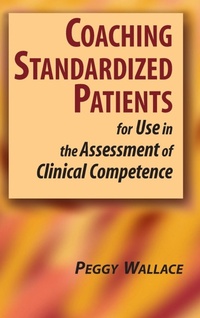
Coaching Standardized Patients
For Use in the Assessment of Clinical Competence
Published on 28. September 2006
Book
Hardback
374 pages
978-0-8261-0224-9 (ISBN)
Description
In today's medical education curriculum, it is necessary for students to learn the proper technique for taking medical histories, performing physical exams, and finding the appropriate way to educate and inform patients. The best way for a student to learn these skills is through hands-on training with a Standardized Patient (SP)--an actor who has been hired to portray a specific set of health problems and symptoms.
Tips to Help You ?n
Develop Coaching Skills and Be a Director to Your SPs
Cast Standardized Patients
Get the Best Performance from Your Actors
Perfect Your SPs' Timing of Fact Delivery during Examinations
Improve the SPs' Written Feedback to Students
Streamline Training Regimens; Checklists Included
Working with SPs has become so important in medical education that it is now a component of the USMLE clinical skills assessment exam. To ensure best practice, the coaches who prepare SPs now need general guidelines.
This handbook is intended as that guide and as a support for those who are involved in training SPs, to encourage each coach to develop a system that will deliver the best results and, in the end, help train the most competent doctors.
Tips to Help You ?n
Develop Coaching Skills and Be a Director to Your SPs
Cast Standardized Patients
Get the Best Performance from Your Actors
Perfect Your SPs' Timing of Fact Delivery during Examinations
Improve the SPs' Written Feedback to Students
Streamline Training Regimens; Checklists Included
Working with SPs has become so important in medical education that it is now a component of the USMLE clinical skills assessment exam. To ensure best practice, the coaches who prepare SPs now need general guidelines.
This handbook is intended as that guide and as a support for those who are involved in training SPs, to encourage each coach to develop a system that will deliver the best results and, in the end, help train the most competent doctors.
More details
Series
Language
English
Place of publication
New York
United States
Target group
College/higher education
Illustrations
illustrations
Dimensions
Height: 235 mm
Width: 157 mm
Thickness: 25 mm
Weight
694 gr
ISBN-13
978-0-8261-0224-9 (9780826102249)
Copyright in bibliographic data and cover images is held by Nielsen Book Services Limited or by the publishers or by their respective licensors: all rights reserved.
Schweitzer Classification
Person
Peggy Wallace, PhD, is Associate Adjunct Professor of Medicine and Director of Curricular Resources and Clinical Evaluation at the University of California, San Diego School of Medicine, where she is responsible for the teaching, assessment, and remediation of clinical skills using standardized patients in the undergraduate medical school curricula. For the past 10 years she has been Director of the Professional Development Center at the UCSD School of Medicine, where the clinical skills of residents and practicing physicians are also being assessed.
Content
List of Figures and Tables
Preface
Acknowledgements
Introduction
PART ONE: Required Skill Sets: Developing the Expertise Needed to Coach Standardized Patients
Chapter 1 - Overview: The Art and Practice of Coaching Standardized Patients
The Collaboration in Standardized Patient Work
The Uniqueness of Standardized Patient Work
Some Qualities of Effective Coaches
The Importance of Selecting the Right SPs
The Skills Needed to Be an SP
The Skills Needed to Be an SP Coach
Chapter Summary
Looking Ahead
Chapter 2 - Clinical Skills: Acquiring the Basic Doctoring Skills
Learning the Four Clinical Skill Sets
Portraying the Medical Student With the SPs
Chapter Summary
Looking Ahead
Chapter 3 - Acting: Understanding How the SPs Portray the Patient
Getting Into the Patient's Psyche
Familiarizing Ourselves With the Actor's Tools
The Interconnectedness of Acting, Directing, and SP Coaching
The Art of Acting: A Model for Enhancing Patient Portrayals
Chapter Summary
Looking Ahead
Chapter 4 - Directing: Coaching to Deepen the SPs' Performances
The Relationship of the Coach/Director With the SPs
Chapter Summary
Looking Ahead
PART TWO: Training Procudures: Casting and Training the Standardized Patients
Chapter 5 - Casting: Finding the Right Standardized Patients
Recruitment
Auditioning
Selection
Chapter Summary
Looking Ahead
Chapter 6 - Training the Standardized Patients: An Overview
General Guidelines for Training
Chapter Summary
Looking Ahead
Chapter 7 - Training Session One: Familiarization with the Case
Notes to the SP Coach About Training Session One
Chapter 8 - Training Session Two: Learning to Use the Checklist
Chapter 9 - Training Session Three: Putting It All Together (Performance, Checklist, Feedback)
Training the SPs to Give Effective Written Feedback
Chapter 10 - Training Session Four: First Dress Rehearsal (Clinician Verification of SPs' Authenticity)
Chapter 11 - Training Options: Variations on the Training Sessions
Chapter 12 - The Practice Exam: Final Dress Rehearsal
Afterword
References
Additional Readings on Acting and Directing
Appendix A: Maria Gomez Case Materials
Appendix B: Standardized Patient Administrative Forms
Index
Preface
Acknowledgements
Introduction
PART ONE: Required Skill Sets: Developing the Expertise Needed to Coach Standardized Patients
Chapter 1 - Overview: The Art and Practice of Coaching Standardized Patients
The Collaboration in Standardized Patient Work
The Uniqueness of Standardized Patient Work
Some Qualities of Effective Coaches
The Importance of Selecting the Right SPs
The Skills Needed to Be an SP
The Skills Needed to Be an SP Coach
Chapter Summary
Looking Ahead
Chapter 2 - Clinical Skills: Acquiring the Basic Doctoring Skills
Learning the Four Clinical Skill Sets
Portraying the Medical Student With the SPs
Chapter Summary
Looking Ahead
Chapter 3 - Acting: Understanding How the SPs Portray the Patient
Getting Into the Patient's Psyche
Familiarizing Ourselves With the Actor's Tools
The Interconnectedness of Acting, Directing, and SP Coaching
The Art of Acting: A Model for Enhancing Patient Portrayals
Chapter Summary
Looking Ahead
Chapter 4 - Directing: Coaching to Deepen the SPs' Performances
The Relationship of the Coach/Director With the SPs
Chapter Summary
Looking Ahead
PART TWO: Training Procudures: Casting and Training the Standardized Patients
Chapter 5 - Casting: Finding the Right Standardized Patients
Recruitment
Auditioning
Selection
Chapter Summary
Looking Ahead
Chapter 6 - Training the Standardized Patients: An Overview
General Guidelines for Training
Chapter Summary
Looking Ahead
Chapter 7 - Training Session One: Familiarization with the Case
Notes to the SP Coach About Training Session One
Chapter 8 - Training Session Two: Learning to Use the Checklist
Chapter 9 - Training Session Three: Putting It All Together (Performance, Checklist, Feedback)
Training the SPs to Give Effective Written Feedback
Chapter 10 - Training Session Four: First Dress Rehearsal (Clinician Verification of SPs' Authenticity)
Chapter 11 - Training Options: Variations on the Training Sessions
Chapter 12 - The Practice Exam: Final Dress Rehearsal
Afterword
References
Additional Readings on Acting and Directing
Appendix A: Maria Gomez Case Materials
Appendix B: Standardized Patient Administrative Forms
Index