

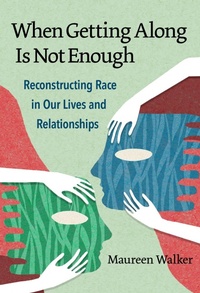
When Getting Along Is not Enough
Reconstructing Race in Our Lives and Relationships
Will be published approx. on 22. November 2019
Book
Hardback
168 pages
978-0-8077-6338-4 (ISBN)
Description
Now more than ever, race has become a morphing relational dynamic that has less to do with the demographic census box we check and more with how we make sense of our lives-who we are and who we can become in relationship with others. Using anecdotes from her practice as a licensed psychologist and as an African American growing up in the South, Walker provides a way for educators and social service professionals to enter into cross-racial discussions about race and race relations. She identifies three essential relational skills for personal transformation and cultural healing that are the foundations for repairing the damage wrought by racism. While Walker does not sugarcoat the destructive history of racism that we all inherit in the United States, the book's vision is ultimately affirming, empowering, hopeful, and inclusive about the individual and collective power to heal our divisions and disconnections.Book Features:
Presents a new way of understanding race as a relational dynamic and racism as a symptom of disconnection.
Synthesizes, for the first time, two important systems of thought: relational-cultural theory and race/social identity theory.
Includes "Pause to Reflect" exercises designed to stimulate group conversations in book clubs, social justice groups, staff development, classrooms, and workplace training.
Offers practical, everyday solutions for people of different races to better understand and accept one another.
Presents a new way of understanding race as a relational dynamic and racism as a symptom of disconnection.
Synthesizes, for the first time, two important systems of thought: relational-cultural theory and race/social identity theory.
Includes "Pause to Reflect" exercises designed to stimulate group conversations in book clubs, social justice groups, staff development, classrooms, and workplace training.
Offers practical, everyday solutions for people of different races to better understand and accept one another.
More details
Language
English
Place of publication
New York
United States
Target group
Professional and scholarly
Product notice
sewn/stitched
Cloth over boards
Dimensions
Height: 231 mm
Width: 157 mm
Thickness: 15 mm
Weight
340 gr
ISBN-13
978-0-8077-6338-4 (9780807763384)
Copyright in bibliographic data and cover images is held by Nielsen Book Services Limited or by the publishers or by their respective licensors: all rights reserved.
Schweitzer Classification
Person
Maureen Walker is a licensed psychologist, speaker, educator, and writer who helps people bridge cultural differences such as race, religion, gender, and other social status markers.
Content
Contents
Acknowledgments
Introduction
1.?The "It" Without a Name
A Brief Survey of Race (as an Essentialist Concept) in America
The Complexity of Everyday Racialized Interactions: Jo and the Clerk at the Convenience Store
Race as a Relational Dynamic
November Morning Redux and the "It-ness" of It All
So Who Do You Think You Are?
Reflections
2.?When the Culture Hurts
Racial Stratification
Race and Neuroscience/Your Brain on Race
Race and the "Dose" Effect
Beyond the Barrier: Race Dialogues
Systemic and Built-In Privilege
Two Models of Human Engagement: Relational-Cultural Theory and Racial Identity Theory
Multiple-Voiced Narratives
Reflections
3.?Race and Place: What's Power Got to Do with It?
Power and Powerlessness in Identity Narratives
Power-Over
Race, Place, and Power
Reflections
4.?Mascots, Missionaries, and Other Illusions of Power-Over
Strategies of Disconnection
Internalized Dominance
Internalized Oppression
Strategies of Disconnection and Illusions of Power-over
Reflections
5.?Sticks and Stones and Words That Hurt
Aversive Racism
Language as Codified Racism
False Narratives
21st-Century Linguistic Dilemmas: The "N" Word
Reflections
6.?Disruptive Empathy: Beyond "I Feel Your Pain"
Disruptive Empathy
The ARC of Empathy
A Story I Would Rather Not Tell
Reflections
7.?Mindful Authenticity
Mindful Authenticity
The Three C Mindset
Mindful Authenticity and Self-Disclosure
Mindful Authenticity and Productive Conflict
One True Thing
Showing Up for Your Own Truth
Doing Authenticity: Four Simple Practices
Holding Contradictory Truths
Reflections
8.?Dynamic Mutuality: Empowering Action in a Relationship
Action in Relationship
Understanding and Misunderstanding Dynamic Mutuality
Dynamic Mutuality in Practice
Dynamic Mutuality Is Not Synonymous with Compromise
Strategies of Disconnection to Resist Dynamic Mutuality
The Sound of One Hand Clapping and Other Caveats
Reflections
9.?Say It Isn't So . . . and Other Race-Card Games
Ideological Force Fields
The "Silencers"
A Few More Words about Race-Card Games
Reflections
10.?Nine Rules for Remaking the Meaning of Race
Five Good Things: Clarity, Creativity, Zest, A Sense of Mattering, and A Desire for More Connection
Rule 1: Pay attention to your body: Pause, then breathe your way into new racial narratives.
Rule 2: Become curious about the multiple racial narratives in your head. You don't have to believe or act on them.
Rule 3: If you find yourself becoming highly reactive in a racialized encounter, ask yourself if some deep background story from your own life is getting triggered.
Rule 4: Acknowledge the necessity of good conflict, and then give yourself permission to set the terms of the interaction.
Rule 5: Recognize when "wanting to win" is driving the interaction.
Rule 6: When an interaction approaches an impasse, say one true thing.
Rule 7: Question the norms . . . notice what surprises you.
Rule 8: Be willing to learn.
Rule 9: Know when to walk away.
Reflections
11.?An Enlarged Vision of Human Possibility
About Allies and Racial Privilege
Remaking the Meaning of Race in Our Lives: A Few Final Words
References
Index
About the Author
Acknowledgments
Introduction
1.?The "It" Without a Name
A Brief Survey of Race (as an Essentialist Concept) in America
The Complexity of Everyday Racialized Interactions: Jo and the Clerk at the Convenience Store
Race as a Relational Dynamic
November Morning Redux and the "It-ness" of It All
So Who Do You Think You Are?
Reflections
2.?When the Culture Hurts
Racial Stratification
Race and Neuroscience/Your Brain on Race
Race and the "Dose" Effect
Beyond the Barrier: Race Dialogues
Systemic and Built-In Privilege
Two Models of Human Engagement: Relational-Cultural Theory and Racial Identity Theory
Multiple-Voiced Narratives
Reflections
3.?Race and Place: What's Power Got to Do with It?
Power and Powerlessness in Identity Narratives
Power-Over
Race, Place, and Power
Reflections
4.?Mascots, Missionaries, and Other Illusions of Power-Over
Strategies of Disconnection
Internalized Dominance
Internalized Oppression
Strategies of Disconnection and Illusions of Power-over
Reflections
5.?Sticks and Stones and Words That Hurt
Aversive Racism
Language as Codified Racism
False Narratives
21st-Century Linguistic Dilemmas: The "N" Word
Reflections
6.?Disruptive Empathy: Beyond "I Feel Your Pain"
Disruptive Empathy
The ARC of Empathy
A Story I Would Rather Not Tell
Reflections
7.?Mindful Authenticity
Mindful Authenticity
The Three C Mindset
Mindful Authenticity and Self-Disclosure
Mindful Authenticity and Productive Conflict
One True Thing
Showing Up for Your Own Truth
Doing Authenticity: Four Simple Practices
Holding Contradictory Truths
Reflections
8.?Dynamic Mutuality: Empowering Action in a Relationship
Action in Relationship
Understanding and Misunderstanding Dynamic Mutuality
Dynamic Mutuality in Practice
Dynamic Mutuality Is Not Synonymous with Compromise
Strategies of Disconnection to Resist Dynamic Mutuality
The Sound of One Hand Clapping and Other Caveats
Reflections
9.?Say It Isn't So . . . and Other Race-Card Games
Ideological Force Fields
The "Silencers"
A Few More Words about Race-Card Games
Reflections
10.?Nine Rules for Remaking the Meaning of Race
Five Good Things: Clarity, Creativity, Zest, A Sense of Mattering, and A Desire for More Connection
Rule 1: Pay attention to your body: Pause, then breathe your way into new racial narratives.
Rule 2: Become curious about the multiple racial narratives in your head. You don't have to believe or act on them.
Rule 3: If you find yourself becoming highly reactive in a racialized encounter, ask yourself if some deep background story from your own life is getting triggered.
Rule 4: Acknowledge the necessity of good conflict, and then give yourself permission to set the terms of the interaction.
Rule 5: Recognize when "wanting to win" is driving the interaction.
Rule 6: When an interaction approaches an impasse, say one true thing.
Rule 7: Question the norms . . . notice what surprises you.
Rule 8: Be willing to learn.
Rule 9: Know when to walk away.
Reflections
11.?An Enlarged Vision of Human Possibility
About Allies and Racial Privilege
Remaking the Meaning of Race in Our Lives: A Few Final Words
References
Index
About the Author