

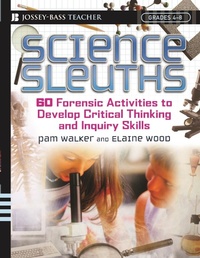
Science Sleuths
60 Forensic Activities to Develop Critical Thinking and Inquiry Skills, Grades 4 - 8
1st Edition
Will be published approx. on 22. September 2006
Book
Paperback/Softback
360 pages
978-0-7879-7435-0 (ISBN)
Description
If your students enjoy solving mysteries, they'll love the activities in Science Sleuths. Forensic science is an ideal vehicle for teaching the nature of science as well as basic science concepts. Besides teaching students to think like scientists, forensic science activities also help them understand, master, and apply science concepts. In addition, forensic science relies heavily on science process skills, manipulative skills, laboratory skills, and interpersonal skills, all emphasized by the National Science Education Standards.
More details
Language
English
Place of publication
New York
United States
Publishing group
John Wiley & Sons Inc
Target group
College/higher education
Professional and scholarly
Product notice
Paperback (trade)
Unsewn / adhesive bound
Dimensions
Height: 280 mm
Width: 216 mm
Thickness: 20 mm
Weight
910 gr
ISBN-13
978-0-7879-7435-0 (9780787974350)
Copyright in bibliographic data and cover images is held by Nielsen Book Services Limited or by the publishers or by their respective licensors: all rights reserved.
Schweitzer Classification
Persons
Pam Walker, M.Ed., has twenty-three years of experience in teaching science and was named 2007 Georgia Teacher of the Year. Elaine Wood, M.S., has spent thirteen years teaching science. Both Walker and Wood teach science in Douglasville, Georgia. They are coauthors of several resource books including Hands-On General Science Activities with Real-Life Applications, Crime Scene Investigations: Real-Life Science Labs for Grades 6-12, and Crime Scene Investigations: Real-Life Science Activities for Elementary Grades.
Content
About the Authors. Preface.
1. Stop, Look, and Listen: Using the Five Senses in Forensic Science.
Activity 1.1: Trained Eyes.
Activity 1.2: Up Close and Personal.
Activity 1.3: Quick Draw.
Activity 1.4: Get the Picture?
Activity 1.5: Sniffing Out the Solution.
Activity 1.6: Make a Note of It.
Activity 1.7: Handwriting Never Lies.
Activity 1.8: Comparative Handwriting Analysis.
Activity 1.9: In the Dark-Homework Assignment.
Activity 1.10: Secret Codes-Homework Assignment.
2. Inquiring Sleuths Want to Know: What to Ask and How to Remember at the Crime Scene.
Activity 2.1: Seeing Is Believing.
Activity 2.2: Are Eyewitnesses Accurate?
Activity 2.3: Train Your Brain.
Activity 2.4: Motive, Motive, Motive.
Activity 2.5: Just the Facts, Ma'am.
Activity 2.6: Which Came First?
Activity 2.7: The Missing Laptop.
Activity 2.8: A Picture-Perfect Mystery.
Activity 2.9: A License to Remember-Homework Assignment.
Activity 2.10: What Are Your Questions?-Homework Assignment.
3. Opening Up a Can of Worms: Using Earth Science in Crime Scene Investigations.
Activity 3.1: Finger the Felon.
Activity 3.2: Sealed with a Kiss.
Activity 3.3: The Invisible Prints.
Activity 3.4: If the Shoe Fits.
Activity 3.5: Earn Your Good Marks.
Activity 3.6: The Case of Blood Splatter.
Activity 3.7: Shattered Glass.
Activity 3.8: Dirty Evidence.
Activity 3.9: Fingerprint Frequency-Homework Assignment.
Activity 3.10: Tracking Down the Intruder-Homework Assignment.
4. When the Beaker Bubbles Over: Using Physical Science in Forensic Science.
Activity 4.1: Paper Detective.
Activity 4.2: Cookie Confusion.
Activity 4.3: Stick It to 'Em.
Activity 4.4: Burning Evidence.
Activity 4.5: Gabby's Gone.
Activity 4.6: Cutting Agents.
Activity 4.7: Floating Down the River.
Activity 4.8: Trouble on the Track.
Activity 4.9: Invisible Ink-Homework Assignment.
Activity 4.10: Skidding to a Stop-Homework Assignment.
5. Using the Logical in Biological: Applying Biology to Crime Scene Investigations.
Activity 5.1: Untangling a Hairy Dognapping.
Activity 5.2: Famous Freckles.
Activity 5.3: Checking It Twice.
Activity 5.4: Pointing Out the Poacher.
Activity 5.5: Green Evidence.
Activity 5.6: Tell-Tale Foot.
Activity 5.7: Detergent Deception.
Activity 5.8: Ruined Radishes.
Activity 5.9: The Eternal Onion-Homework Assignment.
Activity 5.10: Entomology Report-Homework Assignment.
6. It Was a Dark and Stormy Night: Solving Crime Through Critical Thinking and Problem Solving.
Activity 6.1: Scientific Detectives.
Activity 6.2: The Case of the Placido Murder.
Activity 6.3: The Case of the Oak Street Murder.
Activity 6.4: The Case of the Missing Crown.
Activity 6.5: The Case of the Crushed Cameras.
Activity 6.6: The Case of Star Trek Art.
Activity 6.7: The Case of the Atlanta Car Thefts.
Activity 6.8: The Budget Crunch.
Activity 6.9: Comparing Cases-Homework Assignment.
Activity 6.10: The Sherlock in You-Homework Assignment.
Glossary.
Resources for the Classroom.
1. Stop, Look, and Listen: Using the Five Senses in Forensic Science.
Activity 1.1: Trained Eyes.
Activity 1.2: Up Close and Personal.
Activity 1.3: Quick Draw.
Activity 1.4: Get the Picture?
Activity 1.5: Sniffing Out the Solution.
Activity 1.6: Make a Note of It.
Activity 1.7: Handwriting Never Lies.
Activity 1.8: Comparative Handwriting Analysis.
Activity 1.9: In the Dark-Homework Assignment.
Activity 1.10: Secret Codes-Homework Assignment.
2. Inquiring Sleuths Want to Know: What to Ask and How to Remember at the Crime Scene.
Activity 2.1: Seeing Is Believing.
Activity 2.2: Are Eyewitnesses Accurate?
Activity 2.3: Train Your Brain.
Activity 2.4: Motive, Motive, Motive.
Activity 2.5: Just the Facts, Ma'am.
Activity 2.6: Which Came First?
Activity 2.7: The Missing Laptop.
Activity 2.8: A Picture-Perfect Mystery.
Activity 2.9: A License to Remember-Homework Assignment.
Activity 2.10: What Are Your Questions?-Homework Assignment.
3. Opening Up a Can of Worms: Using Earth Science in Crime Scene Investigations.
Activity 3.1: Finger the Felon.
Activity 3.2: Sealed with a Kiss.
Activity 3.3: The Invisible Prints.
Activity 3.4: If the Shoe Fits.
Activity 3.5: Earn Your Good Marks.
Activity 3.6: The Case of Blood Splatter.
Activity 3.7: Shattered Glass.
Activity 3.8: Dirty Evidence.
Activity 3.9: Fingerprint Frequency-Homework Assignment.
Activity 3.10: Tracking Down the Intruder-Homework Assignment.
4. When the Beaker Bubbles Over: Using Physical Science in Forensic Science.
Activity 4.1: Paper Detective.
Activity 4.2: Cookie Confusion.
Activity 4.3: Stick It to 'Em.
Activity 4.4: Burning Evidence.
Activity 4.5: Gabby's Gone.
Activity 4.6: Cutting Agents.
Activity 4.7: Floating Down the River.
Activity 4.8: Trouble on the Track.
Activity 4.9: Invisible Ink-Homework Assignment.
Activity 4.10: Skidding to a Stop-Homework Assignment.
5. Using the Logical in Biological: Applying Biology to Crime Scene Investigations.
Activity 5.1: Untangling a Hairy Dognapping.
Activity 5.2: Famous Freckles.
Activity 5.3: Checking It Twice.
Activity 5.4: Pointing Out the Poacher.
Activity 5.5: Green Evidence.
Activity 5.6: Tell-Tale Foot.
Activity 5.7: Detergent Deception.
Activity 5.8: Ruined Radishes.
Activity 5.9: The Eternal Onion-Homework Assignment.
Activity 5.10: Entomology Report-Homework Assignment.
6. It Was a Dark and Stormy Night: Solving Crime Through Critical Thinking and Problem Solving.
Activity 6.1: Scientific Detectives.
Activity 6.2: The Case of the Placido Murder.
Activity 6.3: The Case of the Oak Street Murder.
Activity 6.4: The Case of the Missing Crown.
Activity 6.5: The Case of the Crushed Cameras.
Activity 6.6: The Case of Star Trek Art.
Activity 6.7: The Case of the Atlanta Car Thefts.
Activity 6.8: The Budget Crunch.
Activity 6.9: Comparing Cases-Homework Assignment.
Activity 6.10: The Sherlock in You-Homework Assignment.
Glossary.
Resources for the Classroom.