

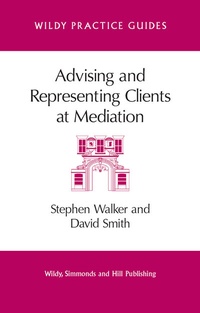
Advising and Representing Clients at Mediation
Published on 31. May 2013
Book
Paperback/Softback
210 pages
978-0-85490-121-0 (ISBN)
Description
Advising and Representing Clients at Mediation is an invaluable guide for lawyers, surveyors and other professionals. It will assist at every stage of the mediation process from persuading the other party to mediate, to preparing for and taking part in the mediation itself, and advising clients on what to expect and how to conduct themselves at a mediation.
The book also offers extensive checklists and precedents, practical advice from experienced mediators, and a clear explanation of the law as it currently stands.
The book also offers extensive checklists and precedents, practical advice from experienced mediators, and a clear explanation of the law as it currently stands.
Reviews / Votes
'Every now and then a book is published for legal representatives that goes beyond a mere analysis of the law and technical guidance, and makes the reader stop and think. This is one such publication. I wish I had read this book before I first represented clients as a solicitor at mediations. Now, as a commercial mediator, plenty in the book resonates with my own experiences. It is packed with real-life tips and examples.' From a review in The Law Society Gazette.More details
Series
Edition
UK ed.
Language
English
Place of publication
London
United Kingdom
Target group
Professional and scholarly
Dimensions
Height: 216 mm
Width: 138 mm
Weight
305 gr
ISBN-13
978-0-85490-121-0 (9780854901210)
Copyright in bibliographic data and cover images is held by Nielsen Book Services Limited or by the publishers or by their respective licensors: all rights reserved.
Schweitzer Classification
Other editions
New editions
Stephen Walker | David Smith
Advising and Representing Clients at Mediation
Book
11/2019
2nd Edition
Wildy, Simmonds and Hill Publishing
€80.76
Shipment within 15-20 days
Persons
Stephen Walker is a consultant at Follett Stock, an accredited moderator and Fellow of the Institute of Arbitrators and a Ranked Mediator and Leading Individual in Chambers. David Smith is a solicitor and Head of Compliance at Anthony Gold. He is an accredited mediator with Regents School of Psychotherapy and ADR Group and a former trustee of Portsmouth Mediation Service.
Content
1 Overview
1.1 Introduction
1.2 Who are the representatives?
1.3 What is the representative's role?
2 When and How to Use Mediation
2.1 Introduction
2.2 Alternative dispute resolution
2.3 How is mediation different?
2.4 Does mediation really work?
2.5 What the client can expect from mediation
2.6 What are the advantages for the clients?
2.7 Uses of mediation
2.8 Other ways of using mediation
2.9 Timing of the mediation
2.10 Conclusion
3 Persuasion and Compulsion
3.1 Introduction
3.2 Mediation theory
3.3 Mediation practice
3.4 Halsey and refusal of mediation
3.5 Responding to a Halsey letter to say no
3.6 Contractual obligations to mediate
3.7 Can I leave a mediation?
3.8 Conclusion
4 Confidentiality and Liability
4.1 Introduction
4.2 Without prejudice rule
4.3 Getting past the without prejudice rule
4.4 Is there mediation privilege?
4.5 Mediation confidentiality agreements
4.6 Settlement agreements
4.7 Protection of the mediator
4.8 Proceeds of Crime Act 2002
4.9 EU mediation and the Directive
4.10 Liability of the mediator
4.11 Conclusion
5 Mediator Selection
5.1 Introduction
5.2 Where to look for a mediator
5.3 Essential questions to ask about a mediator
5.4 Mediator qualifications
5.5 Complaints and conduct
5.6 Mediation style and method
5.7 Mediator fees
5.8 Who do I choose?
5.9 Arguing about the mediator
5.10 Mediation agreement
5.11 Venue selection
5.12 Conclusion
6 Physical Preparation - Position Papers and Bundles
6.1 Introduction
6.2 Is a position paper essential?
6.3 Do you need a mediation bundle?
6.4 Less is more
6.5 Conclusion
7 Mental Preparation I - Pre-mediation Analysis and Mediation Strategy
7.1 Introduction
7.2 Rebalancing
7.3 Purpose and preparation
7.4 Do lawyers really want to settle?
7.5 What mediation expects from the client
7.6 Four topics that must be considered
7.7 Mediation strategy - know your settlement
7.8 BATNAs and WATNAs
7.9 Pre-mediation analysis
7.10 Know your client
7.11 Know yourself - cognitive biases, heuristics
7.12 Conclusion
8 Mental Preparation II - Negotiation Tactics
8.1 Introduction
8.2 Negotiation - practice v theory
8.3 Three things that always crop up - money, deal breakers and the unexpected
8.4 Negotiation tactics
8.5 Offers and the party's role
8.6 Finding the deal zone
8.7 Conclusion
9 Mediation Day
9.1 Introduction
9.2 Mediation stages and timetable
10 Mediation Representation
10.1 Introduction
10.2 Can the client represent himself?
10.3 Who should represent the client?
10.4 Does a representative need to be legally qualified?
10.5 Key requirements of a representative
10.6 Three roles of a representative
10.7 Making peace is a co-operative process
10.8 Three-stage process
10.9 Conclusion
11 At the End
11.1 Introduction
11.2 Settlement agreements
11.3 Drafting the agreement
11.4 What happens if the parties cannot agree?
11.5 Costs
11.6 After settlement
11.7 Conclusion
12 Conclusion
Appendices
1 Mediation - Frequently Asked Questions
2 Mediation Preparation Guidance Notes
3 Preparing the Position Statement
4 Confidential Checklist
5 Pre-mediation Analysis
6 Further Reading
7 Model Mediation Clause
8 Precedent - Halsey Letter Proposing Mediation
9 Precedent - Response to Halsey Mediation Letter
10 Precedent - Response to Halsey Mediation Letter Based on Time
1.1 Introduction
1.2 Who are the representatives?
1.3 What is the representative's role?
2 When and How to Use Mediation
2.1 Introduction
2.2 Alternative dispute resolution
2.3 How is mediation different?
2.4 Does mediation really work?
2.5 What the client can expect from mediation
2.6 What are the advantages for the clients?
2.7 Uses of mediation
2.8 Other ways of using mediation
2.9 Timing of the mediation
2.10 Conclusion
3 Persuasion and Compulsion
3.1 Introduction
3.2 Mediation theory
3.3 Mediation practice
3.4 Halsey and refusal of mediation
3.5 Responding to a Halsey letter to say no
3.6 Contractual obligations to mediate
3.7 Can I leave a mediation?
3.8 Conclusion
4 Confidentiality and Liability
4.1 Introduction
4.2 Without prejudice rule
4.3 Getting past the without prejudice rule
4.4 Is there mediation privilege?
4.5 Mediation confidentiality agreements
4.6 Settlement agreements
4.7 Protection of the mediator
4.8 Proceeds of Crime Act 2002
4.9 EU mediation and the Directive
4.10 Liability of the mediator
4.11 Conclusion
5 Mediator Selection
5.1 Introduction
5.2 Where to look for a mediator
5.3 Essential questions to ask about a mediator
5.4 Mediator qualifications
5.5 Complaints and conduct
5.6 Mediation style and method
5.7 Mediator fees
5.8 Who do I choose?
5.9 Arguing about the mediator
5.10 Mediation agreement
5.11 Venue selection
5.12 Conclusion
6 Physical Preparation - Position Papers and Bundles
6.1 Introduction
6.2 Is a position paper essential?
6.3 Do you need a mediation bundle?
6.4 Less is more
6.5 Conclusion
7 Mental Preparation I - Pre-mediation Analysis and Mediation Strategy
7.1 Introduction
7.2 Rebalancing
7.3 Purpose and preparation
7.4 Do lawyers really want to settle?
7.5 What mediation expects from the client
7.6 Four topics that must be considered
7.7 Mediation strategy - know your settlement
7.8 BATNAs and WATNAs
7.9 Pre-mediation analysis
7.10 Know your client
7.11 Know yourself - cognitive biases, heuristics
7.12 Conclusion
8 Mental Preparation II - Negotiation Tactics
8.1 Introduction
8.2 Negotiation - practice v theory
8.3 Three things that always crop up - money, deal breakers and the unexpected
8.4 Negotiation tactics
8.5 Offers and the party's role
8.6 Finding the deal zone
8.7 Conclusion
9 Mediation Day
9.1 Introduction
9.2 Mediation stages and timetable
10 Mediation Representation
10.1 Introduction
10.2 Can the client represent himself?
10.3 Who should represent the client?
10.4 Does a representative need to be legally qualified?
10.5 Key requirements of a representative
10.6 Three roles of a representative
10.7 Making peace is a co-operative process
10.8 Three-stage process
10.9 Conclusion
11 At the End
11.1 Introduction
11.2 Settlement agreements
11.3 Drafting the agreement
11.4 What happens if the parties cannot agree?
11.5 Costs
11.6 After settlement
11.7 Conclusion
12 Conclusion
Appendices
1 Mediation - Frequently Asked Questions
2 Mediation Preparation Guidance Notes
3 Preparing the Position Statement
4 Confidential Checklist
5 Pre-mediation Analysis
6 Further Reading
7 Model Mediation Clause
8 Precedent - Halsey Letter Proposing Mediation
9 Precedent - Response to Halsey Mediation Letter
10 Precedent - Response to Halsey Mediation Letter Based on Time