


How the Other Half Works
Immigration and the Social Organization of Labor
1st Edition
Published on 3. March 2003
Book
Hardback
299 pages
978-0-520-22980-8 (ISBN)
Description
How the Other Half Works solves the riddle of America's contemporary immigration puzzle: why an increasingly high-tech society has use for so many immigrants who lack the basic skills that today's economy seems to demand. In clear and engaging style, Waldinger and Lichter isolate the key factors that explain the presence of unskilled immigrants in our midst. Focusing on Los Angeles, the capital of today's immigrant America, this hard-hitting book elucidates the other side of the new economy, showing that hiring is finding not so much "one's own kind" but rather the "right kind" to fit the demeaning, but indispensable, jobs many American workers disdain.
More details
Edition
First Edition
Language
English
Place of publication
Berkerley
United States
Target group
Professional and scholarly
Product notice
Cloth over boards
Illustrations
17 tables, 1 map
Dimensions
Height: 229 mm
Width: 152 mm
Thickness: 19 mm
Weight
544 gr
ISBN-13
978-0-520-22980-8 (9780520229808)
Copyright in bibliographic data is held by Nielsen Book Services Limited or its licensors: all rights reserved.
Schweitzer Classification
Other editions
Additional editions
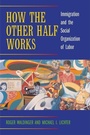
Roger Waldinger | Michael I. Lichter
How the Other Half Works
Immigration and the Social Organization of Labor
E-Book
03/2003
1st Edition
Naval Institute Press
€30.99
Available for download
Persons
Roger Waldinger is Professor and Chair of the Department of Sociology at the University of California, Los Angeles. He is author of Still the Promised City? African-Americans and New Immigrants in Post-industrial New York (1996), which won the Robert Park Award of the American Sociological Association, editor of Strangers at the Gates: New Immigrants in Urban America (California, 2001), and author of several other publications. Michael I. Lichter is Assistant Professor of Sociology, State University of New York at Buffalo.
Content
Dedication Terms used in this book Chapter 1: Introduction Chapter 2: What Empoyers Want Chapter 3: Doing the Job: Skills and the Social Organization of Work Chapter 4: The Language of Work Chapter 5: Network, Bureaucracy, Exclusion Chapter 6: Ethnic Networks and Social Closure Chapter 7: Bringing the Boss Back In: Selection and Hiring Decisions Chapter 8: Whom Employers Want Chapter 9: Us and them Chapter 10: Diversity and Conflict Chapter 11: Black/Immigrant Competition Chapter 12: How the other half works Appendix: the Local and economic context The six industries Conclusions