


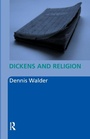
Dickens and Religion
1st Edition
Published on 27. January 2017
Book
Hardback
248 pages
978-1-138-15950-1 (ISBN)
Description
The importance of understanding Dickens's religion to obtain a full appreciation of his achievement has long been admitted; but this is the first critical study of the interaction between Dickens's religious beliefs and his creative imagination throughout his career.
The novelist's religious beliefs are a pervasive and deeply felt presence in his works even if they are not always clearly thought out or expressed. Too discreet and humane to be as explicit, or as dull, as most of the professedly religious novelists of his time, Dickens nevertheless suggests in his own way a liberal Protestant belief, shot through with Romantic, transcendental yearnings, which undoubtedly appealed to a very wide range of readers. Dickens's religion is shown to be that of a great popular writer, who created a unique kind of fiction, and a unique relationship with his readers, by the absorption and transformation of less respectable contemporary forms, from fairy-tale and German romance to tract and print.
Walder's thoroughly researched and lively book provides students of Dickens and the Victorian period with an original perspective on the novelist's methods and attitudes. He offers a judicious and informed exploration of Dickens's obsessive themes, from the 'fall' of innocence in Pickwick Papers, to the search for a religious 'answer' in Little Dorrit. Each chapter focuses upon the striking congruences revealed between individual novels, or groups of novels, and particular religious themes. The views expressed in Dickens's lesser fiction and non-fiction are drawn on throughout, as are those in the influential contemporary press.
The novelist's religious beliefs are a pervasive and deeply felt presence in his works even if they are not always clearly thought out or expressed. Too discreet and humane to be as explicit, or as dull, as most of the professedly religious novelists of his time, Dickens nevertheless suggests in his own way a liberal Protestant belief, shot through with Romantic, transcendental yearnings, which undoubtedly appealed to a very wide range of readers. Dickens's religion is shown to be that of a great popular writer, who created a unique kind of fiction, and a unique relationship with his readers, by the absorption and transformation of less respectable contemporary forms, from fairy-tale and German romance to tract and print.
Walder's thoroughly researched and lively book provides students of Dickens and the Victorian period with an original perspective on the novelist's methods and attitudes. He offers a judicious and informed exploration of Dickens's obsessive themes, from the 'fall' of innocence in Pickwick Papers, to the search for a religious 'answer' in Little Dorrit. Each chapter focuses upon the striking congruences revealed between individual novels, or groups of novels, and particular religious themes. The views expressed in Dickens's lesser fiction and non-fiction are drawn on throughout, as are those in the influential contemporary press.
More details
Language
English
Place of publication
London
United Kingdom
Publishing group
Taylor & Francis Ltd
Target group
College/higher education
Dimensions
Height: 216 mm
Width: 138 mm
Weight
453 gr
ISBN-13
978-1-138-15950-1 (9781138159501)
Copyright in bibliographic data and cover images is held by Nielsen Book Services Limited or by the publishers or by their respective licensors: all rights reserved.
Schweitzer Classification
Other editions
Additional editions
Person
Dennis Walder is Professor of Literature at the Open University and chaired the university's Nineteenth Century Novel course. He has published widely on 19th and 20th century literature, including the best-selling Literature in the Modern World.
Content
Introduction; Chapter 1 Mr Pickwick and the Innocent Fall; Chapter 2 Oliver Twistand Charity; Chapter 3 Death and The Old Curiosity Shop; Chapter 4 Dickens and the False Religious Cry; Chapter 5 Dickens and the Change of Heart; Chapter 6 The Social Gospel; Chapter 7 Dickens and Religion; Chapter 8 Conclusion;