

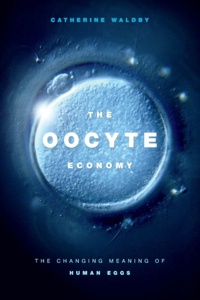
The Oocyte Economy
The Changing Meaning of Human Eggs
Published on 6. May 2019
Book
Paperback/Softback
248 pages
978-1-4780-0472-1 (ISBN)
Description
In recent years increasing numbers of women from wealthy countries have turned to egg donation, egg freezing, and in vitro fertilization to become pregnant, especially later in life. This trend has created new ways of using, exchanging, and understanding oocytes-the reproductive cells specific to women. In The Oocyte Economy Catherine Waldby draws on 130 interviews---with scientists, clinicians, and women who have either donated or frozen their oocytes or received those of another woman---to trace how the history of human oocytes' perceived value intersects with the biological and social life of women. Demonstrating how oocytes have come to be understood as discrete and scarce biomedical objects open to valuation, management, and exchange, Waldby examines the global market for oocytes and the power dynamics between recipients and the often younger and poorer donors. With this exploration of the oocyte economy and its contemporary biopolitical significance, Waldby rethinks the relationship between fertility, gendered experience, and biomedical innovation.
Reviews / Votes
"What Waldby presents so compellingly is that there is an oocyte economy. Eggs have value and meaning, indeed they have different values and meanings in different contexts." - Jane Maienschein (Journal of the History of Medicine and Allied Sciences) "Waldby has a long and impressive history of publications dealing with the social, political, ethical, and biomedical aspects of changing global markets for stem cells, umbilical cord blood, human eggs, fertilized blastocysts, embryos, and other (by-)products of artificially assisted reproduction." - A. H. Koblitz (Choice) "The Oocyte Economy is not only a rigorous study but a riveting read." - Claire Horn (Women's Review of Books) "This book offers a fascinating foray into the changing meaning of human oocytes for Western women and reproductive scientists. As such, it is a must-read for scholars of reproduction, and for related courses in anthropology, sociology, gender studies, and the history of science and medicine."- Marcia C. Inhorn (Bulletin of the History of Medicine) "A thought-provoking and original examination of the emergence of an economy premised on deep cultural beliefs about the meaning of oocytes.... Likely to become required reading in medicine, gender, and in the interdisciplinary field of reproduction." - Rosanna Hertz (Society) "The Oocyte Economy ultimately provides unparalleled insights into fertility practices to better conceptualize ethical arguments pertaining to assisted reproductive technologies. This book will appeal to social sciences and humanities scholars of medicine, especially those seeking refined theorizing on tissue donation made possible by the unique features of human eggs." - Nathalie Egalite (International Journal of Feminist Approaches to Bioethics) "A fascinating account of the complex social meanings attached to egg cells and the possibilities and mysteries that technoscience is still unlocking about them. . . . The Oocyte Economy is replete with historical accounts and quotes from a range of different participants, making this book of particular interest to anybody interested in the expanding reproductive markets with a focus on tissue economies, IVF patients, and reproductive labor." - Anna Molas (Medical Anthropology Quarterly)
More details
Language
English
Place of publication
North Carolina
United States
Target group
Professional and scholarly
Product notice
Paperback (trade)
Dimensions
Height: 229 mm
Width: 152 mm
Thickness: 14 mm
Weight
365 gr
ISBN-13
978-1-4780-0472-1 (9781478004721)
Copyright in bibliographic data and cover images is held by Nielsen Book Services Limited or by the publishers or by their respective licensors: all rights reserved.
Schweitzer Classification
Other editions
Additional editions
E-Book
04/2019
1st Edition
De Gruyter
€198.99
Available for download
Person
Catherine Waldby is Director of the Research School of Social Sciences at Australian National University and the author and coauthor of several books, including Clinical Labor: Tissue Donors and Research Subjects in the Global Bioeconomy, also published by Duke University Press.
Content
Acknowledgments vii
Introduction 1
1. Temporal Oocytes: Fertility and Deep Time 23
2. Twentieth-Century Oocytes: Experiment and Experience 41
3. Precious Oocytes: IVF and the Deficit Spiral 64
4. Global Oocytes: Medical Tourism and the Transaction of Fertility 88
5. Cold-Chain Oocytes: Vitrification and the Formation of Corporate Egg Banks 119
6. Private Oocytes: Personal Egg Banking and Generational Time 114
7. Innovation Oocytes: Therapeutic Cloning and Mitochondrial Donation 161
Conclusion 191
Appendix 199
Notes 205
References 211
Index 231
Introduction 1
1. Temporal Oocytes: Fertility and Deep Time 23
2. Twentieth-Century Oocytes: Experiment and Experience 41
3. Precious Oocytes: IVF and the Deficit Spiral 64
4. Global Oocytes: Medical Tourism and the Transaction of Fertility 88
5. Cold-Chain Oocytes: Vitrification and the Formation of Corporate Egg Banks 119
6. Private Oocytes: Personal Egg Banking and Generational Time 114
7. Innovation Oocytes: Therapeutic Cloning and Mitochondrial Donation 161
Conclusion 191
Appendix 199
Notes 205
References 211
Index 231