

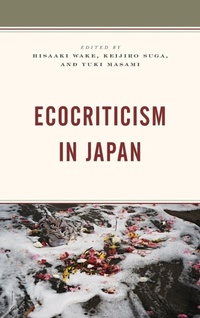
Ecocriticism in Japan
Published on 30. November 2017
Book
Hardback
308 pages
978-1-4985-2784-2 (ISBN)
Description
What can ecocriticism do when engaging with Japanese literature and culture? This edited volume Ecocriticism in Japan attempts to answer this question. The contributors place themselves inside the domestic fields of production of works of art and express their concerns and ideas for the English-speaking spheres of the world. Taking up subjects ranging from the eleventh-century novel The Tale of Genji, an early twentieth-century writer Taoka Reiun, the post-WWII atomic bombing literature by women, the internationally-renowned Abe Kobo, the Nobel laureate Oe Kenzaburo, the world-widely popular writer Murakami Haruki, the Minamata writer Ishimure Michiko, and the anime artist Miyazaki Hayao to the recent TV anime Coppelion, a production that foresaw a devastating nuclear disaster after the Great East Japan Earthquake, this volume extricates and discusses innate, complex values of Japanese people and culture in terms of nature and environment.
Reviews / Votes
Ecocriticism in Japan answers a growing need in Japan studies and contributes to the broader field of environmental studies generally. * The Journal of Japanese Studies *More details
Series
Language
English
Place of publication
United States
Publishing group
Bloomsbury Publishing Plc
Target group
Professional and scholarly
Illustrations
1 b/w illustrations; 3 colour photos;
Dimensions
Height: 235 mm
Width: 157 mm
Thickness: 23 mm
Weight
656 gr
ISBN-13
978-1-4985-2784-2 (9781498527842)
Copyright in bibliographic data and cover images is held by Nielsen Book Services Limited or by the publishers or by their respective licensors: all rights reserved.
Schweitzer Classification
Other editions
Additional editions
Persons
Hisaaki Wake is assistant professor of Japanese at the US Air Force Academy.
Yuki Masami is professor of human and socio-environmental studies at Kanazawa University.
Keijiro Suga is professor at Meiji University.
Yuki Masami is professor of human and socio-environmental studies at Kanazawa University.
Keijiro Suga is professor at Meiji University.
Content
Foreword by Ursula Heise
Acknowledgements
Introduction by Yuki Masami
Chapter 1: Exploring Ecocritical Perspectives by Juxtaposing The Tale of Genji's "Suma" chapter with Folktales by Marjorie Rhine
Chapter 2: Taoka Reiun and Environmental Thought in the Early 1900s by Ronald Loftus by
Chapter 3: Kyoko Matsunaga Radioactive Discourse and Atomic Bomb Texts: Ota Yoko, Sata Ineko, and by Hayashi Kyoko
Chapter 4: Abe Kobo in Ecosophy by Toshiya Ueno
Chapter 5: Literary ground opened in fissures: The Great East Japan Earthquake and Oe Kenzaburo's In Late Style by Haga Koichi
Chapter 6: Oe and the Uses of Ecocritical Affect: Suspicion, Shame and Care after 3.11 by Margherita Long
Chapter 7: Nature Strikes Back: Human Interaction with Natural Forces in Literary Representations of Disaster by Alex Bates
Chapter 8: Horses and Ferns: Kaneko Mitsuharu and Furukawa Hideo by Doug Slaymaker
Chapter 9: Invisible Waves: On Some Japanese Artists After March 11, 2011 by Keijiro Suga
Chapter 10: From "Suffering"
Acknowledgements
Introduction by Yuki Masami
Chapter 1: Exploring Ecocritical Perspectives by Juxtaposing The Tale of Genji's "Suma" chapter with Folktales by Marjorie Rhine
Chapter 2: Taoka Reiun and Environmental Thought in the Early 1900s by Ronald Loftus by
Chapter 3: Kyoko Matsunaga Radioactive Discourse and Atomic Bomb Texts: Ota Yoko, Sata Ineko, and by Hayashi Kyoko
Chapter 4: Abe Kobo in Ecosophy by Toshiya Ueno
Chapter 5: Literary ground opened in fissures: The Great East Japan Earthquake and Oe Kenzaburo's In Late Style by Haga Koichi
Chapter 6: Oe and the Uses of Ecocritical Affect: Suspicion, Shame and Care after 3.11 by Margherita Long
Chapter 7: Nature Strikes Back: Human Interaction with Natural Forces in Literary Representations of Disaster by Alex Bates
Chapter 8: Horses and Ferns: Kaneko Mitsuharu and Furukawa Hideo by Doug Slaymaker
Chapter 9: Invisible Waves: On Some Japanese Artists After March 11, 2011 by Keijiro Suga
Chapter 10: From "Suffering"