

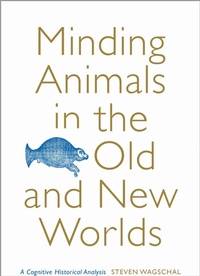
Minding Animals in the Old and New Worlds
A Cognitive Historical Analysis
Published on 16. October 2018
Book
Hardback
360 pages
978-1-4875-0332-1 (ISBN)
Description
Minding Animals in the Old and New Worlds employs current research in cognitive science and the philosophy of animal cognition to explore how humans have understood non-human animals in the Iberian world, from the Middle Ages through the early modern period. Using texts from European and Indigenously-informed sources, Steven Wagschal argues that people tend to conceptualize the minds of animals in ways that reflect their own uses for the animal, the manner in which they interact with the animal, and the place in which the animal lives. Often this has little if anything to do with the actual cognitive abilities of the animal. However, occasionally early authors made surprisingly accurate assumptions about the thoughts and feelings of animals.
Wagschal explores a number of ways in which culture and human cognition interact, including: the utility of anthropomorphism; the symbolic use of animals in medieval Christian texts; attempts at understanding the minds of animals in Spain's early modern farming and hunting books; the effect of novelty on animal conceptualizations in "New World" histories, and how Cervantes navigated the forms of anthropomorphism that preceded him to create the first embodied animal minds in fiction.
Wagschal explores a number of ways in which culture and human cognition interact, including: the utility of anthropomorphism; the symbolic use of animals in medieval Christian texts; attempts at understanding the minds of animals in Spain's early modern farming and hunting books; the effect of novelty on animal conceptualizations in "New World" histories, and how Cervantes navigated the forms of anthropomorphism that preceded him to create the first embodied animal minds in fiction.
Reviews / Votes
"Minding Animals is a welcome addition to the growing body of studies about animals in Hispanism. It shows how early Spanish literature advocates the mindedness of animals and teaches nuanced meanings of anthropomorphism as a productive way to understand animals."- John Beusterien, Texas Tech University (Bulletin of Spanish Studies, Volume XCVI, Number 10, 2019) "Steven Wagschal's book is a goldmine of information about animal minds."
- Marc Bekoff (Psychology Today) "This is a fine example of literary research and writing that ties into recent trends in interdisciplinary human-animal studies, ethology, and medieval and early modern studies."
- Martha Few, Pennsylvania State University (Bulletin of the Comediantes) "Minding Animals is a carefully researched, accessible, and highly readable book that makes a valuable contribution to the history of animal cognition."
- Helen Cowie, University of York (Speculum)
More details
Series
Language
English
Place of publication
Toronto
Canada
Target group
College/higher education
Professional and scholarly
Product notice
sewn/stitched
Cloth over boards
With dust jacket
Dimensions
Height: 234 mm
Width: 160 mm
Thickness: 28 mm
Weight
635 gr
ISBN-13
978-1-4875-0332-1 (9781487503321)
Copyright in bibliographic data and cover images is held by Nielsen Book Services Limited or by the publishers or by their respective licensors: all rights reserved.
Schweitzer Classification
Person
Steven Wagschal is a professor and chair of the Department of Spanish and Portuguese at Indiana University, Bloomington.
Content
Minding Animals with Anthropomorphism
Deploying The Animal in Medieval Miracles, Bestiaries and Fables
Exploiting The Animal through Husbandry and Hunting
Describing The Animal in New World Habitats
Embodying Animals: Cervantes and Animal Cognition
Minding Animals after Cervantes
Deploying The Animal in Medieval Miracles, Bestiaries and Fables
Exploiting The Animal through Husbandry and Hunting
Describing The Animal in New World Habitats
Embodying Animals: Cervantes and Animal Cognition
Minding Animals after Cervantes