

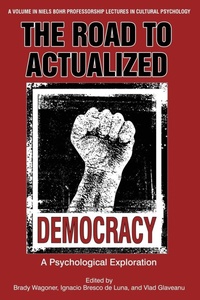
The Road to Actualized Democracy
Psychological Exploration
Published on 16. August 2018
Book
Paperback/Softback
318 pages
978-1-64113-175-9 (ISBN)
Description
"Democracy is the worst form of government, except for all the others" once remarked Winston Churchill. In this day and age this quotation resonates more than ever. This book explores democracy from the perspective of social and cultural psychology, highlighting the importance of the everyday basis of democratic practices. This approach takes us beyond the simple understanding of democracy in its institutional guise of free elections and public accountability, and towards a focus on group dynamics and personal characteristics of the democratic citizen, including their mentalities, habits and ways of relating to others. The book features discussions of the two-way street between democracy and dictatorship; conflicts within protests, ideology and public debate; and the psychological profile of a democratic citizen and its critique. While acknowledging the limitations of today's democratic systems, this volume aims to re-invigorate democracy by bringing psychology to the table of current debates on social change and citizenship.
More details
Series
Language
English
Place of publication
Charlotte
United States
Publishing group
Emerald Publishing Inc
Target group
Professional and scholarly
Dimensions
Height: 234 mm
Width: 156 mm
Thickness: 17 mm
Weight
485 gr
ISBN-13
978-1-64113-175-9 (9781641131759)
Copyright in bibliographic data and cover images is held by Nielsen Book Services Limited or by the publishers or by their respective licensors: all rights reserved.
Schweitzer Classification
Other editions
Additional editions
Brady Wagoner | Ignacio Brescó de Luna | Vlad Glaveanu
The Road to Actualized Democracy
A Psychological Exploration
E-Book
08/2018
1st Edition
IAP - Information Age Publishing
€62.33
Available for download
Persons
Brady Wagoner, Aalborg University
Ignacio Bresco de Luna, Aalborg University
Vlad Glaveanu, Webster University Geneva
Ignacio Bresco de Luna, Aalborg University
Vlad Glaveanu, Webster University Geneva
Content
Who's Afraid of Democracy? Vlad Glaveanu, Brady Wagoner, and Ignacio Bresco.
Part I. Niels Bohr Lecture.
Chapter 1. The Road to Actualized Democracy: A Psychological Exploration; Fathali M. Moghaddam.
Part II. Transitions To And From Democracy.
Chapter 2. Building Group Norms and Group Identities Into the Study of Transitions From Democracy to Dictatorship and Back Again; Winnifred R. Louis, Gi K. Chonu, Tulsi Achia, Cassandra M. Chapman, and Joshua Rhee.
Chapter 3. Looking for Happiness, Finding Economic Growth: The Chilean Transition to Democracy; David Carre.
Chapter 4. Democratic Revolutions? Insights on Social Stability and Social Change From Psychology and Politics; Lucas B. Mazur and Siri Neset.
Chapter 5. On Social Memory, Paradoxes of Opinion, and the Democratic Competence of Citizens; Cristian Tileaga.
Part III. Conflict In Democracy.
Chapter 6. Alternating Dominance: Social Categorization, Group Formation, and the Problem of Borders; Gordon Sammut.
Chapter 7. Actual Democracy and a United Europe of States: A Case Study of Austerity and Protest in the Republic of Ireland; Seamus A. Power.
Chapter 8. Ideology and Actualized Democracy: Allies or Enemies? Sandra Obradovic.
Chapter 9. Cultural Psychology and Politics: Otherness, Democracy, and the Refugee Crisis; Constance de Saint Laurent and Vlad Glaveanu.
Part IV. The Democratic Citizen.
Chapter 10. The Perfect Psytizen: Sociohistorical Debts and the Limits of Psychology as Engineering for Democracy; Jorge Castro Tejerina and Marcos Jose Bernal Marcos.
Chapter 11. Nurturing Democratic Citizens: A Commitment for Psychology? Alberto Rosa and Maria Fernanda Gonzalez.
Chapter 12. Educating for Democracy: Entrepreneurship Education as a Democratic Discipline? Steffen Erno.
Chapter 13. Historical Representations as Contributions to the Road Toward Actualized Democracy; Mario Carretero.
Part V. Concluding Response.
Chapter 14. Psychology as a Science of Human Plasticity; Fathali M. Moghaddam.
About the Contributors.
Part I. Niels Bohr Lecture.
Chapter 1. The Road to Actualized Democracy: A Psychological Exploration; Fathali M. Moghaddam.
Part II. Transitions To And From Democracy.
Chapter 2. Building Group Norms and Group Identities Into the Study of Transitions From Democracy to Dictatorship and Back Again; Winnifred R. Louis, Gi K. Chonu, Tulsi Achia, Cassandra M. Chapman, and Joshua Rhee.
Chapter 3. Looking for Happiness, Finding Economic Growth: The Chilean Transition to Democracy; David Carre.
Chapter 4. Democratic Revolutions? Insights on Social Stability and Social Change From Psychology and Politics; Lucas B. Mazur and Siri Neset.
Chapter 5. On Social Memory, Paradoxes of Opinion, and the Democratic Competence of Citizens; Cristian Tileaga.
Part III. Conflict In Democracy.
Chapter 6. Alternating Dominance: Social Categorization, Group Formation, and the Problem of Borders; Gordon Sammut.
Chapter 7. Actual Democracy and a United Europe of States: A Case Study of Austerity and Protest in the Republic of Ireland; Seamus A. Power.
Chapter 8. Ideology and Actualized Democracy: Allies or Enemies? Sandra Obradovic.
Chapter 9. Cultural Psychology and Politics: Otherness, Democracy, and the Refugee Crisis; Constance de Saint Laurent and Vlad Glaveanu.
Part IV. The Democratic Citizen.
Chapter 10. The Perfect Psytizen: Sociohistorical Debts and the Limits of Psychology as Engineering for Democracy; Jorge Castro Tejerina and Marcos Jose Bernal Marcos.
Chapter 11. Nurturing Democratic Citizens: A Commitment for Psychology? Alberto Rosa and Maria Fernanda Gonzalez.
Chapter 12. Educating for Democracy: Entrepreneurship Education as a Democratic Discipline? Steffen Erno.
Chapter 13. Historical Representations as Contributions to the Road Toward Actualized Democracy; Mario Carretero.
Part V. Concluding Response.
Chapter 14. Psychology as a Science of Human Plasticity; Fathali M. Moghaddam.
About the Contributors.