

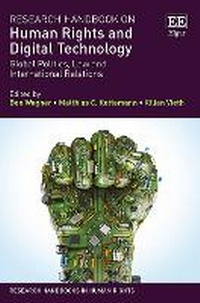
Research Handbook on Human Rights and Digital Technology
Global Politics, Law and International Relations
Published on 13. July 2020
Book
Paperback/Softback
464 pages
978-1-80037-241-2 (ISBN)
Description
In a digitally connected world, the question of how to respect, protect and fulfil human rights has become unavoidable. Uniting research from scholars and practitioners, this contemporary Handbook offers new insights into well-established debates surrounding digital technologies by framing them in terms of human rights.
An international group of expert contributors explore the issues posed by the management of key Internet resources, the governance of its architecture, the role of different stakeholders, the legitimacy of rule-making and rule-enforcement, and the exercise of international public authority over users. Highly interdisciplinary, the Handbook draws on law, political science, and international relations, as well as computer science and science and technology studies in order to engage with human rights aspects of the digitally connected world. The chapters examine in depth current topics relating to human rights and security, internet access, surveillance, automation, trade, and freedom of expression.
This comprehensive and engaging Handbook will be vital reading for both researchers and students in law, human rights, international politics, international relations and technology studies. Policy-makers seeking an understanding of the state of human rights in technology will also find this book a highly useful resource.
Contributors include: W. Benedek, D. Bigo, D. Brodowski, G. Contissa, P. de Hert, M. Dunn Cavelty, T. Engelhardt, B. Farrand, M I. Franklin, M.I. Ganesh, M. Graham, S. Horth, L. Jasmontaite, R.F. Jorgensen, C. Kavanagh, M.C. Kettemann, D. Korff, G. Lansdown, E. Light, S. Livingstone, A. Millikan, J.A. Obar, G. Sartor, G. Sobliye, A. Third, M. Tuszynski, K. Vieth, B. Wagner, T. Wetzling, M. Zalnieriute
An international group of expert contributors explore the issues posed by the management of key Internet resources, the governance of its architecture, the role of different stakeholders, the legitimacy of rule-making and rule-enforcement, and the exercise of international public authority over users. Highly interdisciplinary, the Handbook draws on law, political science, and international relations, as well as computer science and science and technology studies in order to engage with human rights aspects of the digitally connected world. The chapters examine in depth current topics relating to human rights and security, internet access, surveillance, automation, trade, and freedom of expression.
This comprehensive and engaging Handbook will be vital reading for both researchers and students in law, human rights, international politics, international relations and technology studies. Policy-makers seeking an understanding of the state of human rights in technology will also find this book a highly useful resource.
Contributors include: W. Benedek, D. Bigo, D. Brodowski, G. Contissa, P. de Hert, M. Dunn Cavelty, T. Engelhardt, B. Farrand, M I. Franklin, M.I. Ganesh, M. Graham, S. Horth, L. Jasmontaite, R.F. Jorgensen, C. Kavanagh, M.C. Kettemann, D. Korff, G. Lansdown, E. Light, S. Livingstone, A. Millikan, J.A. Obar, G. Sartor, G. Sobliye, A. Third, M. Tuszynski, K. Vieth, B. Wagner, T. Wetzling, M. Zalnieriute
More details
Series
Language
English
Place of publication
Cheltenham
United Kingdom
Target group
Professional and scholarly
Dimensions
Height: 244 mm
Width: 169 mm
ISBN-13
978-1-80037-241-2 (9781800372412)
Copyright in bibliographic data and cover images is held by Nielsen Book Services Limited or by the publishers or by their respective licensors: all rights reserved.
Schweitzer Classification
Other editions
New editions

Ben Wagner | Matthias C. Kettemann | Kilian Vieth-Ditlmann
Research Handbook on Human Rights and Digital Technology
Global Politics, Law and International Relations: Second Edition
Book
approx. 07/2026
2nd Edition
Edward Elgar Publishing
€80.60
Not yet published
Persons
Edited by Ben Wagner, TU Delft and Inholland, the Netherlands, Matthias C. Kettemann, Department of Theory and Future of Law, University of Innsbruck, Austria and Kilian Vieth, AlgorithmWatch, Berlin, Germany
Content
Contents:
Part I Conceptual Approaches to Human Rights and Digital Technology
1. Human Rights Futures for the Internet
M.I. Franklin
2. There Are No Rights 'in' Cyberspace
Mark Graham
3. Beyond national security, the emergence of a digital reason of state(s) led by transnational Guilds of Sensitive Information. The case of the Five Eyes Plus Network
Didier Bigo
4. Digital Copyright and Human Rights: Balancing of Competing Obligations, or Is There No Conflict?
Benjamin Farrand
Part II Security and Human Rights: Between Cybersecurity and Cybercrime
5. Cybersecurity and Human Rights
Myriam Dunn Cavelty and Camino Kavanagh
6. Cybercrime, Human Rights and Digital Politics
Dominik Brodowski
7. "This is Not a Drill": International Law and Protection of Cybersecurity
Mathias C. Kettemann
8. First Do No Harm: The Potential of Harm Caused to Fundamental Rights and Freedoms by State Cybersecurity interventions
Douwe Korff
Part III Internet Access and Surveillance: Assessing Human Rights in Practice
9. Access to the Internet in the EU: a Policy Priority, a Fundamental, a Human Right, or a Concern of eGovernment?
Lina Jasmontaite and Paul de Hert
10. Reflections on Access to Internet in Cuba as a Human Right
Raudiel F. Pena Barrios
11. Surveillance Reform: Revealing Surveillance Harm and Engaging Reform Tactics
Evan Light and Jonathan A. Obar
12. Germany's Recent Intelligence Reform revisited: A Wolf in Sheep's clothing?
Thorsten Wetzling
Part IV Automation, Trade and Freedom of Expression: Embedding Rights in Technology Governance
13. Liability and Automation in Socio-Technical Systems
Giuseppe Contissa and Giovanni Sartor
14. Who pays? - On Artificial Agents, Human Rights and Tort Law
Tim Engelhardt
15. Digital Technologies, Human Rights and Global Trade? Expanding export controls of surveillance technologies in Europe, China and India
Ben Wagner and Stephanie Horth
16. Policing 'online-radicalization': The framing of Europol's Internet Referral Unit
Kilian Vieth
Part V Actors' Perspectives on Human Rights: How Can Change Happen?
17. When Private Actors Govern Human Rights
Rikke Frank Jorgensen
18. International Organizations and Digital Human Rights
Wolfgang Benedek
19. Recognizing Children's Rights in Relation to Digital Technologies: Challenges of Voice and Evidence, Principle and Practice
Amanda Third, Sonia Livingstone and Gerison Lansdown
20. Digital Rights of LGBTI Communities: A Roadmap for a Dual Human Rights Framework
Monika Zalnieriute
Index
Part I Conceptual Approaches to Human Rights and Digital Technology
1. Human Rights Futures for the Internet
M.I. Franklin
2. There Are No Rights 'in' Cyberspace
Mark Graham
3. Beyond national security, the emergence of a digital reason of state(s) led by transnational Guilds of Sensitive Information. The case of the Five Eyes Plus Network
Didier Bigo
4. Digital Copyright and Human Rights: Balancing of Competing Obligations, or Is There No Conflict?
Benjamin Farrand
Part II Security and Human Rights: Between Cybersecurity and Cybercrime
5. Cybersecurity and Human Rights
Myriam Dunn Cavelty and Camino Kavanagh
6. Cybercrime, Human Rights and Digital Politics
Dominik Brodowski
7. "This is Not a Drill": International Law and Protection of Cybersecurity
Mathias C. Kettemann
8. First Do No Harm: The Potential of Harm Caused to Fundamental Rights and Freedoms by State Cybersecurity interventions
Douwe Korff
Part III Internet Access and Surveillance: Assessing Human Rights in Practice
9. Access to the Internet in the EU: a Policy Priority, a Fundamental, a Human Right, or a Concern of eGovernment?
Lina Jasmontaite and Paul de Hert
10. Reflections on Access to Internet in Cuba as a Human Right
Raudiel F. Pena Barrios
11. Surveillance Reform: Revealing Surveillance Harm and Engaging Reform Tactics
Evan Light and Jonathan A. Obar
12. Germany's Recent Intelligence Reform revisited: A Wolf in Sheep's clothing?
Thorsten Wetzling
Part IV Automation, Trade and Freedom of Expression: Embedding Rights in Technology Governance
13. Liability and Automation in Socio-Technical Systems
Giuseppe Contissa and Giovanni Sartor
14. Who pays? - On Artificial Agents, Human Rights and Tort Law
Tim Engelhardt
15. Digital Technologies, Human Rights and Global Trade? Expanding export controls of surveillance technologies in Europe, China and India
Ben Wagner and Stephanie Horth
16. Policing 'online-radicalization': The framing of Europol's Internet Referral Unit
Kilian Vieth
Part V Actors' Perspectives on Human Rights: How Can Change Happen?
17. When Private Actors Govern Human Rights
Rikke Frank Jorgensen
18. International Organizations and Digital Human Rights
Wolfgang Benedek
19. Recognizing Children's Rights in Relation to Digital Technologies: Challenges of Voice and Evidence, Principle and Practice
Amanda Third, Sonia Livingstone and Gerison Lansdown
20. Digital Rights of LGBTI Communities: A Roadmap for a Dual Human Rights Framework
Monika Zalnieriute
Index