

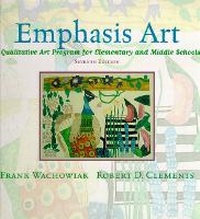
Emphasis Art
A Qualitative Art Program for Elementary and Middle Schools
7th Edition
Published on 1. March 2002
Book
Hardback
432 pages
978-0-321-02351-3 (ISBN)
Description
This beautifully illustrated text reflects the latest trends in art education and demonstrates how to motivate students to learn by integrating art with other content areas. Emphasis Art, 7/e focuses on the intrinsic worth of art-studio experience and the process of implementing art education into classroom practice with a new emphasis on cultural understanding. In addition to a wealth of creative ideas and clear technical direction, this popular text promotes art appreciation and provides teachers with lesson plans that incorporate instructional objectives. It also shows ways to incorporate the widely used "Discipline Based Art Education" method.
More details
Edition
7th edition
Language
English
Place of publication
United States
Publishing group
Pearson Education (US)
Target group
Professional and scholarly
Dimensions
Height: 250 mm
Width: 150 mm
Thickness: 15 mm
Weight
250 gr
ISBN-13
978-0-321-02351-3 (9780321023513)
Copyright in bibliographic data and cover images is held by Nielsen Book Services Limited or by the publishers or by their respective licensors: all rights reserved.
Schweitzer Classification
Other editions
New editions

Frank D. Wachowiak | Robert D. Clements
Emphasis Art
A Qualitative Art Program for Elementary and Middle Schools
Book
07/2005
8th Edition
Pearson
€104.31
Article exhausted; check for reprint
Previous edition

Frank D. Wachowiak | Robert D. Clements
Emphasis Art
A Qualitative Art Program for Elementary and Middle Schools
Book
04/1997
6th Edition
Pearson
€30.99
Article exhausted; check for reprint
Content
I. INTRODUCTION TO ART.
1. The Role of Art in Society and in the Schools.
2. Art and Art: The Design Fundamentals.
II. TEACHERS AND TEACHING.
3. The Role of the Dedicated Teacher.
4. Teaching Strategies.
5. Art Motivation.
III. CURRICULUM FOR AND NATURE OF THE LEARNER.
6. Educational Psychology: Considerations on Children's Learning and Creative Development.
7. A Sequential Curriculum for Kindergarten.
8. A Sequential Curriculum for Grades 1 and 2.
9. A Sequential Curriculum for Grades 3 and 4.
10. A Sequential Curriculum for Grades 5 and 6.
11. A Sequential Curriculum for Grades 7 and 8.
12. Art for Students Experiencing Cognitive or Physical Developmental Disabilities.
13. Giftedness and Art Thinking.
IV. Art's Contents: Integration with Other Subjects.
14. Introduction to Integration and the Cognitive, Affective, and Psychomotor Domains.
15. Science, Math and Art.
16. Social Studies, Multicultural Understanding, and Art Integration.
17. Literacy: Reading, Writing, and Speech Integration with Art.
18. Related Arts Integration.
V. ART APPRECIATION, ART HISTORY, ART CRITICISM, AND AESTHETICS.
19. New Approaches to Art Appreciation.
20. Teaching Art History.
21. Teaching Art Criticism and Aesthetics.
VI. TEACHING ART PRODUCTION.
22. Drawing.
23. Crayon and Oil Pastels.
24. Painting.
25. Paper Projects in Two Dimensions.
26. Printmaking.
27. Visual Technology: Computer Art, Photography, and Video.
28. Three-Dimensional Design: Additive and Subtractive Sculpture.
29. Architecture.
30. Crafts.
31. Clay Modeling.
VII. OBJECTIVES & EVALUATION CRITERIA.
32. Assessment of Art Learning.
1. The Role of Art in Society and in the Schools.
2. Art and Art: The Design Fundamentals.
II. TEACHERS AND TEACHING.
3. The Role of the Dedicated Teacher.
4. Teaching Strategies.
5. Art Motivation.
III. CURRICULUM FOR AND NATURE OF THE LEARNER.
6. Educational Psychology: Considerations on Children's Learning and Creative Development.
7. A Sequential Curriculum for Kindergarten.
8. A Sequential Curriculum for Grades 1 and 2.
9. A Sequential Curriculum for Grades 3 and 4.
10. A Sequential Curriculum for Grades 5 and 6.
11. A Sequential Curriculum for Grades 7 and 8.
12. Art for Students Experiencing Cognitive or Physical Developmental Disabilities.
13. Giftedness and Art Thinking.
IV. Art's Contents: Integration with Other Subjects.
14. Introduction to Integration and the Cognitive, Affective, and Psychomotor Domains.
15. Science, Math and Art.
16. Social Studies, Multicultural Understanding, and Art Integration.
17. Literacy: Reading, Writing, and Speech Integration with Art.
18. Related Arts Integration.
V. ART APPRECIATION, ART HISTORY, ART CRITICISM, AND AESTHETICS.
19. New Approaches to Art Appreciation.
20. Teaching Art History.
21. Teaching Art Criticism and Aesthetics.
VI. TEACHING ART PRODUCTION.
22. Drawing.
23. Crayon and Oil Pastels.
24. Painting.
25. Paper Projects in Two Dimensions.
26. Printmaking.
27. Visual Technology: Computer Art, Photography, and Video.
28. Three-Dimensional Design: Additive and Subtractive Sculpture.
29. Architecture.
30. Crafts.
31. Clay Modeling.
VII. OBJECTIVES & EVALUATION CRITERIA.
32. Assessment of Art Learning.