

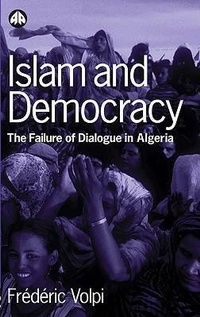
Islam and Democracy
The Failure of Dialogue in Algeria
Published on 20. December 2002
Book
Hardback
184 pages
978-0-7453-1977-3 (ISBN)
Description
During the late twentieth century, many authoritarian Islamic states underwent a dramatic transition to democracy. This book examines the process of democratic reform in Islamic countries, the problems it throws up and the cultural ideas and practices that prevail.
Concentrating in particular on Algeria, and based on extensive on-the-ground research, Volpi offers a unique insight into the political history of the Algerian conflict and raises serious questions about the relationship between Islam and democracy on an international level. Addressing the problem of the radicalisation of political Islam in the region, he suggests possible solutions to the security and foreign policy dilemmas linked to international terrorism.
A bitter battle has been fought between the civil state and the Islamic fundamentalists in Algeria since the 1980s. It's a paradigmatic 'clash of civilisations' for some, whilst for others it's a distorted and local crisis in which 'democratisation' was introduced in a deeply authoritarian context. Looking in particular at the role of oil resources, which give Algeria great international geostrategic and economic importance, Volpi explores Algeria's political transition, a story which continues to have immense potential significance for other non-democratic Muslim countries.
Concentrating in particular on Algeria, and based on extensive on-the-ground research, Volpi offers a unique insight into the political history of the Algerian conflict and raises serious questions about the relationship between Islam and democracy on an international level. Addressing the problem of the radicalisation of political Islam in the region, he suggests possible solutions to the security and foreign policy dilemmas linked to international terrorism.
A bitter battle has been fought between the civil state and the Islamic fundamentalists in Algeria since the 1980s. It's a paradigmatic 'clash of civilisations' for some, whilst for others it's a distorted and local crisis in which 'democratisation' was introduced in a deeply authoritarian context. Looking in particular at the role of oil resources, which give Algeria great international geostrategic and economic importance, Volpi explores Algeria's political transition, a story which continues to have immense potential significance for other non-democratic Muslim countries.
Reviews / Votes
'There could hardly be a more inflammatory political topic at present ... Volpi [has produced] a really valuable work on the subject' -- Professor John Dunn, Cambridge University 'Masterfully situates the obstacles to democratisation in the local negative understandings of elite responsibilities and citizen rights' -- James Piscatori, Oxford Centre for Islamic StudiesMore details
Language
English
Place of publication
London
United Kingdom
Target group
Professional and scholarly
Product notice
Library binding
Dimensions
Height: 225 mm
Width: 131 mm
Thickness: 16 mm
Weight
354 gr
ISBN-13
978-0-7453-1977-3 (9780745319773)
Copyright in bibliographic data and cover images is held by Nielsen Book Services Limited or by the publishers or by their respective licensors: all rights reserved.
Schweitzer Classification
Other editions
Additional editions
E-Book
12/2002
1st Edition
Pluto Press
€122.99
Available for download
Person
Frederic Volpi is Senior Lecturer in the School of International Relations at the University of St Andrews. He is the author of Islam and Democracy: The Failure of Dialogue in Algeria (Pluto, 2002).
Content
I. Understanding political democratisation at the beginning of the 21st century
1. Algeria and the 'third wave' of democratic transitions
2. Islam and the 'West': a clash of ideologies in Algeria
3. New political actors for a new international order
II. Political ideas and practices in historical perspective
1. Genealogies of state power: colonial experiences post colonial dilemmas
2. Historical perspectives on Islamic fundamentalist ideology: a pragmatic account
III. The Algerian political opening: democratic symbols and authoritarian practices (1988-1991)
1. The 1988 October riots: the symbol of a new era
2. The Algerian democratic opening: successes and failures
IV. The 1992 coup d'etat and beyond: war as politics through other means (1992-1994)
1. The 1992 coup d'etat
2. The military in control: the repressive option
3. The Islamic movement: from political opposition to 'holy' war
V. A new authoritarianism: guided democracy versus radical Islam (1995-2000)
1. The re-composition of the political field
2. Electoral marketing: formal representation and informal authoritarianism
3. On the margins of politics: The military and the Islamic guerrillas
VI. A civil society in transition: survivalist strategies and social protest
1. Coping with violence and deprivation: survivalist strategies
2. The articulation of social protest: defying the regime
VII. The international arena: strengths and weaknesses of the New World Order
1. The political economy of the conflict: the role of international actors
2. Algeria as the future of democratisation in the Muslim world
3. Exporting the Jihad: the internationalisation of radical Islamic actors
VIII. Conclusion: learning and unlearning to be democratic
References
Index
1. Algeria and the 'third wave' of democratic transitions
2. Islam and the 'West': a clash of ideologies in Algeria
3. New political actors for a new international order
II. Political ideas and practices in historical perspective
1. Genealogies of state power: colonial experiences post colonial dilemmas
2. Historical perspectives on Islamic fundamentalist ideology: a pragmatic account
III. The Algerian political opening: democratic symbols and authoritarian practices (1988-1991)
1. The 1988 October riots: the symbol of a new era
2. The Algerian democratic opening: successes and failures
IV. The 1992 coup d'etat and beyond: war as politics through other means (1992-1994)
1. The 1992 coup d'etat
2. The military in control: the repressive option
3. The Islamic movement: from political opposition to 'holy' war
V. A new authoritarianism: guided democracy versus radical Islam (1995-2000)
1. The re-composition of the political field
2. Electoral marketing: formal representation and informal authoritarianism
3. On the margins of politics: The military and the Islamic guerrillas
VI. A civil society in transition: survivalist strategies and social protest
1. Coping with violence and deprivation: survivalist strategies
2. The articulation of social protest: defying the regime
VII. The international arena: strengths and weaknesses of the New World Order
1. The political economy of the conflict: the role of international actors
2. Algeria as the future of democratisation in the Muslim world
3. Exporting the Jihad: the internationalisation of radical Islamic actors
VIII. Conclusion: learning and unlearning to be democratic
References
Index