

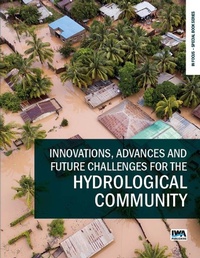
Innovations, Advances and Future Challenges for the Hydrological Community
Published on 15. September 2024
Book
Paperback/Softback
184 pages
978-1-78906-489-6 (ISBN)
Description
In the last decades, the hydrology and water management sectors have been dealing with global changes, proposing several innovative solutions. Climate changes are leading to an increase in long hot and dry periods, alternating with short and intense rainfall events. Urban areas are particularly vulnerable to these changes: rapid population growth and intense anthropic activity enhance the risk of extreme hydrological events. Several solutions have been proposed in the last years to monitor, prevent, forecast and mitigate rainfall extremes and their effects in natural and urban environments. Some questions, however, remain unsolved and new issues are challenging the hydrological community.
The inter- and multi-disciplinary aims and topics discussed in the chapters of this book are organised into the following three main topics: (1) climate change and geo-hydrological risk, (2) tools and techniques for improving the comprehension of catchment hydrology and river hydraulics, and (3) sustainable use of water resources.
In Focus - a book series that showcases the latest accomplishments in water research. Each book focuses on a specialist area with papers from top experts in the field. It aims to be a vehicle for in-depth understanding and inspire further conversations in the sector.
The inter- and multi-disciplinary aims and topics discussed in the chapters of this book are organised into the following three main topics: (1) climate change and geo-hydrological risk, (2) tools and techniques for improving the comprehension of catchment hydrology and river hydraulics, and (3) sustainable use of water resources.
In Focus - a book series that showcases the latest accomplishments in water research. Each book focuses on a specialist area with papers from top experts in the field. It aims to be a vehicle for in-depth understanding and inspire further conversations in the sector.
More details
Series
Language
English
Place of publication
London
United Kingdom
Target group
College/higher education
Professional and scholarly
Dimensions
Height: 275 mm
Width: 213 mm
Thickness: 15 mm
Weight
468 gr
ISBN-13
978-1-78906-489-6 (9781789064896)
Copyright in bibliographic data and cover images is held by Nielsen Book Services Limited or by the publishers or by their respective licensors: all rights reserved.
Schweitzer Classification
Content
Editorial: Innovations, advances, and future challenges for the hydrological community
Elena Cristiano, Marco Peli, Martina Siena, Giulia Zuecco
Significance of hydraulic complexity parameters M1 and M2 based on the laboratory and field data
Farhad Bahmanpouri, Donatella Termini, Silvia Barbetta, Marco Dionigi, Tommaso Moramarco
CERCA (Cascading Effects in Risk Consequences Assessment): An operational tool for geo-hydrological scenario risk assessment and cascading effects evaluation
Daniela Biondi, Graziella Emanuela Scarcella, Pasquale Versace
Post-processing climate projections of precipitation for the Po river basin: will Italy's North become water-constrained?
Oleksiy Boyko, Paolo Reggiani, Ezio Todini
Multilayer blue-green roofs as nature-based solutions for water and thermal insulation management
Elena Cristiano, Antonio Annis, Ciro Apollonio, Dario Pumo, Salvatore Urru, Francesco Viola, Roberto Deidda, Raffaele Pelorosso, Andrea Petroselli, Flavia Tauro, Salvatore Grimaldi, Antonio Francipane, Francesco Alongi, Leonardo Valerio Noto, Olivier Hoes, Friso Klapwijk, Brian Schmitt, Fernando Nardi
The limits of watershed delineation: implications of different DEMs, DEM resolutions, and area threshold values
Srijon Datta, Shyamal Karmakar, Symon Mezbahuddin, Mohammad Mozaffar Hossain, B. S. Chaudhary, Md. Enamul Hoque, M. M. Abdullah Al Mamun, Tarit Kumar Baul
Identification of suitable sites for traditional pokhari water harvesting in mountain rural communities of the Himalaya
Eleonora Forzini, Luigi Piemontese, Elena Bresci, Blandine Barthod, Florian Bielser, Marc Sylvestre, Nirmal Adhikari, Sony Pun, Giulio Castelli
Baseflow index characterization in typical temperate to dry climates: conceptual analysis and simulation experiment to assess the relative role of climate forcing features and catchment geological settings
Antonia Longobardi, Paolo Villani
Land use and damaging hydrological events temporal changes in the Sarno River basin: potential for green technologies mitigation by remote sensing analysis
Mirka Mobilia, Antonia Longobardi, Donato Amitrano, Giuseppe Ruello
Application of Benfratello's method to estimate the spatio-temporal variability of the irrigation deficit in a Mediterranean semiarid climate
Marco Peli, Cesare Rapuzzi, Stefano Barontini, Roberto Ranzi
Modelling annual maximum daily rainfall with the STORAGE (STOchastic RAinfall GEnerator) model
Andrea Petroselli, Davide Luciano De Luca, Dariusz Mlynski, Andrzej Walega
Elena Cristiano, Marco Peli, Martina Siena, Giulia Zuecco
Significance of hydraulic complexity parameters M1 and M2 based on the laboratory and field data
Farhad Bahmanpouri, Donatella Termini, Silvia Barbetta, Marco Dionigi, Tommaso Moramarco
CERCA (Cascading Effects in Risk Consequences Assessment): An operational tool for geo-hydrological scenario risk assessment and cascading effects evaluation
Daniela Biondi, Graziella Emanuela Scarcella, Pasquale Versace
Post-processing climate projections of precipitation for the Po river basin: will Italy's North become water-constrained?
Oleksiy Boyko, Paolo Reggiani, Ezio Todini
Multilayer blue-green roofs as nature-based solutions for water and thermal insulation management
Elena Cristiano, Antonio Annis, Ciro Apollonio, Dario Pumo, Salvatore Urru, Francesco Viola, Roberto Deidda, Raffaele Pelorosso, Andrea Petroselli, Flavia Tauro, Salvatore Grimaldi, Antonio Francipane, Francesco Alongi, Leonardo Valerio Noto, Olivier Hoes, Friso Klapwijk, Brian Schmitt, Fernando Nardi
The limits of watershed delineation: implications of different DEMs, DEM resolutions, and area threshold values
Srijon Datta, Shyamal Karmakar, Symon Mezbahuddin, Mohammad Mozaffar Hossain, B. S. Chaudhary, Md. Enamul Hoque, M. M. Abdullah Al Mamun, Tarit Kumar Baul
Identification of suitable sites for traditional pokhari water harvesting in mountain rural communities of the Himalaya
Eleonora Forzini, Luigi Piemontese, Elena Bresci, Blandine Barthod, Florian Bielser, Marc Sylvestre, Nirmal Adhikari, Sony Pun, Giulio Castelli
Baseflow index characterization in typical temperate to dry climates: conceptual analysis and simulation experiment to assess the relative role of climate forcing features and catchment geological settings
Antonia Longobardi, Paolo Villani
Land use and damaging hydrological events temporal changes in the Sarno River basin: potential for green technologies mitigation by remote sensing analysis
Mirka Mobilia, Antonia Longobardi, Donato Amitrano, Giuseppe Ruello
Application of Benfratello's method to estimate the spatio-temporal variability of the irrigation deficit in a Mediterranean semiarid climate
Marco Peli, Cesare Rapuzzi, Stefano Barontini, Roberto Ranzi
Modelling annual maximum daily rainfall with the STORAGE (STOchastic RAinfall GEnerator) model
Andrea Petroselli, Davide Luciano De Luca, Dariusz Mlynski, Andrzej Walega