

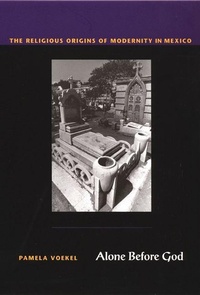
Alone Before God
The Religious Origins of Modernity in Mexico
Published on 30. August 2002
Book
Paperback/Softback
344 pages
978-0-8223-2943-5 (ISBN)
Description
Focusing on cemetery burials in late-eighteenth-century Mexico, Alone Before God provides a window onto the contested origins of modernity in Mexico. By investigating the religious and political debates surrounding the initiative to transfer the burials of prominent citizens from urban to suburban cemeteries, Pamela Voekel challenges the characterization of Catholicism in Mexico as an intractable and monolithic institution that had to be forcibly dragged into the modern world.
Drawing on the archival research of wills, public documents, and other texts from late-colonial and early-republican Mexico, Voekel describes the marked scaling-down of the pomp and display that had characterized baroque Catholic burials and the various devices through which citizens sought to safeguard their souls in the afterlife. In lieu of these baroque practices, the new enlightened Catholics, claims Voekel, expressed a spiritually and hygienically motivated preference for extremely simple burial ceremonies, for burial outside the confines of the church building, and for leaving their earthly goods to charity. Claiming that these changes mirrored a larger shift from an external, corporate Catholicism to a more interior piety, she demonstrates how this new form of Catholicism helped to initiate a cultural and epistemic shift that placed the individual at the center of knowledge.
Breaking with the traditional historiography to argue that Mexican liberalism had deeply religious roots, Alone Before God will be of interest to specialists in Latin American history, modernity, and religion.
Drawing on the archival research of wills, public documents, and other texts from late-colonial and early-republican Mexico, Voekel describes the marked scaling-down of the pomp and display that had characterized baroque Catholic burials and the various devices through which citizens sought to safeguard their souls in the afterlife. In lieu of these baroque practices, the new enlightened Catholics, claims Voekel, expressed a spiritually and hygienically motivated preference for extremely simple burial ceremonies, for burial outside the confines of the church building, and for leaving their earthly goods to charity. Claiming that these changes mirrored a larger shift from an external, corporate Catholicism to a more interior piety, she demonstrates how this new form of Catholicism helped to initiate a cultural and epistemic shift that placed the individual at the center of knowledge.
Breaking with the traditional historiography to argue that Mexican liberalism had deeply religious roots, Alone Before God will be of interest to specialists in Latin American history, modernity, and religion.
Reviews / Votes
"This arresting study couples substance and style to transform what could have been a dry treatise on internecine clerical debates about dogma and inner spirituality into an intriguing and lively examination of the character of Mexican modernity sure to complicate our understandings of nineteenth-century liberal thought."-Allen Wells, Bowdoin College"Voekel's engaging history of the debates surrounding burials and cemetaries in late colonial Mexico provides a fresh perspective on the origins of nationalist sentiments in Latin America. Her creative reading of wills and other archival materals will inspire historians and anthropologists to think in new ways about the role of religion in early liberal thought."-Deborah Poole, New School University
More details
Language
English
Place of publication
North Carolina
United States
Target group
Professional and scholarly
Product notice
Paperback (trade)
Dimensions
Height: 228 mm
Width: 162 mm
Thickness: 24 mm
Weight
581 gr
ISBN-13
978-0-8223-2943-5 (9780822329435)
Copyright in bibliographic data and cover images is held by Nielsen Book Services Limited or by the publishers or by their respective licensors: all rights reserved.
Schweitzer Classification
Other editions
Additional editions
E-Book
08/2002
1st Edition
De Gruyter
€208.99
Available for download
Person
Pamela Voekel is Assistant Professor of History at the University of Montana in Missoula.
Content
Acknowledgments
Introduction
1. The Baroque Backdrop
2. The Reformation in Mexico City
3. Freeing the Virtuous Individual
4. The Battle for Church Burials
5. Piety, Power, and Politics
6. The Ideology Articulated
7. The Rise of Medical Empiricism
8. The Heir Apparent
Conclusion
Postscript
Appendix
Archives
Notes
Primary Sources
Secondary Sources
Introduction
1. The Baroque Backdrop
2. The Reformation in Mexico City
3. Freeing the Virtuous Individual
4. The Battle for Church Burials
5. Piety, Power, and Politics
6. The Ideology Articulated
7. The Rise of Medical Empiricism
8. The Heir Apparent
Conclusion
Postscript
Appendix
Archives
Notes
Primary Sources
Secondary Sources