

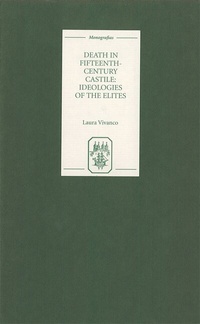
Death in Fifteenth-Century Castile: Ideologies of the Elites
Published on 1. June 2004
Book
Hardback
220 pages
978-1-85566-100-4 (ISBN)
Description
Differences in attitudes to death and dying in two distinct social classes, the ecclesiastics and the nobility.
The theory of the three estates made clear distinctions between the functions of the two estates which comprised the elite of medieval society: the oradores (ecclesiastics) and the defensores (warriors or nobility).They had different lifestyles, clothing and ways of thinking about life. With regard to death, the responses dictated by Christian theology conflicted with the demands of the defensor ideology, based on the defence of individual honour, the pursuit of fama and the display of earthly power. This book charts the progress of the dying from their preparations for death, through their 'good' or 'bad' deaths, to their burials and otherworldly fates and also analyses the responses of the bereaved. Through the use of pre-fifteenth-century texts it is possible to demonstrate that the conflict between the orador and defensor ideologies did not begin in the fifteenth century, but rather had a much older origin, and it is suggested that the conflict continued after 1500. Textual sources include the Siete partidas, wills, chronicles, religious works such as the Arte de bien morir and literary works such as Carcel de Amor and Celestina.
The theory of the three estates made clear distinctions between the functions of the two estates which comprised the elite of medieval society: the oradores (ecclesiastics) and the defensores (warriors or nobility).They had different lifestyles, clothing and ways of thinking about life. With regard to death, the responses dictated by Christian theology conflicted with the demands of the defensor ideology, based on the defence of individual honour, the pursuit of fama and the display of earthly power. This book charts the progress of the dying from their preparations for death, through their 'good' or 'bad' deaths, to their burials and otherworldly fates and also analyses the responses of the bereaved. Through the use of pre-fifteenth-century texts it is possible to demonstrate that the conflict between the orador and defensor ideologies did not begin in the fifteenth century, but rather had a much older origin, and it is suggested that the conflict continued after 1500. Textual sources include the Siete partidas, wills, chronicles, religious works such as the Arte de bien morir and literary works such as Carcel de Amor and Celestina.
Reviews / Votes
A valuable contribution to the study of the culture of European elites. * MEDICAL HISTORY * A very thorough and engaging book. It clarifies these differing - and frequently conflicting - stances in relation to death, present in the Castile of the fifteenth century but which also influenced the region for many years thereafter. * BRITISH BULLETIN OF PUBLICATIONS * [This] is an excellent book on the topic. * AMERICAN ACADEMY OF RESEARCH HISTORIANS OF MEDIEVAL SPAIN * A remarkable study of the social importance of death in fifteenth-century Castile.both a continuation of previous scholarship and a fresh look at the subject. A worthy contribution to the field. * HISPANIC JOURNAL * Readers will surely find this an invaluable source for both primary and secondary material. * BULLETIN OF HISPANIC STUDIES * Este trabajo destaca por la investigacion minuciosa y llena de rigor llevada a cabo y por la intuicion de la autora a la hora de definir las causas y las consecuencias de los comportamientos en la elite cuatrocentista. Recomendamos, pues, desde aqui este estudio necesario sobre las actitudes que a las llamadas ahora clases 'altas' se les proponia adoptar ante el fenomeno, siempre antropologicamente dificil, de la muerte. * REVISTA DE LITERATURA *More details
Series
Language
English
Place of publication
Woodbridge
United Kingdom
Publishing group
Boydell & Brewer Ltd
Target group
Professional and scholarly
Product notice
Cloth over boards
Illustrations
1 line illus.
Dimensions
Height: 234 mm
Width: 156 mm
ISBN-13
978-1-85566-100-4 (9781855661004)
Copyright in bibliographic data and cover images is held by Nielsen Book Services Limited or by the publishers or by their respective licensors: all rights reserved.
Schweitzer Classification
Other editions
Additional editions
E-Book
06/2004
1st Edition
De Gruyter
€48.99
Available for download