

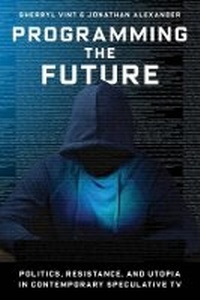
Programming the Future
Politics, Resistance, and Utopia in Contemporary Speculative TV
Published on 1. November 2022
Book
Paperback/Softback
256 pages
978-0-231-19831-8 (ISBN)
Description
From 9/11 to COVID-19, the twenty-first century looks increasingly dystopian-and so do its television shows. Long-form science fiction narratives take one step further the fears of today: liberal democracy in crisis, growing economic precarity, the threat of terrorism, and omnipresent corporate control. At the same time, many of these shows attempt to visualize alternatives, using dystopian extrapolations to spotlight the possibility of building a better world.
Programming the Future examines how recent speculative television takes on the contradictions of the neoliberal order. Sherryl Vint and Jonathan Alexander consider a range of popular SF narratives of the last two decades, including Battlestar Galactica, Watchmen, Colony, The Man in the High Castle, The Expanse, and Mr. Robot. They argue that science fiction television foregrounds governance as part of explaining the novel institutions and norms of its imagined futures. In so doing, SF shows allegorize and critique contemporary social, political, and economic developments, helping audiences resist the naturalization of the status quo. Vint and Alexander also draw on queer theory to explore the representation of family structures and their relationship to larger social structures. Recasting both dystopian and utopian narratives, Programming the Future shows how depictions of alternative-world political struggles speak to urgent real-world issues of identity, belonging, and social and political change.
Programming the Future examines how recent speculative television takes on the contradictions of the neoliberal order. Sherryl Vint and Jonathan Alexander consider a range of popular SF narratives of the last two decades, including Battlestar Galactica, Watchmen, Colony, The Man in the High Castle, The Expanse, and Mr. Robot. They argue that science fiction television foregrounds governance as part of explaining the novel institutions and norms of its imagined futures. In so doing, SF shows allegorize and critique contemporary social, political, and economic developments, helping audiences resist the naturalization of the status quo. Vint and Alexander also draw on queer theory to explore the representation of family structures and their relationship to larger social structures. Recasting both dystopian and utopian narratives, Programming the Future shows how depictions of alternative-world political struggles speak to urgent real-world issues of identity, belonging, and social and political change.
Reviews / Votes
From the post-9/11 Battlestar Galactica to Mr. Robot, from questions of neoliberalization and political polarization to surveillance society and the war on terror, Vint and Alexander's Programming the Future is an exemplary study of twenty-first-century science fiction television as seen through the crisis of U.S. democracy. -- Gerry Canavan, Marquette University By way of a vigorous engagement with the problematics and the politics of form, Vint and Alexander mobilize the generic operations of the utopian and dystopian imaginaries in order to decisively explicate the ways in which a selection of recent science fictional television series challenge the operations of the neoliberal order even as they refuse nihilistic resignation by way of figuring radical utopian alternatives. In doing so, they provide readers and viewers with a deep interpretive interrogation of our contemporary social order that generates a standpoint and politics of hope emerging from our dark times. -- Tom Moylan, author of <i>Becoming Utopian: The Politics and Culture of Radical Transformation</i>More details
Language
English
Place of publication
New York
United States
Target group
Professional and scholarly
Product notice
Paperback (trade)
Dimensions
Height: 229 mm
Width: 152 mm
ISBN-13
978-0-231-19831-8 (9780231198318)
Copyright in bibliographic data and cover images is held by Nielsen Book Services Limited or by the publishers or by their respective licensors: all rights reserved.
Schweitzer Classification
Other editions
Additional editions

Sherryl Vint | Jonathan Alexander
Programming the Future
Politics, Resistance, and Utopia in Contemporary Speculative TV
E-Book
11/2022
1st Edition
Columbia University Press
€29.49
Available for download
Persons
Sherryl Vint is professor of media and cultural studies and of English at the University of California, Riverside. Her books include Science Fiction: A Guide for the Perplexed (2014) and Biopolitical Futures in Twenty-First-Century Speculative Fiction (2021). She is an editor of Science Fiction Studies and the recipient of the Science Fiction Research Association's Lifetime Achievement Award.
Jonathan Alexander is Chancellor's Professor of English and Informatics at the University of California, Irvine. His many books include Writing Youth: Young Adult Fiction as Literacy Sponsorship (2017) and the Creep Trilogy of critical memoirs, and he is the YA editor for and a frequent contributor to the Los Angeles Review of Books.
Jonathan Alexander is Chancellor's Professor of English and Informatics at the University of California, Irvine. His many books include Writing Youth: Young Adult Fiction as Literacy Sponsorship (2017) and the Creep Trilogy of critical memoirs, and he is the YA editor for and a frequent contributor to the Los Angeles Review of Books.
Content
Introduction
1. The Changing Shape of Science Fiction Television
2. Inventing Science Fiction Television as Political Narrative
3. 9/11 and Its Aftermaths: Threats of Invasion
4. American Civil Wars
5. Desiring a Different Future: The 100 and The Expanse
6. Rebooting Democracy and Mr. Robot
Conclusion: Democracy in Crisis
Notes
Bibliography
Filmography
Index
1. The Changing Shape of Science Fiction Television
2. Inventing Science Fiction Television as Political Narrative
3. 9/11 and Its Aftermaths: Threats of Invasion
4. American Civil Wars
5. Desiring a Different Future: The 100 and The Expanse
6. Rebooting Democracy and Mr. Robot
Conclusion: Democracy in Crisis
Notes
Bibliography
Filmography
Index