

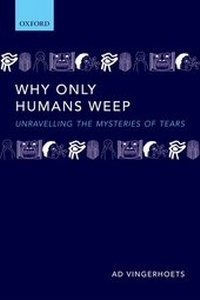
Why Only Humans Weep
Unravelling the Mysteries of Tears
Published on 28. February 2013
Book
Hardback
304 pages
978-0-19-857024-0 (ISBN)
Description
Crying has fascinated mankind for millenia. Since ancient times, we have known that emotional tears are a unique human characteristic. Unsurprisingly, over hundreds of years, scholars from different backgrounds have speculated about the origin and functions of human tears. According to Charles Darwin, tears fulfilled no adaptive function. And yet, this seems in sharp contrast to statements in the popular media about the significance of crying. Crying is thought to bring relief and is considered healthy - and withholding tears unhealthy. In addition, tears have been said to inhibit aggression in assaulters and to promote social bonding. Perhaps that could explain why tears have been so important in our evolution.
Ad Vingerhoets is one of the few scientists in the world to have studied crying. He examines in Why only humans weep which claims about crying are scientifically tenable - which are fact and which are fiction? Though a psychologist, he doesn't just restrict himself to the current psychological literature, but also explores work in evolutionary biology, neurosciences, theology, art, history, and anthropology to provide an integrated perspective on this complex phenomenon. Written throughout in an academically accessible style, this book is groundbreaking in contributing to a modern scientific understanding of crying. It will have broad appeal to psychologists, psychiatrists, philosophers, biologists, and anthropologists.
Ad Vingerhoets is one of the few scientists in the world to have studied crying. He examines in Why only humans weep which claims about crying are scientifically tenable - which are fact and which are fiction? Though a psychologist, he doesn't just restrict himself to the current psychological literature, but also explores work in evolutionary biology, neurosciences, theology, art, history, and anthropology to provide an integrated perspective on this complex phenomenon. Written throughout in an academically accessible style, this book is groundbreaking in contributing to a modern scientific understanding of crying. It will have broad appeal to psychologists, psychiatrists, philosophers, biologists, and anthropologists.
Reviews / Votes
Vingerhoets presents a detailed and accessible model of crying, which illuminates its biological and social function. Through this model, Vingerhoets is successfully able to address the broad issues that underpin the human experience of crying, illustrating how psychobiological, cognitive, emotional, and social processes interact to inform this phenomenon. * International Journal of Psychiatry *More details
Language
English
Place of publication
Oxford
United Kingdom
Target group
College/higher education
Psychologists, psychiatrists, philosophers, biologists, and anthropologists
Dimensions
Height: 247 mm
Width: 187 mm
Thickness: 21 mm
Weight
772 gr
ISBN-13
978-0-19-857024-0 (9780198570240)
Copyright in bibliographic data and cover images is held by Nielsen Book Services Limited or by the publishers or by their respective licensors: all rights reserved.
Schweitzer Classification
Other editions
Additional editions
E-Book
02/2013
1st Edition
OUP eBook
€56.99
Available for download
Person
Dr. Ad Vingerhoets is Professor of Clinical Psychology at Tilburg University, Tilburg, The Netherlands. He published over 300 articles on stress, emotions, and quality of life in scientific journals and co-authored/edited 18 books. His work on phenomena as crying, homesickness, sentiments, and 'leisure sickness' aroused much interest in the (inter)national popular media.
Content
1. Why Only Humans Weep: Introduction to the theme ; 2. The Human Nature of Crying ; 3. Crying and Adaptation: The hardware ; 4. Crying over the Lifespan ; 5. The Antecedents and Context of Crying ; 6. The Intra-individual Effects of Crying ; 7. The Social Effects of Tears ; 8. Culture and Crying ; 9. Why Some People Cry More Often than Others ; 10. Male and Female Tears ; 11. Crying and Health ; 12. Too many tears... ; 13. A Cultural Historical Perspective of Tears ; 14. Epilogue