

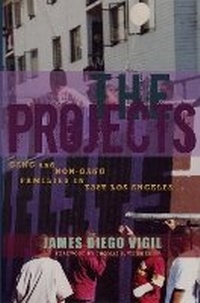
The Projects
Gang and Non-Gang Families in East Los Angeles
Published on 1. November 2007
Book
Paperback/Softback
256 pages
978-0-292-71731-2 (ISBN)
Description
2008 - ALLA Prize for Best Book on Latina/o Anthropology
The Pico Gardens housing development in East Los Angeles has a high percentage of resident families with a history of persistent poverty, gang involvement, and crime. In some families, members of three generations have belonged to gangs. Many other Pico Gardens families, however, have managed to avoid the cycle of gang involvement.
In this work, Vigil adds to the tradition of poverty research and elaborates on the association of family dynamics and gang membership. The main objective of his research was to discover what factors make some families more vulnerable to gang membership, and why gang resistance was evidenced in similarly situated non-gang-involved families. Providing rich, in-depth interviews and observations, Vigil examines the wide variations in income and social capital that exist among the ostensibly poor, mostly Mexican American residents. Vigil documents how families connect and interact with social agencies in greater East Los Angeles to help chart the routines and rhythms of the lives of public housing residents. He presents family life histories to augment and provide texture to the quantitative information.
By studying life in Pico Gardens, Vigil feels we can better understand how human agency interacts with structural factors to produce the reality that families living in all public housing developments must contend with daily.
The Pico Gardens housing development in East Los Angeles has a high percentage of resident families with a history of persistent poverty, gang involvement, and crime. In some families, members of three generations have belonged to gangs. Many other Pico Gardens families, however, have managed to avoid the cycle of gang involvement.
In this work, Vigil adds to the tradition of poverty research and elaborates on the association of family dynamics and gang membership. The main objective of his research was to discover what factors make some families more vulnerable to gang membership, and why gang resistance was evidenced in similarly situated non-gang-involved families. Providing rich, in-depth interviews and observations, Vigil examines the wide variations in income and social capital that exist among the ostensibly poor, mostly Mexican American residents. Vigil documents how families connect and interact with social agencies in greater East Los Angeles to help chart the routines and rhythms of the lives of public housing residents. He presents family life histories to augment and provide texture to the quantitative information.
By studying life in Pico Gardens, Vigil feels we can better understand how human agency interacts with structural factors to produce the reality that families living in all public housing developments must contend with daily.
More details
Language
English
Place of publication
Austin, TX
United States
Target group
Professional and scholarly
Product notice
Paperback (trade)
Dimensions
Height: 229 mm
Width: 152 mm
Thickness: 20 mm
Weight
367 gr
ISBN-13
978-0-292-71731-2 (9780292717312)
Copyright in bibliographic data and cover images is held by Nielsen Book Services Limited or by the publishers or by their respective licensors: all rights reserved.
Schweitzer Classification
Other editions
Previous edition

Book
11/2007
University of Texas Press
€75.80
Article exhausted; check for reprint
Person
James Diego Vigil is Professor of Social Ecology at the University of California, Irvine. He is also the author of A Rainbow of Gangs: Street Cultures in the Mega-City and Barrio Gangs: Street Life and Identity in Southern California.
Content
Foreword by Tom Weisner
Preface
Chapter One. Introduction
Chapter Two. Rationale and Methods
Chapter Three. A History of the Cuatro Flats Barrio Gang
Chapter Four. The Gang Subculture: Change and Continuity
Chapter Five. The Pico Gardens Clique
Chapter Six. A Gang Life
Chapter Seven. Cholas in the World of Gangs
Chapter Eight. Why Children Either Avoid or Affiliate with Gangs
Chapter Nine. Families Not Involved with Gangs
Chapter Ten. A Closer Look at Gang-Affiliated Families
Chapter Eleven. Gang Prevention and Intervention Strategies over Time
Chapter Twelve. Conclusion and Recommendations
References
Index
Preface
Chapter One. Introduction
Chapter Two. Rationale and Methods
Chapter Three. A History of the Cuatro Flats Barrio Gang
Chapter Four. The Gang Subculture: Change and Continuity
Chapter Five. The Pico Gardens Clique
Chapter Six. A Gang Life
Chapter Seven. Cholas in the World of Gangs
Chapter Eight. Why Children Either Avoid or Affiliate with Gangs
Chapter Nine. Families Not Involved with Gangs
Chapter Ten. A Closer Look at Gang-Affiliated Families
Chapter Eleven. Gang Prevention and Intervention Strategies over Time
Chapter Twelve. Conclusion and Recommendations
References
Index