

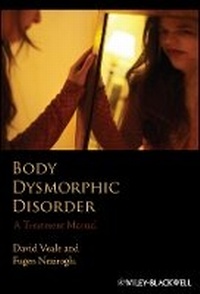
Body Dysmorphic Disorder
A Treatment Manual
Published on 19. March 2010
Book
Hardback
496 pages
978-0-470-85120-3 (ISBN)
Description
This book is a unique treatment manual which looks at the assessment of BDD, offering an treatment model in the form of CBT and pharmacotherapy
Summarises the current knowledge and theoretical perspectives about BDD
Covers the practical aspects of assessment, engagement, and therapy
Uses a number of practical resources, including client handouts
Summarises the current knowledge and theoretical perspectives about BDD
Covers the practical aspects of assessment, engagement, and therapy
Uses a number of practical resources, including client handouts
Reviews / Votes
"Overall my impression of this book is that it is a very useful resource to add to my clinician's catalogue of materials to use when treating patients with BDD." (British Association for Behavioural & Cognitive Psychotherapies, 1 October 2012)More details
Language
English
Place of publication
New York
United States
Target group
Professional and scholarly
Dimensions
Height: 236 mm
Width: 158 mm
Thickness: 31 mm
Weight
807 gr
ISBN-13
978-0-470-85120-3 (9780470851203)
Copyright in bibliographic data and cover images is held by Nielsen Book Services Limited or by the publishers or by their respective licensors: all rights reserved.
Schweitzer Classification
Other editions
Additional editions
Book
03/2010
1st Edition
Wiley
€87.00
Shipment within 10-20 days
E-Book
01/2010
1st Edition
Wiley
€53.99
Available for download
Persons
David Veale is a Consultant Psychiatrist in Cognitive Behaviour Therapy at the South London and Maudsley NHS Trust and The Priory Hospital North London, and an Honorary Senior Lecturer at the Institute of Psychiatry, King's College London. His main research and clinical interests are in Body Dysmorphic Disorder (BDD) and Obsessive Compulsive Disorder (OCD). He is the author of four books and over 70 peer-reviewed articles. Fugen Neziroglu is a board certified behavioural/ cognitive and clinical psychologist involved in the research and treatment of anxiety disorders and obsessive compulsive spectrum disorders. She is Clinical Director of the Bio-Behavioral Institute in Great Neck, NY, USA; Adjunct Professor of Psychology at Hofstra University in Long Island, NY; and Adjunct Professor of Psychiatry at New York University. She has published over 14 books, which have been translated into various languages, and written over 150 peer reviewed articles on obsessive compulsive spectrum disorders. She is on the scientific advisory board of the International Obsessive Compulsive Disorder Foundation.
Content
About the authors.
Preface.
Acknowledgements.
Part A Knowledge and Theory of Body Dysmorphic Disorder.
1. The diagnosis of body dysmorphic disorder.
2. History of body dysmorphic disorder.
3. Epidemiology and presentation of BDD.
4. Descriptive psychopathology of BDD.
5. Psychogenic excoriation.
6. Psychological aspects of cosmetic procedures.
7. Risk factors in the development of BDD.
8. Neurobiological aspects of BDD.
9. Learning theory models of BDD.
10. A cognitive behavioral model of BDD.
11. Evidence for cognitive behavior therapy in BDD.
12. Evidence for pharmacotherapy in BDD.
Part B Assessment and Therapy.
13. Assessment.
14. Engagement and formulation.
15. Advice on cosmetic procedures.16. Imagery rescripting.
17. Modifying attentional biases.
18. Modifying cognitive processes in BDD.
19. Avoidance, compulsive, and safety-seeking behaviors.
20. Modifying appraisals.
21. Habit reversal for psychogenic excoriation.
22. Behavioral activation for depression in BDD.
23. Pharmacotherapy.
Appendix 1 Diagnostic interviews and assessment scales.
Appendix 2 Leafl ets and forms used during therapy.
Appendix 3 Resources for BDD.
References.
Index.
Preface.
Acknowledgements.
Part A Knowledge and Theory of Body Dysmorphic Disorder.
1. The diagnosis of body dysmorphic disorder.
2. History of body dysmorphic disorder.
3. Epidemiology and presentation of BDD.
4. Descriptive psychopathology of BDD.
5. Psychogenic excoriation.
6. Psychological aspects of cosmetic procedures.
7. Risk factors in the development of BDD.
8. Neurobiological aspects of BDD.
9. Learning theory models of BDD.
10. A cognitive behavioral model of BDD.
11. Evidence for cognitive behavior therapy in BDD.
12. Evidence for pharmacotherapy in BDD.
Part B Assessment and Therapy.
13. Assessment.
14. Engagement and formulation.
15. Advice on cosmetic procedures.16. Imagery rescripting.
17. Modifying attentional biases.
18. Modifying cognitive processes in BDD.
19. Avoidance, compulsive, and safety-seeking behaviors.
20. Modifying appraisals.
21. Habit reversal for psychogenic excoriation.
22. Behavioral activation for depression in BDD.
23. Pharmacotherapy.
Appendix 1 Diagnostic interviews and assessment scales.
Appendix 2 Leafl ets and forms used during therapy.
Appendix 3 Resources for BDD.
References.
Index.