

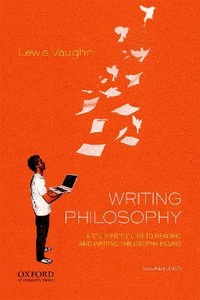
Writing Philosophy
A Student's Guide to Writing Philosophy Essays
2nd Edition
Published on 22. January 2018
Book
Paperback/Softback
192 pages
978-0-19-085301-3 (ISBN)
Description
Writing Philosophy: A Student's Guide to Reading and Writing Philosophy Essays, Second Edition, is a concise, self-guided manual that covers how to read philosophy and the basics of argumentative essay writing. It encourages students to master fundamental skills quickly--with minimal instructor input--and provides step-by-step instructions for each phase of the writing process, from formulating a thesis, to creating an outline, to writing a final draft,
supplementing this tutorial approach with model essays, outlines, introductions, and conclusions.Writing Philosophy is just $5 when packaged with any Oxford University Press Philosophy text.
Contact your Oxford representative for details and package ISBNs.
supplementing this tutorial approach with model essays, outlines, introductions, and conclusions.Writing Philosophy is just $5 when packaged with any Oxford University Press Philosophy text.
Contact your Oxford representative for details and package ISBNs.
Reviews / Votes
"Vaughn's writing is exceptionally clear and perfectly crafted for an undergraduate student audience. I find Writing Philosophy to be an indispensable companion for all of my courses. It provides philosophy professors with an easy yet rigorous way to teach writing without taking away from the course curriculum."--Jennifer McWeeny, Worcester Polytechnic Institute"I really like that Writing Philosophy is set up for students to read and study on their own."--Heidi Malm, Loyola University Chicago
More details
Edition
2nd edition
Language
English
Place of publication
New York
United States
Target group
College/higher education
Weight
584 gr
ISBN-13
978-0-19-085301-3 (9780190853013)
Copyright in bibliographic data and cover images is held by Nielsen Book Services Limited or by the publishers or by their respective licensors: all rights reserved.
Schweitzer Classification
Person
Lewis Vaughn is the author or coauthor of numerous books, including Concise Guide to Critical Thinking (OUP, 2017), Living Philosophy, Second Edition (OUP, 2017), The Moral Life, Sixth Edition (OUP, 2017), and Bioethics, Third Edition (OUP, 2016).
Content
*=New to this Edition
Preface:
PART I. READING AND WRITING
1. How to Read Philosophy
What Is Philosophy?
Reading Philosophy
Rule 1-1. Approach the Text with an Open Mind
Rule 1-2. Read Actively and Critically
Rule 1-3. Identify the Conclusion First, Then the Premises
Rule 1-4. Outline, Paraphrase, or Summarize the Argument
Rule 1-5. Evaluate the Argument and Formulate a Tentative Judgment
Writing a Paraphrase or Summary
Applying the Rules
2. How to Read an Argument
Premises and Conclusions
Judging Arguments
Rule 2-1. Know the Basics of Deductive and Inductive Arguments
Rule 2-2. Determine Whether the Conclusion Follows from the Premises
Rule 2-3. Determine Whether the Premises are True
Applying the Rules
3. Rules of Style and Content for Philosophical Writing
Rule 3-1. Write to Your Audience
Rule 3-2. Avoid Pretentiousness
Rule 3-3. Keep the Authority of Philosophers in Perspective
Rule 3-4. Do Not Overstate Premises or Conclusions
Rule 3-5. Treat Opponents and Opposing Views Fairly
Rule 3-6. Write Clearly
Rule 3-7. Avoid Inappropriate Emotional Appeals
Rule 3-8. Be Careful What You Assume
Rule 3-9. Write in First Person
Rule 3-10. Avoid Discriminatory Language
4. Defending a Thesis in an Argumentative Essay
Basic Essay Structure
Introduction:
Argument Supporting the Thesis:
Assessment of Objections:
Conclusion:
Well-Built Essay:
Writing the Essay: Step by Step
Step 1. Select a Topic and Narrow It to a Specific Issue:
Step 2. Research the Issue:
Step 3. Write a Thesis Statement:
Step 4. Create an Outline of the Whole Essay:
Step 5. Write a First Draft:
Step 6. Study and Revise Your First Draft:
Step 7. Produce a Final Draft:
An Annotated Sample Paper
5. Avoiding Fallacious Reasoning
Straw Man
Appeal to the Person
Appeal to Popularity
Appeal to Tradition
Genetic Fallacy
Equivocation
Appeal to Ignorance
False Dilemma
Begging the Question
Hasty Generalization
Slippery Slope
Composition
Division
6. Using, Quoting, and Citing Sources
Rule 6-1. Know When and How to Quote Sources
Rule 6-2. Do Not Plagiarize
Rule 6-3. Cite Your Sources Carefully
Rule 6-4. Build a Bibliography if Needed
PART 2. REFERENCE GUIDE
7. Writing Effective Sentences
Rule 7-1. Make the Subject and Verb Agree in Number and Person
Rule 7-2. Express Parallel Ideas in Parallel Form
Rule 7-3. Write in Complete Sentences, Not Fragments
Rule 7-4. Connect Independent Clauses Properly
Rule 7-5. Delete the Deadwood
Rule 7-6. Put Modifiers in Their Place
Rule 7-7. Be Consistent in Tense, Voice, Number, and Person
Rule 7-8. Communicate Pronoun References Clearly
Exercises: Writing Effective Sentences
8. Choosing the Right Words
Rule 8-1. Select Nouns and Verbs Precisely
Rule 8-2. Prefer the Active Voice
Rule 8-3. Use Specific Terms
Rule 8-4. Avoid Redundancy
Rule 8-5. Be Aware of the Connotations of Words
Rule 8-6. Learn to Distinguish Words That Writers Frequently Mix Up
Rule 8-7. Strive for Freshness; Avoid Cliches
Rule 8-8. Do Not Mix Metaphors
Rule 8-9. Beware of Awkward Repetition
* Rule 8-10. Spell Correctly
Exercises: Choosing the Right Words
Appendix A. Formatting Your Paper
Appendix B. Documenting Your Sources
* Appendix C. Answers to Exercises
* Appendix D. Researching a Philosophy Paper
Index:
Preface:
PART I. READING AND WRITING
1. How to Read Philosophy
What Is Philosophy?
Reading Philosophy
Rule 1-1. Approach the Text with an Open Mind
Rule 1-2. Read Actively and Critically
Rule 1-3. Identify the Conclusion First, Then the Premises
Rule 1-4. Outline, Paraphrase, or Summarize the Argument
Rule 1-5. Evaluate the Argument and Formulate a Tentative Judgment
Writing a Paraphrase or Summary
Applying the Rules
2. How to Read an Argument
Premises and Conclusions
Judging Arguments
Rule 2-1. Know the Basics of Deductive and Inductive Arguments
Rule 2-2. Determine Whether the Conclusion Follows from the Premises
Rule 2-3. Determine Whether the Premises are True
Applying the Rules
3. Rules of Style and Content for Philosophical Writing
Rule 3-1. Write to Your Audience
Rule 3-2. Avoid Pretentiousness
Rule 3-3. Keep the Authority of Philosophers in Perspective
Rule 3-4. Do Not Overstate Premises or Conclusions
Rule 3-5. Treat Opponents and Opposing Views Fairly
Rule 3-6. Write Clearly
Rule 3-7. Avoid Inappropriate Emotional Appeals
Rule 3-8. Be Careful What You Assume
Rule 3-9. Write in First Person
Rule 3-10. Avoid Discriminatory Language
4. Defending a Thesis in an Argumentative Essay
Basic Essay Structure
Introduction:
Argument Supporting the Thesis:
Assessment of Objections:
Conclusion:
Well-Built Essay:
Writing the Essay: Step by Step
Step 1. Select a Topic and Narrow It to a Specific Issue:
Step 2. Research the Issue:
Step 3. Write a Thesis Statement:
Step 4. Create an Outline of the Whole Essay:
Step 5. Write a First Draft:
Step 6. Study and Revise Your First Draft:
Step 7. Produce a Final Draft:
An Annotated Sample Paper
5. Avoiding Fallacious Reasoning
Straw Man
Appeal to the Person
Appeal to Popularity
Appeal to Tradition
Genetic Fallacy
Equivocation
Appeal to Ignorance
False Dilemma
Begging the Question
Hasty Generalization
Slippery Slope
Composition
Division
6. Using, Quoting, and Citing Sources
Rule 6-1. Know When and How to Quote Sources
Rule 6-2. Do Not Plagiarize
Rule 6-3. Cite Your Sources Carefully
Rule 6-4. Build a Bibliography if Needed
PART 2. REFERENCE GUIDE
7. Writing Effective Sentences
Rule 7-1. Make the Subject and Verb Agree in Number and Person
Rule 7-2. Express Parallel Ideas in Parallel Form
Rule 7-3. Write in Complete Sentences, Not Fragments
Rule 7-4. Connect Independent Clauses Properly
Rule 7-5. Delete the Deadwood
Rule 7-6. Put Modifiers in Their Place
Rule 7-7. Be Consistent in Tense, Voice, Number, and Person
Rule 7-8. Communicate Pronoun References Clearly
Exercises: Writing Effective Sentences
8. Choosing the Right Words
Rule 8-1. Select Nouns and Verbs Precisely
Rule 8-2. Prefer the Active Voice
Rule 8-3. Use Specific Terms
Rule 8-4. Avoid Redundancy
Rule 8-5. Be Aware of the Connotations of Words
Rule 8-6. Learn to Distinguish Words That Writers Frequently Mix Up
Rule 8-7. Strive for Freshness; Avoid Cliches
Rule 8-8. Do Not Mix Metaphors
Rule 8-9. Beware of Awkward Repetition
* Rule 8-10. Spell Correctly
Exercises: Choosing the Right Words
Appendix A. Formatting Your Paper
Appendix B. Documenting Your Sources
* Appendix C. Answers to Exercises
* Appendix D. Researching a Philosophy Paper
Index: