

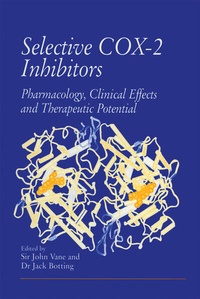
Selective COX-2 Inhibitors
Pharmacology, Clinical Effects and Therapeutic Potential
Published on 5. November 2012
Book
Paperback/Softback
IX, 150 pages
978-94-010-6041-7 (ISBN)
Description
The mainstay of therapy for rheumatoid disease is the non-steroid antiinflammatory drugs (NSAIDs), despite their inherent gastrointestinal toxicity and ability to cause renal damage in susceptible patients. The theory that the beneficial and toxic effects of NSAIDs stem from a reduction in prostanoid production through inhibition of cyclooxygenase implied that particular toxicities were inevitable with NSAIDs and would always be correlated with efficacy. However, over the years, it became apparent that at therapeutic doses, some NSAIDs had greater toxic side-effects than others, a fact not explained by the general theory. A significant clarification arose from the discovery that there are two distinct isoforms of COX, a constitutive enzyme (COX-I) responsible for the production of prostanoids necessary for platelet aggregation and protection of the gastric mucosa and kidney; and an inducible enzyme (COX-2) that is newly synthesized at sites of tissue damage and produces prostaglandins that manifest pathological effects. It became clear that different NSAIDs had greater or lesser effects on COX-I when used in therapeutic doses, explaining the variation in side-effects. ' The elucidation of the crystal structure of these different enzymes and the skills of medicinal chemists have led to the synthesis of new chemicals with a selectivity for the inducible enzyme, and thus with therapeutic efficacy without those toxic effects result ing from inhibition of the constitutive enzyme.
More details
Edition
Softcover reprint of the original 1st ed. 1998
Language
English
Place of publication
Dordrecht
Netherlands
Target group
Professional and scholarly
Research
Illustrations
IX, 150 p.
Dimensions
Height: 240 mm
Width: 160 mm
Thickness: 10 mm
Weight
274 gr
ISBN-13
978-94-010-6041-7 (9789401060417)
DOI
10.1007/978-94-011-4872-6
Schweitzer Classification
Other editions
Additional editions
Sir John R. Vane | Jack H. Botting
Selective COX-2 Inhibitors
Pharmacology, Clinical Effects and Therapeutic Potential
E-Book
12/2012
Springer
€96.29
Available for download
J.R. Vane | Jack H. Botting
Selective COX-2 Inhibitors
Pharmacology, Clinical Effects and Therapeutic Potential
Book
01/1998
Kluwer Academic Publishers
€115.50
Shipment within 15-20 days
Persons
Sir John Vane
is the Director General at the William Harvey Research Institute, an independent charitable foundation within Queen Mary and Westfield College of the University of London, UK.
Sir John Vane shared the Nobel Prize in Physiology or Medicine in 1982 for his discoveries of the mechanism of action of aspirin and of prostacyclin, as well as his work on other prostanoids. Jack Botting is Consultant at the William Harvey Research Institute, an independent charitable foundation within Queen Mary and Westfield College of the University of London, UK.
Sir John Vane shared the Nobel Prize in Physiology or Medicine in 1982 for his discoveries of the mechanism of action of aspirin and of prostacyclin, as well as his work on other prostanoids. Jack Botting is Consultant at the William Harvey Research Institute, an independent charitable foundation within Queen Mary and Westfield College of the University of London, UK.
Content
List of Contributors.- Preface.- 1 Mechanism of action of anti-inflammatory drugs: an overview.- 2 The structure of human COX-2 and selective inhibitors.- 3 Differential inhibition of COX-1 and COX-2 by NSAIDS: a summary of results obtained using various test systems.- 4 COX-2 in brain and retina: role in neuronal survival.- 5 COX-2 and apoptosis: NSAIDs as effectors of programmed cell death.- 6 Inhibition of intestinal tumorigenesis via selective inhibition of COX-2.- 7 Cyclooxygenase enzymes in human vascular disease.- 8 Gastrointestinal effects of NSAIDs.- 9 Renal side effects of NSAIDs: role of COX-1 and COX-2.- 10 Aspirin-induced asthma and cyclooxygenases.- 11 New classification of aspirin-like drugs.- 12 New highly selective COX-2 inhibitors.- 13 Specific COX-2 inhibitors: from bench to bedside.- 14 Meloxicam: selective COX-2 inhibition in clinical practice.