

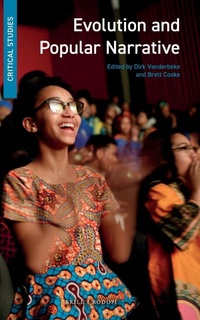
Evolution and Popular Narrative
Published on 27. June 2019
Book
Hardback
312 pages
978-90-04-39115-4 (ISBN)
Description
The contributors to this volume share the assumption that popular narrative, when viewed with an evolutionary lens, offers an incisive index into human nature. In theory, narrative art could take a near infinity of possible forms. In actual practice, however, particular motifs, plot patterns, stereotypical figures, and artistic devices persistently resurface, indicating specific predilections frequently at odds with our actual living conditions. Our studies explore various media and genres to gauge the impact of our evolutionary inheritance, in interdependence with the respective cultural environments, on our aesthetic appreciation. As they suggest, research into mass culture is not only indispensable for evolutionary criticism but may also contribute to our understanding of prehistoric selection pressures that still influence modern preferences in popular narrative.
Contributions by David Andrews, James Carney, Mathias Clasen, Brett Cooke, Tamas David-Barrett, Tom Dolack, Kathryn Duncan, Isabel Behncke Izquierdo, Joe Keener, Alex C. Parrish, Todd K. Platts, Anna Rotkirch, Judith P. Saunders, Michelle Scalise Sugiyama, Dirk Vanderbeke, and Sophia Wege.
Contributions by David Andrews, James Carney, Mathias Clasen, Brett Cooke, Tamas David-Barrett, Tom Dolack, Kathryn Duncan, Isabel Behncke Izquierdo, Joe Keener, Alex C. Parrish, Todd K. Platts, Anna Rotkirch, Judith P. Saunders, Michelle Scalise Sugiyama, Dirk Vanderbeke, and Sophia Wege.
Reviews / Votes
"[...] this edited volume is an excellent addition to the study of popular culture, introducing a wider variety of narrative to the Darwinian approach. [...] It is encouraging to see such a broad range of narrative included, especially some of those often aimed at a young audience, such as graphic novels and Harry Potter. As someone who has dabbled in this area myself and advocated for the study of popular culture as artifacts of human nature, I highly recommend Evolution and Popular Narrative to anyone interested in the application of evolution to the arts or the study of popular culture in general."-Catherine Salmon, in Evolutionary Studies in Imaginative Culture, Vol. 4, No. 1, 2020, pp. 141-143
More details
Series
Language
English
Place of publication
Leiden
Netherlands
Target group
Professional and scholarly
Product notice
sewn/stitched
Cloth over boards
Dimensions
Height: 236 mm
Width: 155 mm
Thickness: 23 mm
Weight
703 gr
ISBN-13
978-90-04-39115-4 (9789004391154)
Copyright in bibliographic data and cover images is held by Nielsen Book Services Limited or by the publishers or by their respective licensors: all rights reserved.
Schweitzer Classification
Other editions
Complete work / Part of the work
![Cover: Evolution and Popular Narrative [print & e-book] - Brill](https://content.schweitzer-online.de/static/catalog_manager/live/media_files/representation/A56524350/42967844_l_1.jpg)
Dirk Vanderbeke | Brett Cooke
Evolution and Popular Narrative [print & e-book]
Book
03/2020
Brill
€143.50
Shipment within 10-20 days
Persons
Dirk Vanderbeke is Professor of English Studies at the Friedrich-Schiller-University Jena. He has published on a variety of topics, e.g. physics and literature, evolutionary criticism, James Joyce, Thomas Pynchon, John Milton, and popular narratives including comics and graphic novels.
Brett Cooke is Professor of Russian at Texas A&M University. He is the author of Pushkin and the Creative Process, and Human Nature in Utopia: Zamyatin's We, (co-) editor of Sociobiology and the Arts, The Fantastic Other, Biopoetics: Evolutionary Explorations in the Art, and Critical Insights: War and Peace.
Brett Cooke is Professor of Russian at Texas A&M University. He is the author of Pushkin and the Creative Process, and Human Nature in Utopia: Zamyatin's We, (co-) editor of Sociobiology and the Arts, The Fantastic Other, Biopoetics: Evolutionary Explorations in the Art, and Critical Insights: War and Peace.
Content
List of Figures
Introduction
Brett Cooke and Dirk Vanderbeke
1 Evolution and Slasher Films
Mathias Clasen and Todd K. Platts
2 Remaking, or Not, the Classics: Straw Dogs and Biocultural Stability in Rape-Revenge Movies
David Andrews
3 Imagining the End of the World: a Biocultural Analysis of Post-Apocalyptic Fiction
Mathias Clasen
4 On Love and Marriage in Popular Genres
Dirk Vanderbeke
5 Social Network Complexity in Mozart's Marriage of Figaro
Tamas David-Barrett, James Carney, Anna Rotkirch, Isabel Behncke Izquierdo
6 Banal Classicism and Borrowed Ethos in the Rhetorics of Human and Nonhuman Animals
Alex C. Parrish
7 The Reader Is Always Right. Biopoetic and Cognitive-Aesthetic Aspects of Karl May's Adventure Novel Winnetou I
Sophia Wege
8 Why We Read Detective Fiction: Theory of Mind in Action
Judith P. Saunders
9 Handel, Senesino, and Giulio Cesare, or the Irreversible Decline of Opera Seria
Brett Cooke
10 We've Evolved into the Gutters: Using Cognition and a Graphic Novel to Kill Shakespeare
Joe Keener
11 Theory of Mind and Mind Eating: the Popular Appeal of Jane Austen and Pride and Prejudice and Zombies
Kathryn Duncan
12 The Relevance of Popularity: Ecological Factors at Play in Story Pervasiveness
Michelle Scalise Sugiyama
13 A Quantitative Approach to Counterintuitive Imagery in the Hebrew Bible and the Harry Potter Novels
Tom Dolack
Index
Introduction
Brett Cooke and Dirk Vanderbeke
1 Evolution and Slasher Films
Mathias Clasen and Todd K. Platts
2 Remaking, or Not, the Classics: Straw Dogs and Biocultural Stability in Rape-Revenge Movies
David Andrews
3 Imagining the End of the World: a Biocultural Analysis of Post-Apocalyptic Fiction
Mathias Clasen
4 On Love and Marriage in Popular Genres
Dirk Vanderbeke
5 Social Network Complexity in Mozart's Marriage of Figaro
Tamas David-Barrett, James Carney, Anna Rotkirch, Isabel Behncke Izquierdo
6 Banal Classicism and Borrowed Ethos in the Rhetorics of Human and Nonhuman Animals
Alex C. Parrish
7 The Reader Is Always Right. Biopoetic and Cognitive-Aesthetic Aspects of Karl May's Adventure Novel Winnetou I
Sophia Wege
8 Why We Read Detective Fiction: Theory of Mind in Action
Judith P. Saunders
9 Handel, Senesino, and Giulio Cesare, or the Irreversible Decline of Opera Seria
Brett Cooke
10 We've Evolved into the Gutters: Using Cognition and a Graphic Novel to Kill Shakespeare
Joe Keener
11 Theory of Mind and Mind Eating: the Popular Appeal of Jane Austen and Pride and Prejudice and Zombies
Kathryn Duncan
12 The Relevance of Popularity: Ecological Factors at Play in Story Pervasiveness
Michelle Scalise Sugiyama
13 A Quantitative Approach to Counterintuitive Imagery in the Hebrew Bible and the Harry Potter Novels
Tom Dolack
Index