


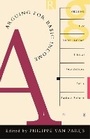
Arguing for Basic Income
Ethical Foundations for a Radical Reform
Published on 17. November 1992
Book
Hardback
256 pages
978-0-86091-371-9 (ISBN)
Description
The idea of providing a basic income for all, paid to each individual without means tests or work requirements, is not a new one. But it is only in the past decade, with the emergence of a permanent underclass of unemployed, that politicians and academics have begun to argue seriously for minimum income as a route to stability in societies riven by the grotesque inequalities of modern capitalist economics. The central objection to basic income is simple: there is a widespread feeling that a basic income would be unfair because hard workers would be exploited by loafers. In these pages, a group of specialists describe the type of society in which unconditional income would be legitimate. In so doing they question and clarify some of the central principles of modern political philosophy. The contributors are John Baker, Brian Barry, Alan Carling, Michael Freeden, Robert Goodin, Andre Gorz, Bill Jordan, Richard Norman, Claus Offe, Guy Standing, Hillel Steiner and Philippe Van Parijs.
More details
Language
English
Place of publication
London
United Kingdom
Target group
College/higher education
Professional and scholarly
Dimensions
Height: 203 mm
Width: 127 mm
Thickness: 25 mm
Weight
454 gr
ISBN-13
978-0-86091-371-9 (9780860913719)
Copyright in bibliographic data is held by Nielsen Book Services Limited or its licensors: all rights reserved.
Schweitzer Classification
Other editions
New editions
Book
11/1992
Verso Books
€42.27
Shipment within 3-4 weeks
Persons
Content
Brazilian culture - nationalism by elimination; misplaced ideas - literature and society in late 19th century Brazil; beware of alien ideologies; the importing of the novel to Brazil and its contradictions in the work of alencar; machado de Assis - a biographical sketch; complex, modern, national and negative; the poor woman and her portraitist; "Who Can Tell Me That This Character is Not Brazil?"; the cart, the tram and the modernist poet; culture and politics in Brazil, 1964-1969; cinema and the guns; on "A Man Marked Out To Die"; is there a Third World aesthetic?; Anatol Rosenfeld, a foreign intellectual; a historic landmark; Chico Buarque's new novel.