

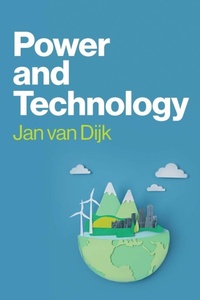
Power and Technology
A Theory of Social, Technical and Natural Power
1st Edition
Published on 27. September 2024
Book
Paperback/Softback
272 pages
978-1-5095-6368-5 (ISBN)
Description
The definition of power varies across disciplines. Social scientists tend to deal with social power, philosophers of technology with the relation between technology and society, and ecologists with the relation between natural and social power. Concepts of power and technology are freely used but this relationship is complex and multifaceted.
In this analytic and ambitious textbook, Jan van Dijk brings these perspectives together to provide a more comprehensive answer. In attempting to integrate social, technical, and natural power into one framework, he develops a general concept of power which unites all three - the first time such an attempt has been made. The author argues that it is important to look at these concepts together: natural power is not simply a resource for technology and society, and its inclusion is crucial given the ecological impact of technologies. Overall, nine forms of power which comprise the framework are discussed in each chapter - force, construction, coercion, domination, discipline, dependency, information, persuasion, and authority - and at all levels (individuals, organizations, and societies). Van Dijk concludes with some practical implications and asks two key questions: how can automatic and autonomous technology such as AI be controlled by humans? And, how can we find a more sustainable and less exploitive technology?
Power and Technology contains many figures, tables and illustrations and is suitable for students and scholars of technology studies and the sociology, philosophy and history of technology.
In this analytic and ambitious textbook, Jan van Dijk brings these perspectives together to provide a more comprehensive answer. In attempting to integrate social, technical, and natural power into one framework, he develops a general concept of power which unites all three - the first time such an attempt has been made. The author argues that it is important to look at these concepts together: natural power is not simply a resource for technology and society, and its inclusion is crucial given the ecological impact of technologies. Overall, nine forms of power which comprise the framework are discussed in each chapter - force, construction, coercion, domination, discipline, dependency, information, persuasion, and authority - and at all levels (individuals, organizations, and societies). Van Dijk concludes with some practical implications and asks two key questions: how can automatic and autonomous technology such as AI be controlled by humans? And, how can we find a more sustainable and less exploitive technology?
Power and Technology contains many figures, tables and illustrations and is suitable for students and scholars of technology studies and the sociology, philosophy and history of technology.
Reviews / Votes
"Van Dijk brilliantly explicates and integrates nine appearances of natural, social and technology power into understanding the world. This comprehensive, wide-ranging, masterful framework illuminates the implications of AI in particular, and technology in general, and is destined to become a classic in the field."Ronald E. Rice, University of California, Santa Barbara
"Van Dijk's ambitious work reboots discussion of technology and society by focusing on power. His book could anchor courses exploring how multiple actors interacting around such new technologies as AI are shaping our world."
William H. Dutton, University of Oxford and University of Southern California
More details
Language
English
Place of publication
Oxford
United Kingdom
Publishing group
John Wiley and Sons Ltd
Target group
Professional and scholarly
Dimensions
Height: 227 mm
Width: 154 mm
Thickness: 25 mm
Weight
402 gr
ISBN-13
978-1-5095-6368-5 (9781509563685)
Copyright in bibliographic data and cover images is held by Nielsen Book Services Limited or by the publishers or by their respective licensors: all rights reserved.
Schweitzer Classification
Other editions
Additional editions
Book
09/2024
1st Edition
Polity Press
€65.00
Shipment within 15-20 days
E-Book
09/2024
1st Edition
Wiley
€18.99
Available for download
Person
Jan van Dijk is Emeritus Professor of Communication Science and Sociology of the Information Society at the University of Twente.
Content
Tables and Figures
Chapter 1: Introduction
Chapter 2: Power
Chapter 3: Technology
Chapter 4: Mediation and Interaction in Natural, Technical and Social Power
Chapter 5: Micropower (Individuals)
Chapter 6: Meso-power (Organizations)
Chapter 7: Macro-power (Societies)
Chapter 8: The Power of Artificial Intelligence
Chapter 9: Conclusions and Implications: The Control of Technology
Chapter 1: Introduction
Chapter 2: Power
Chapter 3: Technology
Chapter 4: Mediation and Interaction in Natural, Technical and Social Power
Chapter 5: Micropower (Individuals)
Chapter 6: Meso-power (Organizations)
Chapter 7: Macro-power (Societies)
Chapter 8: The Power of Artificial Intelligence
Chapter 9: Conclusions and Implications: The Control of Technology