

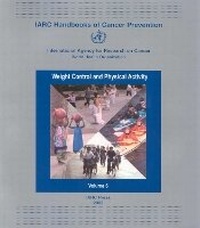
Weight Control and Physical Activity
IARC Hanbook of Cancer Prevention
Published on 1. February 2002
Book
Paperback/Softback
327 pages
978-92-832-3006-9 (ISBN)
Description
The trends with increasing prevalence of overweight/obesity and sedentary lifestyle are alarming. The prevalence of obesity has increased markedly during the last 20 years in Europe and in USA; e.g. in USA, one quarter of Americans were overweight in 1978, one third in 1990 and in 2001 60% of them had become overweight. The consequences of the stealthy epidemic has now been realised; the reasons lie in excess calorie intake and reduced physical activity. Maintaining a health body weight with the help of regular physical activity, and healthy diet, will reduce cancer risk. Overweight/obesity increases the risks for cancers of the oesophagus (adenocarcinoma), colon, breast, endometrium and kidney. Regular physical activity protects against cancers of the colon and breast.
Avoiding overweight and obesity is the best-established diet-related risk factor for cancer. The proportion of people who are overweight/obese is increasing, and the amount of physical activity is decreasing in most populations, including urban populations in many developing countries. The increasing prevalence of overweight/obesity is presumably due to the increasing availability of highly palatable, high energy foods and an increasing sedentary lifestyle due to mechanisation of both workplace and leisure activities. Overweight/obesity and reduced physical activity increases the risk of cancers in various organs. Maintaining a healthy body weight and regular physical activity is the second most important way to prevent cancer, after tobacco control. The suggestions of possible public health action aimed at tackling these risk factors include education activities to promote balanced diets which are not excessive in energy and broad education and planning to enable and encourage physical activity during work and leisure. The Handbook Volume 6 on Weight Control and Physical Activity contains a full discussion of this topic, together with recommendations for public health action.
Avoiding overweight and obesity is the best-established diet-related risk factor for cancer. The proportion of people who are overweight/obese is increasing, and the amount of physical activity is decreasing in most populations, including urban populations in many developing countries. The increasing prevalence of overweight/obesity is presumably due to the increasing availability of highly palatable, high energy foods and an increasing sedentary lifestyle due to mechanisation of both workplace and leisure activities. Overweight/obesity and reduced physical activity increases the risk of cancers in various organs. Maintaining a healthy body weight and regular physical activity is the second most important way to prevent cancer, after tobacco control. The suggestions of possible public health action aimed at tackling these risk factors include education activities to promote balanced diets which are not excessive in energy and broad education and planning to enable and encourage physical activity during work and leisure. The Handbook Volume 6 on Weight Control and Physical Activity contains a full discussion of this topic, together with recommendations for public health action.
More details
Series
Language
English
Place of publication
Lyon
France
Target group
Professional and scholarly
Illustrations
30 farbige Abbildungen
30 colour illustrations
Dimensions
Height: 240 mm
Width: 160 mm
Weight
76 gr
ISBN-13
978-92-832-3006-9 (9789283230069)
Copyright in bibliographic data and cover images is held by Nielsen Book Services Limited or by the publishers or by their respective licensors: all rights reserved.
Schweitzer Classification