

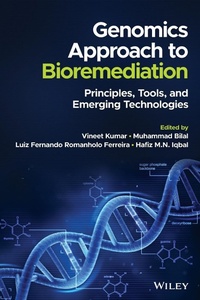
Genomics Approach to Bioremediation - Principles, Tools, and Emerging Technologies
Description
In recent years, the application of genomics to biodegradation and bioremediation research has led to a better understanding of the metabolic capabilities of microorganisms, their interactions with hazardous and toxic chemical compounds, and their adaptability to changing environmental conditions.
Genomics to Bioremediation: Principles, Applications, and Perspectives provides comprehensive and up-to-date information on cutting-edge technologies and approaches in bioremediation and biodegradation of environmental pollutants. Edited by prominent researchers in the field, this authoritative reference examines advanced genomics technologies, next-generation sequencing (NGS), and state-of-the-art bioinformatics tools while offering valuable insights into the unique functional attributes of different microbial communities and their impact on the removal of chemical contaminants.
Each chapter includes numerous high-quality illustrations, detailed tables, extensive references, and step-by-step descriptions of various microbial metabolic pathways of degradation and biotransformation of environments containing various inorganic, metallic, organometallic, and organic hydrocarbon contaminants.
Describes methodologies and underlying theory for the remediation, detoxification, and degradation of contaminated environments
Covers new genomics technologies that address nutrient removal, resource recovery, and other major trends in environmental cleanup
Highlights recent advances in microbial biotechnological approaches including the latest description of the relationship between microbes and the environment focusing on their impact on ecosystem services.
Offers perspectives on energy saving, production, sustainability, and community involvement
Discusses current challenges and future directions in the field of bioremediation
Genomics to Bioremediation: Principles, Applications, and Perspectives is an essential resource for biochemical and environmental engineers, environmental microbiologists, academic researchers, process and treatment plant managers, policymakers, and industry professionals working in the areas of microbial degradation, bioremediation, and phytoremediation.
<b>Provides insights into the various aspects of microbial genomics and biotechnology for environmental cleanup</b>
In recent years, the application of genomics to biodegradation and bioremediation research has led to a better understanding of the metabolic capabilities of microorganisms, their interactions with hazardous and toxic chemical compounds, and their adaptability to changing environmental conditions.
<i>Genomics to Bioremediation: Principles, Applications, and Perspectives</i> provides comprehensive and up-to-date information on cutting-edge technologies and approaches in bioremediation and biodegradation of environmental pollutants. Edited by prominent researchers in the field, this authoritative reference examines advanced genomics technologies, next-generation sequencing (NGS), and state-of-the-art bioinformatics tools while offering valuable insights into the unique functional attributes of different microbial communities and their impact on the removal of chemical contaminants.
Each chapter includes numerous high-quality illustrations, detailed tables, extensive references, and step-by-step descriptions of various microbial metabolic pathways of degradation and biotransformation of environments containing various inorganic, metallic, organometallic, and organic hydrocarbon contaminants.
<ul><li>Describes methodologies and underlying theory for the remediation, detoxification, and degradation of contaminated environments</li><li>Covers new genomics technologies that address nutrient removal, resource recovery, and other major trends in environmental cleanup</li><li>Highlights recent advances in microbial biotechnological approaches including the latest description of the relationship between microbes and the environment focusing on their impact on ecosystem services.</li><li>Offers perspectives on energy saving, production, sustainability, and community involvement</li><li>Discusses current challenges and future directions in the field of bioremediation</li></ul>G<i>enomics to Bioremediation: Principles, Applications, and Perspectives</i> is an essential resource for biochemical and environmental engineers, environmental microbiologists, academic researchers, process and treatment plant managers, policymakers, and industry professionals working in the areas of microbial degradation, bioremediation, and phytoremediation.
More details
Other editions
Additional editions
Person
Muhammad Bilal is an Associate Professor in the School of Life Science and Food Engineering at the Huaiyin Institute of Technology, China. He has published widely in areas such as environmental biotechnology, environmental bioengineering, nanotechnology, bio-catalysis, enzyme engineering, and bioremediation of hazardous and emerging pollutants.
Luiz Fernando R. Ferreira is an Associate Professor at Tiradentes University and a researcher at the Institute for Technology and Research (ITP), Brazil. Dr. Ferreira serves on the editorial board of the World Journal of Microbiology and Biotechnology and is a Review Editor for Frontiers in Microbiology.
Hafiz M.N. Iqbal is a Professor in the School of Engineering and Sciences at Tecnologico de Monterrey, Mexico. Dr. Iqbal's research group is engaged in environmental engineering, bioengineering, biomedical engineering, materials science, enzyme engineering, bio catalysis, bioremediation, algal biotechnology, and applied biotechnology research.
<b>Vineet Kumar</b> is a Senior Project Associate at CSIR-National Environmental Engineering Research Institute (NEERI), India. He has published more than 110 scientific contributions in various fields of science and engineering, including bioremediation, phytoremediation, metagenomics, wastewater treatment, environmental monitoring, and waste management.
<b>Muhammad Bilal</b> is an Associate Professor in the School of Life Science and Food Engineering at the Huaiyin Institute of Technology, China. He has published widely in areas such as environmental biotechnology, environmental bioengineering, nanotechnology, bio-catalysis, enzyme engineering, and bioremediation of hazardous and emerging pollutants.
<b>Luiz Fernando R. Ferreira </b>is an Associate Professor at Tiradentes University and a researcher at the Institute for Technology and Research (ITP), Brazil.<b> </b>Dr. Ferreira<b> </b>serves on the editorial board of the <i>World Journal of Microbiology and Biotechnology</i> and is a Review Editor for <i>Frontiers in Microbiology</i>.
<b>Hafiz M.N. Iqbal</b> is a Professor in the School of Engineering and Sciences at Tecnologico de Monterrey, Mexico. Dr. Iqbal's research group is engaged in environmental engineering, bioengineering, biomedical engineering, materials science, enzyme engineering, bio catalysis, bioremediation, algal biotechnology, and applied biotechnology research.