

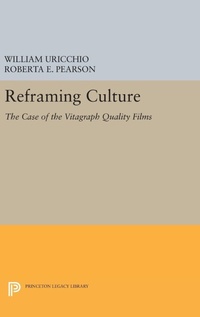
Reframing Culture
The Case of the Vitagraph Quality Films
Will be published approx. on 19. April 2016
Book
Hardback
268 pages
978-0-691-63021-2 (ISBN)
Description
The works of Shakespeare and Dante or the figures of George Washington and Moses do not often enter into popular conceptions of the silent cinema, yet, between 1907 and 1910, the Vitagraph Company frequently used such material in producing "quality" films that promulgated "respectable" culture. William Uricchio and Roberta Pearson situate these films in an era of immigration, labor unrest, and mainstream American xenophobia, in order to explore the cultural views promoted by the films and the ways the audiences--the middle classes as well as workers and immigrants--related to what they saw. The authors associate the production of quality films with a top-down forging of cultural consensus on issues such as patriotism and morality, and reveal the surprising bottom-up negotiations of these films' "meanings.". Devoting chapters to the literary, historical, and biblical subjects used by Vitagraph, this book draws upon plays, pageants, school textbooks, and even product advertisements to illuminate the conditions of cinematic production and reception.
It provides a detailed look at one aspect of the film industry's transformation from "despised cheap amusement" to the nation's dominant mass medium, while showing how cultural elites engaged in a struggle similar to that of today's American academy over the literary canon and national value systems. Originally published in 1993. The Princeton Legacy Library uses the latest print-on-demand technology to again make available previously out-of-print books from the distinguished backlist of Princeton University Press. These editions preserve the original texts of these important books while presenting them in durable paperback and hardcover editions. The goal of the Princeton Legacy Library is to vastly increase access to the rich scholarly heritage found in the thousands of books published by Princeton University Press since its founding in 1905.
It provides a detailed look at one aspect of the film industry's transformation from "despised cheap amusement" to the nation's dominant mass medium, while showing how cultural elites engaged in a struggle similar to that of today's American academy over the literary canon and national value systems. Originally published in 1993. The Princeton Legacy Library uses the latest print-on-demand technology to again make available previously out-of-print books from the distinguished backlist of Princeton University Press. These editions preserve the original texts of these important books while presenting them in durable paperback and hardcover editions. The goal of the Princeton Legacy Library is to vastly increase access to the rich scholarly heritage found in the thousands of books published by Princeton University Press since its founding in 1905.
Reviews / Votes
"Vitagraph, the largest of the New York studios during the early part of the century, made numerous films based in literary classics, historical events, and Biblical Lore. The authors make a convincing case that the 'Vitagraph Quality Films' series played an important role in improving the cultural status of the movies."--American CinematographerMore details
Series
Language
English
Place of publication
New Jersey
United States
Target group
College/higher education
Professional and scholarly
Product notice
Trade binding
Illustrations
25 halftones
Dimensions
Height: 240 mm
Width: 161 mm
Thickness: 19 mm
Weight
570 gr
ISBN-13
978-0-691-63021-2 (9780691630212)
Copyright in bibliographic data and cover images is held by Nielsen Book Services Limited or by the publishers or by their respective licensors: all rights reserved.
Schweitzer Classification
Other editions
Additional editions
E-Book
07/2014
1st Edition
Princeton University Press
€48.99
Available for download
Persons
William Uricchio & Roberta E. Pearson
Content
List of IllustrationsAcknowledgmentsIntroduction3Ch. 1Responses to Cultural Crisis: Political Domination and Hegemony17Ch. 2The Film Industry's Drive for Respectability41Ch. 3Literary Qualities: Shakespeare and Dante65Ch. 4Historical Qualities: Washington and Napoleon111Ch. 5Biblical Qualities: Moses160Conclusion195Appendix: Vitagraph's Description of the Washington and Napoleon Films201Notes205Index245