

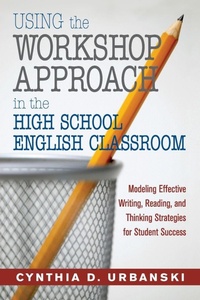
Using the Workshop Approach in the High School English Classroom
Modeling Effective Writing, Reading, and Thinking Strategies for Student Success
1st Edition
Published on 2. February 2006
Book
Paperback/Softback
192 pages
978-1-4129-2549-5 (ISBN)
Description
Everybody wins when you practice the workshop approach in high school English!
Do you find that preparing for standardized tests interferes with teaching advanced thinking, reading, and writing skills in a meaningful way? Do you want to balance test preparation with more creative activities? Success in school and beyond depends on one's ability to read fluently, write coherently, and think critically. This handbook uses the workshop model for exponentially increasing adolescents' abilities in these three key areas.
This practical guide addresses the daily running and practice of a workshop-based classroom, using research and the author's own experiences to illustrate how to establish a workshop that:
Fosters lasting learning while reinforcing the skills needed for standardized tests
Teaches audience and purpose as a vehicle to style and structure
Provides a supportive and lively environment in which students are comfortable enough to take risks and share original ideas
Try Urbanski's approach to teaching literacy analysis and mentoring student writers, and discover just how rewarding the workshop experience can be!
Do you find that preparing for standardized tests interferes with teaching advanced thinking, reading, and writing skills in a meaningful way? Do you want to balance test preparation with more creative activities? Success in school and beyond depends on one's ability to read fluently, write coherently, and think critically. This handbook uses the workshop model for exponentially increasing adolescents' abilities in these three key areas.
This practical guide addresses the daily running and practice of a workshop-based classroom, using research and the author's own experiences to illustrate how to establish a workshop that:
Fosters lasting learning while reinforcing the skills needed for standardized tests
Teaches audience and purpose as a vehicle to style and structure
Provides a supportive and lively environment in which students are comfortable enough to take risks and share original ideas
Try Urbanski's approach to teaching literacy analysis and mentoring student writers, and discover just how rewarding the workshop experience can be!
Reviews / Votes
"Both new and veteran English teachers will learn new strategies that will enrich their students' lives while greatly improving their writing clarity, voice and precision." -- Charles M. Longbottom, International Baccalaureate Program Coordinator "This book offers motivation and inspiration for preservice and novice English teachers and provides reassurance and encouragement for the veteran teachers who feel burdened by the standardization of education. It takes into account the high-stakes accountability of our current environment and documents results from research based practices. The examples and lessons reassure us that effective teaching does not have to give way to 'teaching to the test'." -- Nelda R. Cockman, Clinical Assistant Professor "Drawing from her experience as a coach, the author demonstrates the importance of modeling in the classroom by reading and writing alongside her students, taking risks, and building a strong community of learners in the process. This book will inspire good English teachers to become great literacy coaches." -- Robin Boswell, Middle School Language Arts Instructor "It is possible to balance test preparation with advanced thinking, reading, and writing skills. This book shows you how." -- Journal of Adolescent & Adult Literacy, May 2006More details
Language
English
Place of publication
Thousand Oaks
United States
Publishing group
SAGE Publications Inc
Target group
Professional and scholarly
Dimensions
Height: 229 mm
Width: 152 mm
Thickness: 11 mm
Weight
287 gr
ISBN-13
978-1-4129-2549-5 (9781412925495)
Copyright in bibliographic data and cover images is held by Nielsen Book Services Limited or by the publishers or by their respective licensors: all rights reserved.
Schweitzer Classification
Other editions
Additional editions
Cynthia D. Urbanski
Using the Workshop Approach in the High School English Classroom
Modeling Effective Writing, Reading, and Thinking Strategies for Student Success
Book
02/2006
1st Edition
Corwin Press Inc
€89.33
Article exhausted; check different version
Person
Cynthia D. Urbanski is a Co-Leader of the University of North Carolina-Charlotte Writing Project, where her focus is teacher research, summer institutes, and structuring professional development for surrounding areas. Since graduating from the North Carolina Teaching Fellows Program at UNC-Chapel Hill in 1995 and while completing a master's of English education at UNC-Charlotte in 2000, she has worked with writers from middle grades through the undergraduate level. As an instructor at North Mecklenburg High School since 2000, she has worked with student writers in the International Baccalaureate Program as well as standard-level English courses. Her mission has been to help all students improve their literacy skills by making their writing, reading, and thinking meaningful to them. She continues to run regularly and considers it an integral part of her writing process and her life. Currently she is working to develop the concept of her second book project and spending time with her family in Charlotte, North Carolina.
Content
Foreword by Lillian Brannon
Acknowledgments
About the Author
1. Running and Writing
The Workshop Culture - A Study of Coaching
Conclusions and The Mission
2. Who Writes the Rule Book Anyway? Accountability, Tests, and the History of Rhetoric
A Bit of History
And What About the Other Parts of My Curriculum?
Testing and Accountability
Conclusions
Suggested Reading
3. Coaching and Teaching By Doing; Modeling Thinking, Writing, and Reading
A Horror Story in Two Scenes
Scene I: Sunday Night Back in the Dark Ages
Scene II: Sunday Night One Week Later
Modeling; A Simple Concept With Huge Benefits
Modeling Gives Us Fresh Experiences to Draw From
Modeling Can Transform Our Classrooms
Modeling Fosters Authentic Learning
Modeling Will Supercharge Our Planning Time
Modeling In Our Classrooms: What Do We Do?
Modeling Concepts for Writing
A Lesson in Modeling Writing
Modeling Concepts for Reading
A Lesson in Modeling Close Reading and Analysis
Conclusions: Pulling It All Together and Coming Full Circle
4. Warming Up the Writing Muscles; Two Tools for Invention
Free Writing
What Is Free Writing . . . Really?
Why Does Free Writing Work?
Application: Helping Our Students Discover the Magic
A Lesson in Free Writing
The Last Word on Free Writing
Daybooks. A Place to Store Free Writing and Thinking
Conclusions
5. The Practice Field; Building Strength and Confidence in Writing and Literary Analysis
Types of Practice
Reader Response and Invention
In-Class Revision and Drafting
Types and Progression of Assignments as Practice
Conclusions
6. Race Day: Evaluation and the Idea of Grammar
Grammar in Context
The Bottom Line On Grammar
A Grammar Lesson
A Word of Caution
For Further Ideas
A Word About Standards
Watching the Race: Evaluating Student Writing
Grading Practice Writing Without Eradicating Its Purpose
Grading Response Journals or Daybooks
Grading Published Pieces
Portfolios: Looking at the Whole Season and Student Growth Over Time
Conclusions
Suggested Reading
7. Responding as a Spectator: The Writing Conference
Why Conference Anyway?
A Trek Through a Conference Log
Writing Conventions/Skills in Context
A Fifty-Minute Tutoring Session Translated Into a Ninety-Minute Class
Basic Behavior in a Writing Conference
A Close-up Look at a Conference
Conclusions
8. Becoming Independent; Writing and Literature Groups
A Scenario: Student Writing as Class Literature
Student Response to Groups
How to Make Groups Work
Model Functional Groups
Provide Structure and Incentive
Help Students Find Their Own Structure
What About the Kid Who Doesn't Buy Into Group Work?
Timing
Writing Groups
Literature Groups
Conclusions
Suggested Reading
Epilogue - Why Teachers Coach
References
Index
Acknowledgments
About the Author
1. Running and Writing
The Workshop Culture - A Study of Coaching
Conclusions and The Mission
2. Who Writes the Rule Book Anyway? Accountability, Tests, and the History of Rhetoric
A Bit of History
And What About the Other Parts of My Curriculum?
Testing and Accountability
Conclusions
Suggested Reading
3. Coaching and Teaching By Doing; Modeling Thinking, Writing, and Reading
A Horror Story in Two Scenes
Scene I: Sunday Night Back in the Dark Ages
Scene II: Sunday Night One Week Later
Modeling; A Simple Concept With Huge Benefits
Modeling Gives Us Fresh Experiences to Draw From
Modeling Can Transform Our Classrooms
Modeling Fosters Authentic Learning
Modeling Will Supercharge Our Planning Time
Modeling In Our Classrooms: What Do We Do?
Modeling Concepts for Writing
A Lesson in Modeling Writing
Modeling Concepts for Reading
A Lesson in Modeling Close Reading and Analysis
Conclusions: Pulling It All Together and Coming Full Circle
4. Warming Up the Writing Muscles; Two Tools for Invention
Free Writing
What Is Free Writing . . . Really?
Why Does Free Writing Work?
Application: Helping Our Students Discover the Magic
A Lesson in Free Writing
The Last Word on Free Writing
Daybooks. A Place to Store Free Writing and Thinking
Conclusions
5. The Practice Field; Building Strength and Confidence in Writing and Literary Analysis
Types of Practice
Reader Response and Invention
In-Class Revision and Drafting
Types and Progression of Assignments as Practice
Conclusions
6. Race Day: Evaluation and the Idea of Grammar
Grammar in Context
The Bottom Line On Grammar
A Grammar Lesson
A Word of Caution
For Further Ideas
A Word About Standards
Watching the Race: Evaluating Student Writing
Grading Practice Writing Without Eradicating Its Purpose
Grading Response Journals or Daybooks
Grading Published Pieces
Portfolios: Looking at the Whole Season and Student Growth Over Time
Conclusions
Suggested Reading
7. Responding as a Spectator: The Writing Conference
Why Conference Anyway?
A Trek Through a Conference Log
Writing Conventions/Skills in Context
A Fifty-Minute Tutoring Session Translated Into a Ninety-Minute Class
Basic Behavior in a Writing Conference
A Close-up Look at a Conference
Conclusions
8. Becoming Independent; Writing and Literature Groups
A Scenario: Student Writing as Class Literature
Student Response to Groups
How to Make Groups Work
Model Functional Groups
Provide Structure and Incentive
Help Students Find Their Own Structure
What About the Kid Who Doesn't Buy Into Group Work?
Timing
Writing Groups
Literature Groups
Conclusions
Suggested Reading
Epilogue - Why Teachers Coach
References
Index