

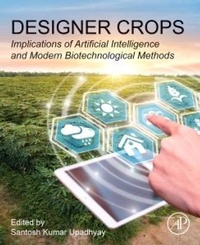
Designer Crops
Implications of Artificial Intelligence and Modern Biotechnological Methods
Published on 7. May 2026
Book
Paperback/Softback
578 pages
978-0-443-40401-6 (ISBN)
Description
Designer Crops: Implications of Artificial Intelligence and Modern Biotechnological Methods explores the global impact of environmental challenges and climate change on crop productivity. This comprehensive guide reveals how abiotic and biotic stresses and shifting climatic conditions have significantly affected traditional cropping systems and crop yields worldwide. This book discusses designer crops and climate-resilient and super cropping systems by applying diverse information from biotechnology, crop breeding, machine learning, and automation in agriculture. It showcases the evolution of technologies such as high-throughput genome sequencing, artificial intelligence, and precision breeding, revolutionizing crop design for enhanced disease resistance, nutritional value, and increased yields.
In addition, it examines modern biotechnological tools and speed breeding strategies, offering a glimpse into the promising future of super crop development. Contributions from leading global experts on artificial intelligence in agriculture, machine learning for smart agricultural practices, and climate-resilient cropping strategies make this book a must have for upper-level undergraduate students in the fields of crop science, biotechnology, and sustainable agriculture. It will also be useful for researchers and professionals working in food technology, agricultural automation, and environmental consulting.
In addition, it examines modern biotechnological tools and speed breeding strategies, offering a glimpse into the promising future of super crop development. Contributions from leading global experts on artificial intelligence in agriculture, machine learning for smart agricultural practices, and climate-resilient cropping strategies make this book a must have for upper-level undergraduate students in the fields of crop science, biotechnology, and sustainable agriculture. It will also be useful for researchers and professionals working in food technology, agricultural automation, and environmental consulting.
More details
Language
English
Place of publication
San Diego
United States
Publishing group
Elsevier Science Publishing Co Inc
Target group
College/higher education
Product notice
Paperback (trade)
Unsewn / adhesive bound
Dimensions
Height: 232 mm
Width: 192 mm
Thickness: 27 mm
Weight
1134 gr
ISBN-13
978-0-443-40401-6 (9780443404016)
Copyright in bibliographic data and cover images is held by Nielsen Book Services Limited or by the publishers or by their respective licensors: all rights reserved.
Schweitzer Classification
Other editions
Additional editions
Santosh Kumar Upadhyay
Designer Crops
Implications of Artificial Intelligence and Modern Biotechnological Methods
E-Book
05/2026
Elsevier
€96.99
Available for download
Person
Dr. Upadhyay is currently working as an Assistant Professor at the Department of Botany, Panjab University, Chandigarh, India. He has been working in the field of Plant Biotechnology for more than 16 years. He is currently working in the area of functional genomics. His research group at PU has characterized numerous important defence-related protein families such as receptor-like kinases, anti-oxidant enzymes, calcium transporters, chitinases, lectins, etc. They are also characterizing long non-coding RNAs related to the abiotic and biotic stress response. He has authored more than 110 publications including
research papers in leading journals of international repute, national and international patents, book chapters and books. In recognition of his strong credentials and contributions, he has been awarded the NAAS Young scientist award (2017-18) and NAAS-Associate (2018) from the National Academy of Agricultural Sciences, India, INSA-Associate Fellowship (2023), and INSA Medal for Young Scientist (2013) from the Indian National Science Academy, India, NASI- Young Scientist Platinum Jubilee Award (2012) from the National Academy of Sciences, India, and Altech Young Scientist Award (2011). He has also been the recipient of the prestigious DST-INSPIRE Faculty Fellowship (2012), and SERB-Early Career Research Award, (2016) from the Ministry of Science and Technology, Government of India, and several research grants from various funding agencies like SERB, DBT, CSIR etc. Dr. Upadhyay also serves as a member of the editorial board and reviewer of a number of peer-reviewed international journals.
research papers in leading journals of international repute, national and international patents, book chapters and books. In recognition of his strong credentials and contributions, he has been awarded the NAAS Young scientist award (2017-18) and NAAS-Associate (2018) from the National Academy of Agricultural Sciences, India, INSA-Associate Fellowship (2023), and INSA Medal for Young Scientist (2013) from the Indian National Science Academy, India, NASI- Young Scientist Platinum Jubilee Award (2012) from the National Academy of Sciences, India, and Altech Young Scientist Award (2011). He has also been the recipient of the prestigious DST-INSPIRE Faculty Fellowship (2012), and SERB-Early Career Research Award, (2016) from the Ministry of Science and Technology, Government of India, and several research grants from various funding agencies like SERB, DBT, CSIR etc. Dr. Upadhyay also serves as a member of the editorial board and reviewer of a number of peer-reviewed international journals.
Content
1. Designer crops: An overview and future perspectives
2. Artificial Intelligence in Agriculture: stretegies and challenges
3. Automation in agriculture: Strategies and applications
4. Remote Sensing Applications for Crop Modelling: Strategies and Future Challenges
5. Digital Farming: Current status and future strategies
6. Pan-Genomes: Applications in crop designing
7. Genic bioprospecting for stress resistant designer crops
8. Transgenic crops, an update from the field and implications
9. Trait stacking stretegies, applications and future perspectives
10. Genome editing stretegies and implications in future crop designing
11. Precision breeding for the development of smart fruit crops
12. Climate resilient crops: Modern strategies and challenges
13. Application of synthetic biology in future crop designing
14. Harnessing Speed Breeding to revolutionize crop cultivation: Insights and prospects
15. Designing of disease free crops using artificial Intelligence and biotechnological tools
16. Gene Mining and Introgression Strategies from Wild Relatives for Trait Improvement in Conventional Crops: Potato a Case Study
17. Genetic Engineering for Environmental Sustainability
18. Microbial Metagenomics Technology for Sustainable Agriculture and Environment
19. Biotechnological Interventions for Designing Climate Smart Crops
2. Artificial Intelligence in Agriculture: stretegies and challenges
3. Automation in agriculture: Strategies and applications
4. Remote Sensing Applications for Crop Modelling: Strategies and Future Challenges
5. Digital Farming: Current status and future strategies
6. Pan-Genomes: Applications in crop designing
7. Genic bioprospecting for stress resistant designer crops
8. Transgenic crops, an update from the field and implications
9. Trait stacking stretegies, applications and future perspectives
10. Genome editing stretegies and implications in future crop designing
11. Precision breeding for the development of smart fruit crops
12. Climate resilient crops: Modern strategies and challenges
13. Application of synthetic biology in future crop designing
14. Harnessing Speed Breeding to revolutionize crop cultivation: Insights and prospects
15. Designing of disease free crops using artificial Intelligence and biotechnological tools
16. Gene Mining and Introgression Strategies from Wild Relatives for Trait Improvement in Conventional Crops: Potato a Case Study
17. Genetic Engineering for Environmental Sustainability
18. Microbial Metagenomics Technology for Sustainable Agriculture and Environment
19. Biotechnological Interventions for Designing Climate Smart Crops