

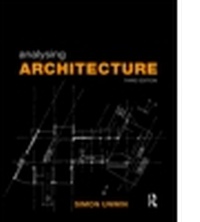
Analysing Architecture
3rd Edition
Published on 27. January 2009
Book
Paperback/Softback
296 pages
978-0-415-48928-7 (ISBN)
Description
Clear and accessible, Analysing Architecture opens a fresh way to understanding architecture. It offers a unique `notebook' of architectural strategies to present an engaging introduction to elements and concepts in architectural design. Beautifully illustrated throughout with the author's original drawings, examples are drawn from across the world and many periods of architectural history (from prehistoric times to the recent past) to illustrate analytical themes and to show how drawing can be used to study architecture. Since its first edition appeared in 1997, Analysing Architecture has established itself internationally as one of the key texts in architectural education.
This third edition includes a new section discussing the ways analyzing examples cultivates a capacity for design. Original chapters have been expanded, new case studies added, and the format rearranged for additional clarity. The bibliography of recommended supplementary reading has also been extended.
In Analysing Architecture, Simon Unwin clearly identifies the key elements of architecture and conceptual themes apparent in buildings and relevant to other works of architecture such as gardens and cities. He describes ideas for use in the active process of design. Breaking down the grammar of architecture into themes and `moves', Unwin exposes its underlying patterns to reveal the organizational strategies that lie beneath the superficial appearances of buildings.
Exploring buildings as results of the interaction of people with the world around them, Analysing Architecture offers a definition of architecture as `identification of place' and provides a greater understanding of architecture as a creative discipline. This book presents a powerful impetus for readers to develop their own capacities for architectural design. It will also be of use to all those with an interest in the human occupation of and involvement with space - anthropologists, archaeologists, film-makers, installation artists, planners, urban designers, politicians.
A companion website will be available at www.routledge.com/textbooks/9780415489287.
This third edition includes a new section discussing the ways analyzing examples cultivates a capacity for design. Original chapters have been expanded, new case studies added, and the format rearranged for additional clarity. The bibliography of recommended supplementary reading has also been extended.
In Analysing Architecture, Simon Unwin clearly identifies the key elements of architecture and conceptual themes apparent in buildings and relevant to other works of architecture such as gardens and cities. He describes ideas for use in the active process of design. Breaking down the grammar of architecture into themes and `moves', Unwin exposes its underlying patterns to reveal the organizational strategies that lie beneath the superficial appearances of buildings.
Exploring buildings as results of the interaction of people with the world around them, Analysing Architecture offers a definition of architecture as `identification of place' and provides a greater understanding of architecture as a creative discipline. This book presents a powerful impetus for readers to develop their own capacities for architectural design. It will also be of use to all those with an interest in the human occupation of and involvement with space - anthropologists, archaeologists, film-makers, installation artists, planners, urban designers, politicians.
A companion website will be available at www.routledge.com/textbooks/9780415489287.
Reviews / Votes
"Excellent in every way - a core book along with An Architectural Notebook by him"- Terry Robson, Teaching Fellow in Architecture at the University of Bath, UK"Probably the best introductory book on architecture" - Andrew Higgott, Lecturer in Architecture at the University of East London, UK
"I think this is an excellent book and I will continue to recommend it to my students."- Donald Hanlon, Professor at the Department of Architecture, University of Wisconsin-Milwaukee, US
"This book opens a fresh way to understanding architecture. It offers a unique 'notebook' of architectural strategies to present an engaging introduction to elements and concepts in architectural design. Beautifully illustrated throughout with the author's original drawings, examples are drawn from across the world and many periods of architectural history...one of the key texts in architectural education."
- Lonarrd
More details
Edition
3rd New edition
Language
English
Place of publication
London
United Kingdom
Publishing group
Taylor & Francis Ltd
Target group
College/higher education
Edition type
New edition
Product notice
Paperback (UK-B)
Illustrations
300 s/w Abbildungen
300 Illustrations, black and white
Dimensions
Height: 276 mm
Width: 219 mm
Weight
907 gr
ISBN-13
978-0-415-48928-7 (9780415489287)
Copyright in bibliographic data and cover images is held by Nielsen Book Services Limited or by the publishers or by their respective licensors: all rights reserved.
Schweitzer Classification
Other editions
New editions
Additional editions
Simon Unwin
Analysing Architecture
Book
01/2009
3rd Edition
Routledge
€155.99
Article exhausted; check for reprint
Previous edition
Simon Unwin
Analysing Architecture
Book
09/2003
2nd Edition
Routledge
€57.13
Article exhausted; check for reprint
Person
Simon Unwin was born in Yorkshire in 1952, but grew up in Wales. He studied in Chelsea School of Art, London, and then the Welsh School of Architecture in Cardiff, where he went on to do his PhD and become a senior lecturer. He has also lived in Australia, and taught architecture in the USA, Scandinavia, the Middle East and the Far East. He is currently Professor at the University of Dundee.
Content
Preface to the Third Edition. 1. Introduction 2. How Analysis Helps Design 3. Architecture as Identification of Place 4. Basic Elements of Architecture 5. Modifying Elements of Architecture 6. Elements Doing More than One Thing 7. Using Things That Are There 8. Primitive Place Types 9. Architecture as Making Frames 10. Temples and Cottages 11. Geometries of Being 12. Ideal Geometry 13. Themes in Spatial Organisation 13.1. Space and Structure 13.2. Parallel Walls 13.3. Stratification 13.4. Transition, Heirarchy, Heart 14. Postscript Case Studies - Iron Age House, Royal Villa, Knossos, Llainfadyn, Il Tempietto, Fitzwilliam College Chapel, The Schminke House, The Vanna Venturi House, The Woodland Chapel, House VI, The Box. Bibliography