

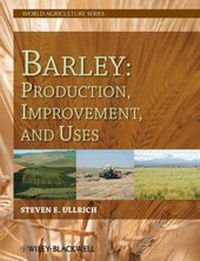
Barley
Production, Improvement, and Uses
Published on 25. January 2011
Book
Hardback
640 pages
978-0-8138-0123-0 (ISBN)
Unfortunately, price unknown
Article exhausted; check different version
Description
Barley is one of the world's most important crops with uses ranging from food and feed production, malting and brewing to its use as a model organism in molecular research. The demand and uses of barley continue to grow and there is a need for an up-to-date comprehensive reference that looks at all aspects of the barley crop from taxonomy and morphology through to end use. Barley will fill this increasing void. Barley will stand as a must have reference for anyone researching, growing, or utilizing this important crop.
Reviews / Votes
"Overall, therefore, the book is not without flaws, but it remains a comprehensive source of information and a valuable addition to the literature on a hugely important crop species." (The Journal of Language in Society, 2011) "The book is aimed at an academic rather than a general readership and should achieve wide approval amongst barley scientists, although familiarity with techniques and terminology may be necessary for some specialist areas." (Experimental Agriculture, 2011)More details
Other editions
Person
Steven E. Ullrich is a Professor of Agronomy in the Department of Crop and Soil Sciences at Washington State University.
Content
Contributors.
Preface.
1: Significance, Adaptation, Production, and Trade of Barley.
2: Barley Origin and Related Species.
3: Barley Genome Organization, Mapping, and Synteny.
4: Genome Analysis: The State of Knowledge of Barley Genes.
5: Cytogenetics and Molecular Cytogenetics of Barley: A Model Cereal Crop with a Large Genome.
6: Application of Molecular Genetics and Transformation to Barley Improvement.
7: Barley Germplasm Conservation and Resources.
8: Barley Breeding History, Progress, Objectives, and Technology.
9: Cultural Practices: Focus on Major Barley-Producing Regions.
10: Abiotic Stresses in Barley: Problems and Solutions.
11: Biotic Stress in Barley: Disease Problems and Solutions.
12: Biotic Stress in Barley: Insect Problems and Solutions.
13: The Development, Structure, and Composition of the Barley Grain.
14: Biochemistry, Physiology, and Genetics of Endosperm Mobilization in Germinated Barley Grain.
15: Malting and Brewing Uses of Barley.
16: Barley Feed Uses and Quality Improvement.
17: Food Uses of Barley.
18: Adapting Cereal Plants and Human Society to a Changing Climate and Economy Merged by the Concept of Self-Organization.
Index.
Color plate is located between pages 340 and 341.
Preface.
1: Significance, Adaptation, Production, and Trade of Barley.
2: Barley Origin and Related Species.
3: Barley Genome Organization, Mapping, and Synteny.
4: Genome Analysis: The State of Knowledge of Barley Genes.
5: Cytogenetics and Molecular Cytogenetics of Barley: A Model Cereal Crop with a Large Genome.
6: Application of Molecular Genetics and Transformation to Barley Improvement.
7: Barley Germplasm Conservation and Resources.
8: Barley Breeding History, Progress, Objectives, and Technology.
9: Cultural Practices: Focus on Major Barley-Producing Regions.
10: Abiotic Stresses in Barley: Problems and Solutions.
11: Biotic Stress in Barley: Disease Problems and Solutions.
12: Biotic Stress in Barley: Insect Problems and Solutions.
13: The Development, Structure, and Composition of the Barley Grain.
14: Biochemistry, Physiology, and Genetics of Endosperm Mobilization in Germinated Barley Grain.
15: Malting and Brewing Uses of Barley.
16: Barley Feed Uses and Quality Improvement.
17: Food Uses of Barley.
18: Adapting Cereal Plants and Human Society to a Changing Climate and Economy Merged by the Concept of Self-Organization.
Index.
Color plate is located between pages 340 and 341.