

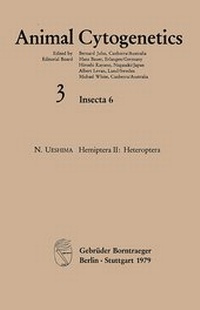
Animal Cytogenetics / Insecta / Hemiptera II: Heteroptera
Heteroptera
Published in 1979
Book
Paperback/Softback
V, 117 pages
978-3-443-26008-8 (ISBN)
Description
Cytological studies on the Heteroptera date from Henking?s (1891) well-known discovery of a ?peculiar chromatin element? in Pyrrhocoris apterus (Pyrrhocoridae) which subsequently proved to be a sex-chromosome. Montgomery (1901a, 1906) and Wilson, in a series of publications spanning the period 1905-1912, made substantial contributions to Heteropteran cytology which provided the impetus for all subsequent studies. The work of the Schraders (Schrader 1940a, 1947a; Hughes-Schrader & Schrader 1961) established that the chromosomes of Heteropterans, like those of Homopterans, are holocentric and have no localised or individualised entromere. This, as we shall see, has important consequences for chromosome evolution within the group. Several taxonomic revisions of the Heteroptera have appeared since the earlier cytological studies so that some of the published work is now confounded by the use of incorrect specific names. In compiling this monograph I have taken the opportunity to correct these so that they conform with current usage.
More details
Content
Preface V
1 Introduction 1
2 Chromosome behaviour during meiosis 1
2.1 Meiosis in Oncopeltus fasciatus 1
2.2 The meiotic behaviour of special chromosomes 4
2.2.1 Sex chromosomes 4
2.2.2 m-chromosomes 9
2.2.3 Supernumerary chromosomes 11
2.3 Meiosis in hybrids 14
2.4 The harlequin lobe self Pentatomids 19
3 Chromosome organisation in the Heteroptera 22
3.1 The holocentric nature of heteropteran chromosomes 22
3.2 The orientation of meiotic chromosomes 24
4 Chromosome systems in the Heteroptera 25
4.1 Dipsocoromorpha 25
4.1.1 Dipsocoridae 25
4.2 Nepomorpha 25
4.2.1 Nepidae 25
4.2.2 Belostomatidae 27
4.2.3 Corixidae 28
4.2.4 Gelastocoridae 29
4.2.5 Ochteridae 29
4.2.6 Naucoridae 31
4.2.7 Notonectidae 31
4.2.8 Pleidae 33
4.3 Gerromorpha 33
4.3.1 Hydrometridae 33
4.3.2 Hebridae 33
4.3.3 Velindae 33
4.3.4 Gerridae 33
4.4 Leptopodomorpha 34
4.4.1 Saldidae 34
4.4.2 Leptopodidae 34
4.5 Cimicomorpha 34
4.5.1 Joppeicidae 34
4.5.2 Tingidae 35
4.5.3 Miridae 35
4.5.4 Nabidae 42
4.5.5 Anthocoridae 42
4.5.6 Cimicidae 42
4.5.7 Polyctenidae 47
4.5.8 Reduviidae 47
4.6 Pentatomorpha 51
4.6.1 Aradidae 51
4.6.2 Colobathristidae 51
4.6.3 Berytidae 52
4.6.4 Lygaeidae 52
4.6.5 Stenocephalidae 66
4.6.6 Largidae 66
4.6.7 Pyrrhocoridae 68
4.6.8 Coreidae 68
4.6.9 Alydidae 73
4.6.10 Rhopalidae 74
4.6.11 Urostylidae 74
4.6.12 Plataspidae 74
4.6.13 Cydnidae 74
4.6.14 Scutelleridae 74
4.6.15 Dinidoridae 74
4.6.16 Tesseratomidae 74
4.6.17 Eumenotidae 74
4.6.18 Pentatomidae 76
4.6.19 Acanthosomatidae 84
5 Chromosome evolution in the Heteroptera 85
5.1 Autosomal evolution 85
5.2 Sex chromosome systems 91
5.2.1 General considerations 91
5.2.2 The evolution of multiple mechanisms 91
5.2.3 The XO system 98
References 100
Species Index 115
1 Introduction 1
2 Chromosome behaviour during meiosis 1
2.1 Meiosis in Oncopeltus fasciatus 1
2.2 The meiotic behaviour of special chromosomes 4
2.2.1 Sex chromosomes 4
2.2.2 m-chromosomes 9
2.2.3 Supernumerary chromosomes 11
2.3 Meiosis in hybrids 14
2.4 The harlequin lobe self Pentatomids 19
3 Chromosome organisation in the Heteroptera 22
3.1 The holocentric nature of heteropteran chromosomes 22
3.2 The orientation of meiotic chromosomes 24
4 Chromosome systems in the Heteroptera 25
4.1 Dipsocoromorpha 25
4.1.1 Dipsocoridae 25
4.2 Nepomorpha 25
4.2.1 Nepidae 25
4.2.2 Belostomatidae 27
4.2.3 Corixidae 28
4.2.4 Gelastocoridae 29
4.2.5 Ochteridae 29
4.2.6 Naucoridae 31
4.2.7 Notonectidae 31
4.2.8 Pleidae 33
4.3 Gerromorpha 33
4.3.1 Hydrometridae 33
4.3.2 Hebridae 33
4.3.3 Velindae 33
4.3.4 Gerridae 33
4.4 Leptopodomorpha 34
4.4.1 Saldidae 34
4.4.2 Leptopodidae 34
4.5 Cimicomorpha 34
4.5.1 Joppeicidae 34
4.5.2 Tingidae 35
4.5.3 Miridae 35
4.5.4 Nabidae 42
4.5.5 Anthocoridae 42
4.5.6 Cimicidae 42
4.5.7 Polyctenidae 47
4.5.8 Reduviidae 47
4.6 Pentatomorpha 51
4.6.1 Aradidae 51
4.6.2 Colobathristidae 51
4.6.3 Berytidae 52
4.6.4 Lygaeidae 52
4.6.5 Stenocephalidae 66
4.6.6 Largidae 66
4.6.7 Pyrrhocoridae 68
4.6.8 Coreidae 68
4.6.9 Alydidae 73
4.6.10 Rhopalidae 74
4.6.11 Urostylidae 74
4.6.12 Plataspidae 74
4.6.13 Cydnidae 74
4.6.14 Scutelleridae 74
4.6.15 Dinidoridae 74
4.6.16 Tesseratomidae 74
4.6.17 Eumenotidae 74
4.6.18 Pentatomidae 76
4.6.19 Acanthosomatidae 84
5 Chromosome evolution in the Heteroptera 85
5.1 Autosomal evolution 85
5.2 Sex chromosome systems 91
5.2.1 General considerations 91
5.2.2 The evolution of multiple mechanisms 91
5.2.3 The XO system 98
References 100
Species Index 115