

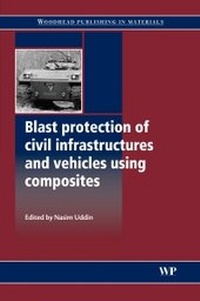
Blast Protection of Civil Infrastructures and Vehicles Using Composites
Published on 12. March 2010
Book
Hardback
448 pages
978-1-84569-399-2 (ISBN)
Description
With the upsurge in terrorism in recent years and the possibility of accidental blast threats, there is growing interest in manufacturing blast 'hardened' structures and retrofitting blast mitigation materials to existing structures. Composites provide the ideal material for blast protection as they can be engineered to give different levels of protection by varying the reinforcements and matrices.
Part one discusses general technical issues with chapters on topics such as blast threats and types of blast damage, processing polymer matrix composites for blast protection, standards and specifications for composite blast protection materials, high energy absorbing composite materials for blast resistant design, modelling the blast response of hybrid laminated composite plates and the response of composite panels to blast wave pressure loadings. Part two reviews applications including ceramic matrix composites for ballistic protection of vehicles and personnel, using composites to protect military vehicles from mine blasts, blast protection of buildings using FRP matrix composites, using composites in blast resistant walls for offshore, naval and defence related structures, using composites to improve the blast resistance of columns in buildings, retrofitting using fibre reinforced polymer composites for blast protection of buildings and retrofitting to improve the blast response of concrete masonry walls.
With its distinguished editor and team of expert contributors, Blast protection of civil infrastructures and vehicles using composites is a standard reference for all those concerned with protecting structures from the effects of blasts in both the civil and military sectors.
Part one discusses general technical issues with chapters on topics such as blast threats and types of blast damage, processing polymer matrix composites for blast protection, standards and specifications for composite blast protection materials, high energy absorbing composite materials for blast resistant design, modelling the blast response of hybrid laminated composite plates and the response of composite panels to blast wave pressure loadings. Part two reviews applications including ceramic matrix composites for ballistic protection of vehicles and personnel, using composites to protect military vehicles from mine blasts, blast protection of buildings using FRP matrix composites, using composites in blast resistant walls for offshore, naval and defence related structures, using composites to improve the blast resistance of columns in buildings, retrofitting using fibre reinforced polymer composites for blast protection of buildings and retrofitting to improve the blast response of concrete masonry walls.
With its distinguished editor and team of expert contributors, Blast protection of civil infrastructures and vehicles using composites is a standard reference for all those concerned with protecting structures from the effects of blasts in both the civil and military sectors.
Reviews / Votes
"This book contains all the information required to start thinking about materials development and implementation in this area." --Materials WorldMore details
Series
Language
English
Place of publication
Cambridge
United Kingdom
Publishing group
Elsevier Science & Technology
Target group
Professional and scholarly
College/higher education
Dimensions
Height: 234 mm
Width: 156 mm
Weight
800 gr
ISBN-13
978-1-84569-399-2 (9781845693992)
Copyright in bibliographic data and cover images is held by Nielsen Book Services Limited or by the publishers or by their respective licensors: all rights reserved.
Schweitzer Classification
Other editions
Additional editions
E-Book
03/2010
Woodhead Publishing
€200.00
Available for download
Person
Dr Nasim Uddin is an Associate Professor of Civil Engineering in the School of Engineering at the University of Alabama at Birmingham.
Content
Part 1 Introduction: Blast threats and blast loading; Standards and specifications for composite blast protection materials; Processing polymer matrix composites for blast protection; High energy absorbing composite materials for blast resistant design; Modelling the blast response of hybrid laminated composite plates; Response of composite panels to blast wave pressure loadings. Part 2 Applications: Ceramic matrix composites for ballistic protection of vehicles and personnel; Developing mine blast resistance for composite based military vehicles; Blast protection of buildings using fibre-reinforced polymer (FRP) composites; The use of composites in blast-resistant walls; Using composites to improve the blast resistance of columns in buildings; Retrofitting using fiber-reinforced polymer (FRP) polymer composites for blast protection of buildings; Retrofitting to improve the blast response of concrete masonry walls.