

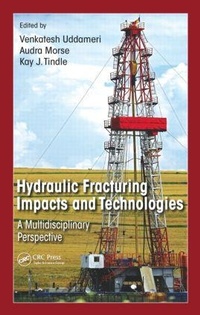
Hydraulic Fracturing Impacts and Technologies
A Multidisciplinary Perspective
1st Edition
Published on 22. June 2015
Book
Hardback
312 pages
978-1-4987-2117-2 (ISBN)
Description
Hydraulic Fracturing Impacts and Technologies: A Multidisciplinary Perspective serves as an introduction to hydraulic fracturing and provides balanced coverage of its benefits and potential negative effects. Presenting a holistic assessment of hydraulic fracturing and its environmental impacts, this book chronicles the history and development of unconventional oil and gas production and describes the risks associated with the use of these technologies. More specifically, it addresses hydraulic fracturing's use and dependence on large amounts of water as a fracturing medium. It examines the limits of reusing flowback and produced water, explores cost-effective ways to clean or effectively dispose of water used in fracturing, and provides suggestions for the efficient use, discovery, and recycle potential of non-potable water. Utilizing a team of experts from industry and academia, the text provides readers with a multiple lens approach-incorporating various perspectives and solutions surrounding this evolving technology.
This book:
Leads with an overview of hydraulic fracturing operations and technologies
Considers a variety of legal issues associated with hydraulic fracturing
Summarizes human health and environmental risks associated with hydraulic fracturing operations
Discusses the analytes chosen by researchers as possible indicators of groundwater contamination from unconventional drilling processes
Presents strategies for reducing the freshwater footprint of hydraulic fracturing
Discusses water treatment technologies and solutions to recycle and reuse produced waters, and more
Hydraulic Fracturing Impacts and Technologies: A Multidisciplinary Perspective brings together experts from disciplines that include petroleum, civil, and environmental engineering; environmental sciences chemistry toxicology; law; media; and communications; and provides readers with a multidisciplinary outlook and unbiased, scientifically credible solutions to issues surrounding hydraulic fracturing operations.
This book:
Leads with an overview of hydraulic fracturing operations and technologies
Considers a variety of legal issues associated with hydraulic fracturing
Summarizes human health and environmental risks associated with hydraulic fracturing operations
Discusses the analytes chosen by researchers as possible indicators of groundwater contamination from unconventional drilling processes
Presents strategies for reducing the freshwater footprint of hydraulic fracturing
Discusses water treatment technologies and solutions to recycle and reuse produced waters, and more
Hydraulic Fracturing Impacts and Technologies: A Multidisciplinary Perspective brings together experts from disciplines that include petroleum, civil, and environmental engineering; environmental sciences chemistry toxicology; law; media; and communications; and provides readers with a multidisciplinary outlook and unbiased, scientifically credible solutions to issues surrounding hydraulic fracturing operations.
Reviews / Votes
"... this book highlights the need to integrate analysis of technologies with environmental and societal impact considerations... for the professionals working within the industry, it also emphasizes what issues need to be addressed, and how those issues should be addressed, in order to potentially convince the public and policy makers that fracture stimulation can be used safely without risking environmental damage, public health issues and overuse/contamination of precious water resources."-Journal of Natural Gas Science and Engineering, 2016
More details
Language
English
Place of publication
Bosa Roca
United States
Publishing group
Taylor & Francis Inc
Target group
College/higher education
Academic and Professional Practice & Development
Product notice
sewn/stitched
Cloth over boards
Illustrations
96 s/w Abbildungen, 25 s/w Tabellen
25 Tables, black and white; 96 Illustrations, black and white
Dimensions
Height: 239 mm
Width: 152 mm
Thickness: 20 mm
Weight
680 gr
ISBN-13
978-1-4987-2117-2 (9781498721172)
Copyright in bibliographic data and cover images is held by Nielsen Book Services Limited or by the publishers or by their respective licensors: all rights reserved.
Schweitzer Classification
Other editions
Additional editions
Venki Uddameri | Audra Morse | Kay J. Tindle
Hydraulic Fracturing Impacts and Technologies
A Multidisciplinary Perspective
E-Book
06/2015
CRC Press
€205.99
Available for download
Venki Uddameri | Audra Morse | Kay J. Tindle
Hydraulic Fracturing Impacts and Technologies
A Multidisciplinary Perspective
E-Book
06/2015
1st Edition
CRC Press
€205.99
Available for download
Persons
Dr. Venkatesh Uddameri, PhD, P.E. is a professor and director of the Water Resources Center in the Department of Civil and Environmental Engineering at Texas Tech University, Lubbock. He has research interests in groundwater modeling, sustainable water resources management, conjunctive surface water-groundwater interactions, water-energy nexus, decision support systems for water resources planning, and climate change. Dr. Uddameri completed his bachelor's degree in civil engineering from Osmania University, India, and received his master's and doctoral degrees in civil engineering and environmental engineering, respectively, from the University of Maine.
Dr. Audra Morse, PE, PhD, is the associate dean for undergraduate studies in the Whitacre College of Engineering (WCOE) and a professor in the Department of Civil and Environmental Engineering at Texas Tech University. She leads the Engineering Opportunities Center, which provides retention, placement, and academic support services to WCOE students. Her professional experience is focused on water and wastewater treatment, specifically water reclamation systems, membrane filtration, and the fate of personal products in treatment systems.
Kay J. Tindle, MEd, is the director of the Research Development Team in the Office of the Vice President for Research at Texas Tech University (TTU), Lubbock. In this role, she links faculty researchers with regional, state, and national partners to further develop collaborative teams to advance and achieve the strategic goals championed by the university. Among other initiatives, she works with the leader of TTU's Unconventional Production Technology and Environmental Consortium (UpTec), a multidisciplinary, collaborative research group that focuses on hydraulic fracturing research. Kay is currently pursuing a PhD in higher education research at TTU.
Dr. Audra Morse, PE, PhD, is the associate dean for undergraduate studies in the Whitacre College of Engineering (WCOE) and a professor in the Department of Civil and Environmental Engineering at Texas Tech University. She leads the Engineering Opportunities Center, which provides retention, placement, and academic support services to WCOE students. Her professional experience is focused on water and wastewater treatment, specifically water reclamation systems, membrane filtration, and the fate of personal products in treatment systems.
Kay J. Tindle, MEd, is the director of the Research Development Team in the Office of the Vice President for Research at Texas Tech University (TTU), Lubbock. In this role, she links faculty researchers with regional, state, and national partners to further develop collaborative teams to advance and achieve the strategic goals championed by the university. Among other initiatives, she works with the leader of TTU's Unconventional Production Technology and Environmental Consortium (UpTec), a multidisciplinary, collaborative research group that focuses on hydraulic fracturing research. Kay is currently pursuing a PhD in higher education research at TTU.
Content
Overview of Hydraulic Fracturing Operations and Technologies. Economic Impact of the Permian Basin's Oil and Gas Industry. From Property Rights to Endangered Species: Legal Issues Surrounding Hydraulic Fracturing. Looking into the Crystal Ball: Potential New EPA Hydraulic Fracturing Rules Impacting Unconventional Oil and Gas Production from Shale Plays. Commentary on Health and Environmental Risks from Hydraulic Fracturing. Health and Environment Risks from Oil and Gas Development. Addressing Concerns about Impacts from Unconventional Drilling Using Advanced Analytical Chemistry. Water Availability in the Permian Basin Region of West Texas. Reuse and Recycling of Flowback and Produced Waters. Impact of Hydraulic Fracturing on Transportation Infrastructure. GIS-Based Assessment of Wastewater Disposal Impacts in Permian Basin, Texas. Challenges and Opportunities for Increasing Guar Production in the United States to Support Unconventional Oil and Gas Production. Characterization of the Properties of Guar Gum to Improve Hydraulic Fracturing Efficiencies. Communicating Fracturing Impacts and Technologies: Assessment, Public Understanding, and Theoretical Linkages. Multidisciplinary Teams as Mechanisms of Accountability: Neutralizing the Emotions and Politics of Hydraulic Fracturing Research.