

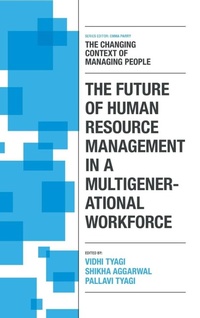
The Future of Human Resource Management in a Multigenerational Workforce
Published on 27. October 2025
Book
Hardback
354 pages
978-1-83708-809-6 (ISBN)
Description
As organizations navigate an increasingly complex and fast-evolving business landscape, The Future of Human Resource Management in a Multigenerational Workforce provides HR professionals, researchers, and business leaders with a comprehensive guide to understanding and managing the workforce of tomorrow.
Driven by technological advancements, demographic shifts, and evolving employee expectations, the future of work demands adaptive and forward-thinking HR strategies. This contributed volume explores essential topics, including workforce planning, talent acquisition, employee engagement, and leadership development, all tailored to meet the challenges of a multigenerational and diverse workforce.
Drawing on contributions from global experts in human resource management, performance systems, and smart data analytics, The Future of Human Resource Management in a Multigenerational Workforce offers a rich blend of research-driven insights and practical strategies. Whether addressing the needs of digital-age employees or preparing leaders for an unpredictable future, this book serves as an invaluable reference for those committed to shaping the future of human resource management.
Driven by technological advancements, demographic shifts, and evolving employee expectations, the future of work demands adaptive and forward-thinking HR strategies. This contributed volume explores essential topics, including workforce planning, talent acquisition, employee engagement, and leadership development, all tailored to meet the challenges of a multigenerational and diverse workforce.
Drawing on contributions from global experts in human resource management, performance systems, and smart data analytics, The Future of Human Resource Management in a Multigenerational Workforce offers a rich blend of research-driven insights and practical strategies. Whether addressing the needs of digital-age employees or preparing leaders for an unpredictable future, this book serves as an invaluable reference for those committed to shaping the future of human resource management.
More details
Series
Language
English
Place of publication
Bingley
United Kingdom
Target group
Professional and scholarly
College/higher education
Dimensions
Height: 158 mm
Width: 238 mm
Thickness: 25 mm
Weight
620 gr
ISBN-13
978-1-83708-809-6 (9781837088096)
Copyright in bibliographic data and cover images is held by Nielsen Book Services Limited or by the publishers or by their respective licensors: all rights reserved.
Schweitzer Classification
Persons
Dr. Vidhi Tyagi is an Associate Professor at Amity College of Commerce and Finance, Amity University, Noida, India.
Dr. Shikha Aggarwal is an Assistant Professor with the Management Department at the Institute of Technology and Science (ITS), Ghaziabad, India.
Dr. Pallavi Tyagi is an Associate Professor at Amity College of Commerce and Finance, Amity University, Noida, India.
Dr. Shikha Aggarwal is an Assistant Professor with the Management Department at the Institute of Technology and Science (ITS), Ghaziabad, India.
Dr. Pallavi Tyagi is an Associate Professor at Amity College of Commerce and Finance, Amity University, Noida, India.
Content
Introduction; Vidhi Tyagi, Shikha Aggarwal, and Pallavi Tyagi
Chapter 1. Sustainable Green Human Resources Management and Influence of Organizational Citizenship Behavior and Emotional Intelligence on Sustainable Start-ups; Broto Rauth Bhardwaj and Shuchi Dikshit
Chapter 2. Analyzing the Effectiveness of Workplace Wellness Programs for Occupational Health; Kamini Rai, Abha Gupta, Karunendra Pratap Singh, Mamta Sharma, and Sushmita Singh
Chapter 3. Artificial Intelligence Adoption for HRM Practices: An Empirical Approach; Abha Gupta, Kamini Rai, Mamta Sharma, Sushmita Singh, and Vidhi Tyagi
Chapter 4. HR 4.0: A Systematic Review of Design Thinking and People Analytics for Future Work Transformations; Anita Pareek
Chapter 5. Emerging Trends in Hybrid Work Environment - A Study Investigating the Needs and Expectations of Gen Z and Millennial Employees; Anam Shahid, Tausif Mulla, and Sufia Munir
Chapter 6. Strategies for Managing Remote Work Teams: A Roadmap to Accelerated Team Productivity and Sustainability; Rakhi Kumari and Geeta Besoya
Chapter 7. Navigating Workplace Diversity: Understanding and Addressing Microaggressions for Inclusive Organizational Culture; Pranjal Pandey, Shuchi Dikshit, and Ramandeep Kaur
Chapter 8. AI Tools in Recruitment and Selection: A Comparative Analysis across Industries; Bhavya Kalra and Shuchi Dikshit
Chapter 9. The Role of Digital Leadership: Job Satisfaction and Employee Engagement in the Multigenerational Workforce of the Private Sector; Khagendra Nath Gangai and Joseph Atta-Woode
Chapter 10. Unveiling the Implication on Employees' Perception and Engagement Level Due to AI-HRM Integration; Rahul Nawani and Hardik Shah
Chapter 11. Navigating Digital Transformation: The Role of Technology in HRM Efficiency and Effectiveness; Sofia Khan and Kartikeya Singh
Chapter 12. Exploring the Evolution of Technology-Driven Human Resource Management: A Bibliometric Analysis; Tarun Tiwari and Pallavi Tyagi
Chapter 13. Boosting Work-Life Balance with Employee Engagement and Innovation; Manoj Kumar Mishra, Sneha Gupta, Soummya Chowdhury, and Shobha Mishra
Chapter 14. Sustainable Organizations: Driving Green Practices through Emotional Intelligence; Tanya Chouhan, Arjita Singh, and Avinash Chopra
Chapter 1. Sustainable Green Human Resources Management and Influence of Organizational Citizenship Behavior and Emotional Intelligence on Sustainable Start-ups; Broto Rauth Bhardwaj and Shuchi Dikshit
Chapter 2. Analyzing the Effectiveness of Workplace Wellness Programs for Occupational Health; Kamini Rai, Abha Gupta, Karunendra Pratap Singh, Mamta Sharma, and Sushmita Singh
Chapter 3. Artificial Intelligence Adoption for HRM Practices: An Empirical Approach; Abha Gupta, Kamini Rai, Mamta Sharma, Sushmita Singh, and Vidhi Tyagi
Chapter 4. HR 4.0: A Systematic Review of Design Thinking and People Analytics for Future Work Transformations; Anita Pareek
Chapter 5. Emerging Trends in Hybrid Work Environment - A Study Investigating the Needs and Expectations of Gen Z and Millennial Employees; Anam Shahid, Tausif Mulla, and Sufia Munir
Chapter 6. Strategies for Managing Remote Work Teams: A Roadmap to Accelerated Team Productivity and Sustainability; Rakhi Kumari and Geeta Besoya
Chapter 7. Navigating Workplace Diversity: Understanding and Addressing Microaggressions for Inclusive Organizational Culture; Pranjal Pandey, Shuchi Dikshit, and Ramandeep Kaur
Chapter 8. AI Tools in Recruitment and Selection: A Comparative Analysis across Industries; Bhavya Kalra and Shuchi Dikshit
Chapter 9. The Role of Digital Leadership: Job Satisfaction and Employee Engagement in the Multigenerational Workforce of the Private Sector; Khagendra Nath Gangai and Joseph Atta-Woode
Chapter 10. Unveiling the Implication on Employees' Perception and Engagement Level Due to AI-HRM Integration; Rahul Nawani and Hardik Shah
Chapter 11. Navigating Digital Transformation: The Role of Technology in HRM Efficiency and Effectiveness; Sofia Khan and Kartikeya Singh
Chapter 12. Exploring the Evolution of Technology-Driven Human Resource Management: A Bibliometric Analysis; Tarun Tiwari and Pallavi Tyagi
Chapter 13. Boosting Work-Life Balance with Employee Engagement and Innovation; Manoj Kumar Mishra, Sneha Gupta, Soummya Chowdhury, and Shobha Mishra
Chapter 14. Sustainable Organizations: Driving Green Practices through Emotional Intelligence; Tanya Chouhan, Arjita Singh, and Avinash Chopra