

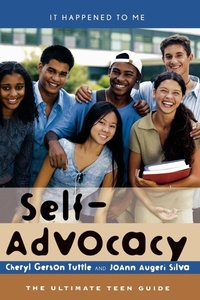
Self-Advocacy
The Ultimate Teen Guide
Published on 22. June 2007
Book
Hardback
232 pages
978-0-8108-5646-2 (ISBN)
Description
Young people come to realize, sometimes painfully early, that it isn't always possible to depend on adults to make sure they are treated safely, fairly, and legally. When teens are faced with situations that are unfair, immoral, illegal, and unjust, they do not need to be victims. They can learn to speak up for themselves effectively to improve their own lives and the lives of others. The skill of self-advocacy rarely comes naturally for teens. Self-Advocacy: The Ultimate Teen Guide offers a set of skills for young people to sort through and acquire and encourages them to speak up about what is bothering them. The book gives them helpful tools they can adapt to deal with adults they must work with-and in some cases against-in order to come to a solution to their problem.
Self-Advocacy provides information teens need to have to advocate for themselves. The introduction and first three chapters explain what self-advocacy is; identify when and why it might be necessary for teens to speak up for themselves; provide a step-by-step guide on how to self-advocate successfully; and offer specific, real-world advice about how to wisely use the power of the media to publicize their cause. Seven issue-specific chapters follow. Each topic is treated in a dignified, organized, and comprehensive way, providing information teens can use and resources they can draw upon. The issues and information in those chapters deal with the real world and don't shy away from the difficulties young people encounter every day, such as personal rights, school issues, learning disabilities, physical disability, sexuality, legal issues, and foster care. Each chapter includes the voices and experiences of teens who have encountered issues and decided to speak up for and get what they need. Teens who learn how to advocate for themselves and then act are not only taking steps to right whatever wrong they have been facing, they are also preparing themselves for a successful adult life.
Self-Advocacy provides information teens need to have to advocate for themselves. The introduction and first three chapters explain what self-advocacy is; identify when and why it might be necessary for teens to speak up for themselves; provide a step-by-step guide on how to self-advocate successfully; and offer specific, real-world advice about how to wisely use the power of the media to publicize their cause. Seven issue-specific chapters follow. Each topic is treated in a dignified, organized, and comprehensive way, providing information teens can use and resources they can draw upon. The issues and information in those chapters deal with the real world and don't shy away from the difficulties young people encounter every day, such as personal rights, school issues, learning disabilities, physical disability, sexuality, legal issues, and foster care. Each chapter includes the voices and experiences of teens who have encountered issues and decided to speak up for and get what they need. Teens who learn how to advocate for themselves and then act are not only taking steps to right whatever wrong they have been facing, they are also preparing themselves for a successful adult life.
Reviews / Votes
Self-advocacy begins with honest self-appraisal and results in a solid appreciation of who you are and what you can accomplish. The path to becoming an effective self-advocate is almost always complicated by self-doubt, misinformation, low expectations and repeated frustrations and setbacks. There is no question that this guide can be a powerful tool for teens (and adult readers) in understanding the importance of self-advocacy, appreciating its potential benefits in school and other settings, and in preparing to take action. -- Dr. Sheldon H. Horowitz, National Center for Learning Disabilities In this practical resource for teens, educators Tuttle and Silva teach the fundamental skills of self-advocacy. In the first three chapters, they explain what self-advocacy is, describe how it is done, and suggest ways of dealing effectively with the media. Each of seven subsequent chapters deals with self-advocacy in the context of a particular issue, such as personal rights, learning disabilities, and foster care. Sprinkled throughout the volume are quotes from teens who decided to speak out on issues affecting them. * Reference and Research Book News *More details
Series
Language
English
Place of publication
Lanham, MD
United States
Target group
Young adult
Interest Age: From 12 to 18 years
Dimensions
Height: 260 mm
Width: 183 mm
Thickness: 17 mm
Weight
629 gr
ISBN-13
978-0-8108-5646-2 (9780810856462)
Copyright in bibliographic data and cover images is held by Nielsen Book Services Limited or by the publishers or by their respective licensors: all rights reserved.
Schweitzer Classification
Other editions
Additional editions
E-Book
06/2007
1st Edition
Scarecrow Press
€61.99
Available for download
E-Book
06/2007
1st Edition
Scarecrow Press
€61.99
Available for download
Persons
Cheryl Gerson Tuttle has more than thirty years experience in education, counseling, and advocacy. She is the coauthor of five books, including Learning Disabilities: The Ultimate Teen Guide (Scarecrow, 2003), and the author of Medications: The Ultimate Teen Guide (Scarecrow, 2005).
JoAnn Augeri Silva is an award-winning writer, editor, public relations professional, and journalism teacher whose work has appeared in numerous publications.
JoAnn Augeri Silva is an award-winning writer, editor, public relations professional, and journalism teacher whose work has appeared in numerous publications.
Content
Part 1 Acknowledgments
Part 2 Introduction
Part 3 1 Why You Should Be Your Own Advocate
Part 4 2 How to Self-Advocate
Part 5 3 Dealing with the Media
Part 6 4 Personal Rights
Part 7 5 School Issues
Part 8 6 Learning Disabilities
Part 9 7 Phsycial Disabilities
Part 10 8 Sexuality
Part 11 9 Legal Issues
Part 12 10 Foster Care
Part 13 Bibliography
Part 14 Index
Part 15 About the Authors
Part 2 Introduction
Part 3 1 Why You Should Be Your Own Advocate
Part 4 2 How to Self-Advocate
Part 5 3 Dealing with the Media
Part 6 4 Personal Rights
Part 7 5 School Issues
Part 8 6 Learning Disabilities
Part 9 7 Phsycial Disabilities
Part 10 8 Sexuality
Part 11 9 Legal Issues
Part 12 10 Foster Care
Part 13 Bibliography
Part 14 Index
Part 15 About the Authors