

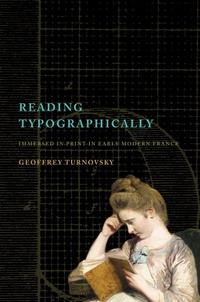
Reading Typographically
Immersed in Print in Early Modern France
Published on 18. June 2024
Book
Hardback
328 pages
978-1-5036-3721-4 (ISBN)
Description
Anxieties about the fate of reading in the digital age reveal how deeply our views of the moral and intellectual benefits of reading are tied to print. These views take root in a conception of reading as an immersive activity, exemplified by the experience of "losing oneself in a book." Against the backdrop of digital distraction and fragmentation, such immersion leads readers to become more focused, collected, and empathetic.
How did we come to see the printed book as especially suited to deliver this experience? Print-based reading practices have historically included a wide range of modes, not least the disjointed scanning we associate today with electronic text. In the context of religious practice, literacy's benefits were presumed to lie in such random-access retrieval, facilitated by indexical tools like the numbering of Biblical chapters and verses. It was this didactic, hunt-and-peck reading that bound readers to communities.
Exploring key evolutions in print in 17th- and 18th-century France, from typeface, print runs, and format to punctuation and the editorial adaptation of manuscript and oral forms in print, this book argues that typographic developments upholding the transparency of the printed medium were decisive for the ascendancy of immersive reading as a dominant paradigm that shaped modern perspectives on reading and literacy.
How did we come to see the printed book as especially suited to deliver this experience? Print-based reading practices have historically included a wide range of modes, not least the disjointed scanning we associate today with electronic text. In the context of religious practice, literacy's benefits were presumed to lie in such random-access retrieval, facilitated by indexical tools like the numbering of Biblical chapters and verses. It was this didactic, hunt-and-peck reading that bound readers to communities.
Exploring key evolutions in print in 17th- and 18th-century France, from typeface, print runs, and format to punctuation and the editorial adaptation of manuscript and oral forms in print, this book argues that typographic developments upholding the transparency of the printed medium were decisive for the ascendancy of immersive reading as a dominant paradigm that shaped modern perspectives on reading and literacy.
Reviews / Votes
"This book will shift discussions of the public sphere, imagined communities, and the role of the public intellectual. In the looming controversies surrounding AI in education, this book makes the case against fetishizing one historically specific kind of reading."-George Hoffmann, University of Michigan "This is a fascinating study. Reading Typographically is an important contribution to our histories of reading, and essential for students and historians of reading."
-Jennifer Richards, University of Cambridge "This provocative and exciting book considers how typographical devices were used for erasing the perception of the materiality of the text and create an unmediated relationship between the reader and characters' voices or the writer's heart. Important and innovative."
-Roger Chartier, College de France "Brilliantly joining literary criticism with book history, this superbly researched study explores the emergence in the 18th century 'reading revolution' of a new kind of 'immersive' reading, abetted by new kinds of page layout and typography.... Highly recommended."-D. L. Patey, CHOICE
More details
Series
Edition
New edition
Language
English
Place of publication
Palo Alto
United States
Target group
Professional and scholarly
Edition type
New edition
Product notice
Cloth
Illustrations
16 halftones
Dimensions
Height: 229 mm
Width: 152 mm
Thickness: 26 mm
Weight
640 gr
ISBN-13
978-1-5036-3721-4 (9781503637214)
Copyright in bibliographic data and cover images is held by Nielsen Book Services Limited or by the publishers or by their respective licensors: all rights reserved.
Schweitzer Classification
Other editions
Additional editions

E-Book
06/2024
1st Edition
Stanford University Press
€139.99
Available for download
Person
Geoffrey Turnovsky is Associate Professor of French at the University of Washington, Seattle. He is the author of The Literary Market: Authorship and Modernity in the Old Regime (2011).
Content
Acknowledgments
Introduction: The Benefits of Reading
1. Typeface: Disappearing Letters from the Romain du Roi to Didot
2. Print Runs: Tender Maps in the Marketplace
3. Format: Appropriations of the Book
4. Editorial Labors: The Typography of Intimate Texts
5. Punctuation Marks: Bringing Speech to Life on the Printed Page
Conclusion: Hybridity and Text Technologies
Notes
Selected Bibliography
Index
Introduction: The Benefits of Reading
1. Typeface: Disappearing Letters from the Romain du Roi to Didot
2. Print Runs: Tender Maps in the Marketplace
3. Format: Appropriations of the Book
4. Editorial Labors: The Typography of Intimate Texts
5. Punctuation Marks: Bringing Speech to Life on the Printed Page
Conclusion: Hybridity and Text Technologies
Notes
Selected Bibliography
Index