

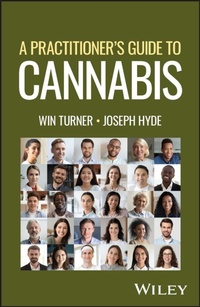
A Practitioner's Guide to Cannabis
Description
A Practitioner's Guide to Cannabis expertly cuts through the political and cultural noise surrounding cannabis use and provides a relevant, timely, and agnostic analysis of cannabis use and abuse.
Incisive and insightful, this book assists behavioral health practitioners to increase their skills in screening, assessment, and intervention while helping them to adopt evidence-based practices. Health care providers will come to rely on this comprehensive resource to understand the risks of cannabis use and to provide a set of intervention strategies effective in a variety of settings.
The book covers topics crucial for understanding the work of behavioral health and health practitioners dealing with cannabis issues, including:
the complexities of cannabis science
our cultural interpretations of the use of cannabis
the risks involved with cannabis use
effective interventions
patients' expressions of their own "biopsychosocial" experience
The book is perfect for social workers, psychologists, professional counselors, alcohol/drug counselors, and providers of health care, including physicians, nurses, and physician's assistants.
<b>Inform and improve your practice with this comprehensive resource on cannabis use and abuse</b>
<i>A Practitioner's Guide to Cannabis </i>expertly cuts through the political and cultural noise surrounding cannabis use and provides a relevant, timely, and agnostic analysis of cannabis use and abuse.
Incisive and insightful, this book assists behavioral health practitioners to increase their skills in screening, assessment, and intervention while helping them to adopt evidence-based practices. Health care providers will come to rely on this comprehensive resource to understand the risks of cannabis use and to provide a set of intervention strategies effective in a variety of settings.
The book covers topics crucial for understanding the work of behavioral health and health practitioners dealing with cannabis issues, including:
<ul><li>the complexities of cannabis science</li><li>our cultural interpretations of the use of cannabis</li><li>the risks involved with cannabis use</li><li>effective interventions </li><li>patients' expressions of their own "biopsychosocial" experience</li></ul>The book is perfect for social workers, psychologists, professional counselors, alcohol/drug counselors, and providers of health care, including physicians, nurses, and physician's assistants.
More details
Other editions
Additional editions
Content
<b>Chapter 2: What is Cannabis?</b>
<ul><li>For most of human history, cannabis has been viewed as a medicinal, spiritual, and recreational substance. Cultures have long recognized both the benefits of cannabis use and the risks of overuse.</li><li>Cannabis co-evolved with human society, and cannabis use has been affected by changes in attitude and policy.</li><li>Cannabis was recognized and used by Western medicine from the 1860s until the 1930s, when public perception changed, and it was deemed harmful.</li><li>Today, laws on cannabis and public attitudes toward its use have evolved; the current trend is toward legalization for medical and recreational purposes.</li></ul><b> </b>
<b>Chapter 3</b><b>: Cannabis: What it's Made of and How it Works</b>
<ul><li>A summary of cannabis plant makeup and chemistry</li><li>Understanding The two most studied cannabinoids are delta-9-tetrahydrocannabinol (THC) and cannabidiol (CBD) and terpenes, the psychoactive chemicals in cannabis</li><li>How cannabis works on the body: CB1 and CB2 receptor sites</li><li>Cannabis effects on the brain</li></ul>Chapter 4: Prevalence and Methods of Cannabis Use <ul><li>Current Usage: Marijuana is the most commonly used illicit drug in the U.S. with approximately 24 million Americans over 12 years old reporting having used marijuana in the past month. More than half of all Americans say they have tried marijuana (Marist Institute for Public Opinion, 2017).</li><li>Methods of use: smoking, vaping, consuming edibles, applying salves and dabbing.</li><li>Due to changes in growing and production, cannabis is more potent and more readily available in multiple strains </li></ul>
<b> </b>
<b>Chapter 5: Cannabis its Recreational Use and its Effects </b>
<ul><li>People are motivated to use cannabis for a variety of desired recreational, medicinal, or psychosocial effects.</li><li>Cannabis users describe why they use.</li><li>Approximately 85% of cannabis users describe few if any negative impacts of cannabis use</li><li>Evidence for the negative psychological, emotional, social and occupational impacts of cannabis use are reviewed</li></ul>
Chapter 6: Medical Cannabis Patients Describe Their Experiences
? Using basic ethnographic research strategies including patient and provider interviews, review of literature and case illustrations: this chapter seeks to represent cannabis use from the point of view of medicinal cannabis users to step outside of narrowly defined assumptions and to better understand the psychosocial experience of medicinal usersChapter 7: A New Approach to Cannabis Screening <ul><li>Introducing the Cannabis Intervention Screener (CIS)</li><li>The CIS validation study is summarized</li><li>The CIS clinical utility for cannabis screening, risk stratification and supporting motivational interventions is described.</li></ul>
<b> </b>
<b>Chapter 8: Cannabis Brief Motivational Intervention</b>
<ul><li>A step by step explanation for the Cannabis Brief Motivational Intervention</li><li>Patient and clinician scripts illustrated the intervention.</li><li>Tips and tools support engaging, focusing, motivating and planning for change</li></ul>
<b>Chapter 9: Effective Treatment for Cannabis Use Disorder: Integrated Motivational Interviewing & Cognitive Behavioral Therapy (MET/CBT)</b>
<ul><li>The Rationale and Context for MET/CBT</li><li>Structured MET/CBT clinical interventions for the treatment of Cannabis Use Disorder</li><li>Behavioral Activation as a core element of the model</li></ul><b><i> </i></b>