

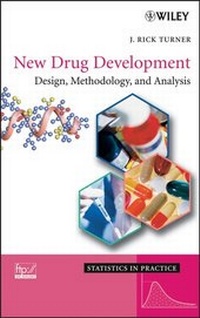
New Drug Development
Design, Methodology, and Analysis
1st Edition
Published on 1. July 2007
Book
Hardback
270 pages
978-0-470-07373-5 (ISBN)
Description
New Drug Development acquaints students and practitioners in the related fields of pharmaceutical sciences, clinical trials, and evidence-based medicine with the necessary study design concepts and statistical practices to allow them to understand how drug developers plan and evaluate their drug development. Two goals of the book are to make the material accessible to readers with minimal background in research and to be straightforward enough for self-taught purposes. By bringing the topic from the early discovery phase to clinical trials and medical practice, the book provides an indispensable overview of an otherwise confusing and fragmented set of topics. The author's experience as a respected scientist, teacher of statistics, and one who has worked in the clinical trials arena makes him well suited to write such a treatise.
Reviews / Votes
"This volume would provide an excellent introduction for anyone entering the pharmaceutical industry. It would also make superb background reading for medical statistics for MSc students." (International Statistical Review Aug 2008) "The book gives a refreshing run through of the drug discovery and development process and it is probably the book you need to have to learn about this fascinating field." (Journal of Applied Statistics, January 2008) "The author has the uncanny ability to reveal the essence of a complex topic without bogging down in superficialities." (Journal of Clinical Research Practices, September 2007)More details
Series
Edition
1., Auflage
Language
English
Place of publication
New York
United States
Publishing group
John Wiley and Sons Ltd
Target group
Professional and scholarly
Illustrations
Illustrations
Dimensions
Height: 23.8 cm
Width: 16.6 cm
Thickness: 20 mm
Weight
562 gr
ISBN-13
978-0-470-07373-5 (9780470073735)
Schweitzer Classification
Person
J. Rick Turner, PhD, is Chairman of the Department of Clinical Research at Campbell University School of Pharmacy in Morrisville, North Carolina. A Fellow of the Society of Behavioral Medicine, his areas of interest include cardiovascular behavioral medicine, drug development, and clinical submissions. Dr. Turner has authored several books as well as more than fifty articles in professional journals, and he received a Commit to Product Development Award from GlaxoSmithKline in 2005.
Content
PART I: INTRODUCTION
CHAPTER 1: NEW DRUG DEVELOPMENT
CHAPTER 2: THE REGULATORY ENVIRONMENT FOR NEW DRUG DEVELOPMENT
PART II: DRUG DISCOVERY AND NONCLINICAL RESEARCH
CHAPTER 3: DRUG DISCOVERY
CHAPTER 4: NONCLINICAL RESEARCH
PART III: DESIGN, METHODOLOGY, AND ANALYSIS
CHAPTER 5: DESIGN AND METHODOLOGY IN CLINICAL TRIALS
CHAPTER 6: STATISTICAL ANALYSIS
CHAPTER 7: STATISTICAL SIGNIFICANCE--EMPLOYMENT OF HYPOTHESIS TESTING
CHAPTER 8: CLINICAL SIGNIFICANCE--EMPLOYMENT OF CONFIDENCE INTERVALS
CHAPTER 9: SAMPLE-SIZE ESTIMATION
PART IV: LIFECYCLE CLINICAL DEVELOPMENT
CHAPTER 10: SAFETY ASSESSMENT IN CLINICAL TRIALS
CHAPTER 11: EFFICACY ASSESSMENT IN CLINICAL TRIALS
CHAPTER 12: PHARMACEUTICAL AND BIOPHARMACEUTICAL DRUG MANUFACTURING
CHAPTER 13: POSTMARKETING SURVEILLANCE AND EVIDENCE-BASED MEDICINE
PART V: INTEGRATIVE DISCUSSION
CHAPTER 14: UNIFYING THEMES AND CONCLUDING COMMENTS
047008023X3ENAbout the Authors.
Acknowledgments.
Introduction to the Second Edition.
Part I: Introduction to Exploitation: Linux on x86.
Chapter 1: Before You Begin.
Chapter 2: Stack Overflows.
Chapter 3: Shellcode.
Chapter 4: Introduction to Format String Bugs.
Chapter 5: Introduction to Heap Overflows.
Part II: Other Platforms--Windows, Solaris, OS/X, and Cisco.
Chapter 6: The Wild World of Windows.
Chapter 7: Windows Shellcode.
Chapter 8: Windows Overflows.
Chapter 9: Overcoming Filters.
Chapter 10: Introduction to Solaris Exploitation.
Chapter 11: Advanced Solaris Exploitation.
Chapter 12: OS X Shellcode.
Chapter 13: Cisco IOS Exploitation.
Chapter 14: Protection Mechanisms.
Part III: Vulnerability Discovery.
Chapter 15: Establishing a Working Environment.
Chapter 16: Fault Injection.
Chapter 17: The Art of Fuzzing.
Chapter 18: Source Code Auditing: Finding Vulnerabilities in C-Based Languages.
Chapter 19: Instrumented Investigation: A Manual Approach.
Chapter 20: Tracing for Vulnerabilities.
Chapter 21: Binary Auditing: Hacking Closed Source Software.
Part IV: Advanced Materials.
Chapter 22: Alternative Payload Strategies.
Chapter 23: Writing Exploits that Work in the Wild.
Chapter 24: Attacking Database Software.
Chapter 25: Unix Kernel Overflows.
Chapter 26: Exploiting Unix Kernel Vulnerabilities.
Chapter 27: Hacking the Windows Kernel.
Index.
CHAPTER 1: NEW DRUG DEVELOPMENT
CHAPTER 2: THE REGULATORY ENVIRONMENT FOR NEW DRUG DEVELOPMENT
PART II: DRUG DISCOVERY AND NONCLINICAL RESEARCH
CHAPTER 3: DRUG DISCOVERY
CHAPTER 4: NONCLINICAL RESEARCH
PART III: DESIGN, METHODOLOGY, AND ANALYSIS
CHAPTER 5: DESIGN AND METHODOLOGY IN CLINICAL TRIALS
CHAPTER 6: STATISTICAL ANALYSIS
CHAPTER 7: STATISTICAL SIGNIFICANCE--EMPLOYMENT OF HYPOTHESIS TESTING
CHAPTER 8: CLINICAL SIGNIFICANCE--EMPLOYMENT OF CONFIDENCE INTERVALS
CHAPTER 9: SAMPLE-SIZE ESTIMATION
PART IV: LIFECYCLE CLINICAL DEVELOPMENT
CHAPTER 10: SAFETY ASSESSMENT IN CLINICAL TRIALS
CHAPTER 11: EFFICACY ASSESSMENT IN CLINICAL TRIALS
CHAPTER 12: PHARMACEUTICAL AND BIOPHARMACEUTICAL DRUG MANUFACTURING
CHAPTER 13: POSTMARKETING SURVEILLANCE AND EVIDENCE-BASED MEDICINE
PART V: INTEGRATIVE DISCUSSION
CHAPTER 14: UNIFYING THEMES AND CONCLUDING COMMENTS
047008023X3ENAbout the Authors.
Acknowledgments.
Introduction to the Second Edition.
Part I: Introduction to Exploitation: Linux on x86.
Chapter 1: Before You Begin.
Chapter 2: Stack Overflows.
Chapter 3: Shellcode.
Chapter 4: Introduction to Format String Bugs.
Chapter 5: Introduction to Heap Overflows.
Part II: Other Platforms--Windows, Solaris, OS/X, and Cisco.
Chapter 6: The Wild World of Windows.
Chapter 7: Windows Shellcode.
Chapter 8: Windows Overflows.
Chapter 9: Overcoming Filters.
Chapter 10: Introduction to Solaris Exploitation.
Chapter 11: Advanced Solaris Exploitation.
Chapter 12: OS X Shellcode.
Chapter 13: Cisco IOS Exploitation.
Chapter 14: Protection Mechanisms.
Part III: Vulnerability Discovery.
Chapter 15: Establishing a Working Environment.
Chapter 16: Fault Injection.
Chapter 17: The Art of Fuzzing.
Chapter 18: Source Code Auditing: Finding Vulnerabilities in C-Based Languages.
Chapter 19: Instrumented Investigation: A Manual Approach.
Chapter 20: Tracing for Vulnerabilities.
Chapter 21: Binary Auditing: Hacking Closed Source Software.
Part IV: Advanced Materials.
Chapter 22: Alternative Payload Strategies.
Chapter 23: Writing Exploits that Work in the Wild.
Chapter 24: Attacking Database Software.
Chapter 25: Unix Kernel Overflows.
Chapter 26: Exploiting Unix Kernel Vulnerabilities.
Chapter 27: Hacking the Windows Kernel.
Index.