

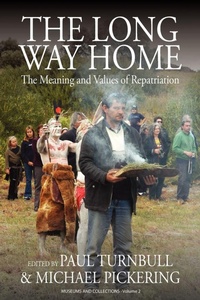
The Long Way Home
The Meaning and Values of Repatriation
1st Edition
Published on 1. November 2010
Book
Paperback/Softback
224 pages
978-1-84545-958-1 (ISBN)
Description
Indigenous peoples have long sought the return of ancestral human remains and associated artifacts from western museums and scientific institutions. Since the late 1970s their efforts have led museum curators and researchers to re-evaluate their practices and policies in respect to the scientific uses of human remains. New partnerships have been established between cultural and scientific institutions and indigenous communities. Human remains and culturally significant objects have been returned to the care of indigenous communities, although the fate of bones and burial artifacts in numerous collections remains unresolved and, in some instances, the subject of controversy. In this book, leading researchers from a wide range of disciplines in the humanities and social sciences reflect critically on the historical, cultural, ethical and scientific dimensions of repatriation. Through various case studies they consider the impact of repatriation: what have been the benefits, and in what ways has repatriation given rise to new problems for indigenous people, scientists and museum personnel. It features chapters by indigenous knowledge custodians, who reflect upon recent debates and interaction between indigenous people and researchers in disciplines with direct interests in the continued scientific preservation of human remains.
In this book, leading researchers from a wide range of disciplines in the humanities and social sciences reflect critically on the historical, cultural, ethical and scientific dimensions of repatriation. Through various case studies they consider the impact of repatriation: what have been the benefits, and in what ways has repatriation given rise to new problems for indigenous people, scientists and museum personnel. It features chapters by indigenous knowledge custodians, who reflect upon recent debates and interaction between indigenous people and researchers in disciplines with direct interests in the continued scientific preservation of human remains.
In this book, leading researchers from a wide range of disciplines in the humanities and social sciences reflect critically on the historical, cultural, ethical and scientific dimensions of repatriation. Through various case studies they consider the impact of repatriation: what have been the benefits, and in what ways has repatriation given rise to new problems for indigenous people, scientists and museum personnel. It features chapters by indigenous knowledge custodians, who reflect upon recent debates and interaction between indigenous people and researchers in disciplines with direct interests in the continued scientific preservation of human remains.
Reviews / Votes
"All of the chapters are highly informative and well written, with balanced perspectives and a genuine intention to educate and inform without assigning undue blame." ? Journal of the Royal Anthropological InstituteMore details
Series
Language
English
Place of publication
Oxford
United Kingdom
Target group
Professional and scholarly
Product notice
Paperback (trade)
Illustrations
Bibliography; Index; 2 Illustrations
Dimensions
Height: 229 mm
Width: 152 mm
Thickness: 12 mm
Weight
321 gr
ISBN-13
978-1-84545-958-1 (9781845459581)
DOI
10.3167/9781845459581
Copyright in bibliographic data and cover images is held by Nielsen Book Services Limited or by the publishers or by their respective licensors: all rights reserved.
Schweitzer Classification
Other editions
Additional editions
E-Book
11/2010
1st Edition
Berghahn Books
€24.49
Available for download
E-Book
11/2010
1st Edition
Berghahn Books
from
€35.09
Available for download
Persons
Paul Turnbull is a Professor of history in the School of History, Philosophy, Religion and Classics at the University of Queensland. He has written extensively on nineteenth-century racial thought, and the theft and repatriation of Indigenous bodily remains. His recent publications include (with Cressida Fforde and Jane Hubert) the co-edited volume The Dead and their Possessions (Routledge).
Content
Acknowledgements
Introduction
Paul Turnbull
PART I: ANCESTORS, NOT SPECIMENS
Chapter 1. The Meanings and Values of Repatriation
Henry Atkinson
Chapter 2. Repatriating Our Ancestors: Who Will Speak for the Dead?
Franchesca Cubillo
PART II: REPATRIATION IN LAW AND POLICY
Chapter 3. Museums, Ethics and Human Remains in England: Recent Developments and Implications for the Future
Liz Bell
Chapter 4. Legal Impediments to the Repatriation of Cultural Objects to Indigenous Peoples
Kathryn Whitby-Last
Chapter 5. Parks Canada's Policies that Guide the Repatriation of Human Remains and Objects
Virginia Myles
PART III: THE ETHICS AND CULTURAL IMPLICATIONS OF REPATRIATION
Chapter 6. What Might an Anthropology of Cultural Property Look Like?
Martin Skrydstrup
Chapter 7. Repatriation and the Concept of Inalienable Possession
Elizabeth Burns Coleman
Chapter 8. Consigned to Oblivion: People and Things Forgotten in the Creation of Australia
John Morton
PART IV: REPATRIATION AND THE HISTORY OF SCIENTIFIC COLLECTING OF INDIGENOUS REMAINS
Chapter 9. The Vermillion Accord and the Significance of the History of the Scientific Procurement and Use of Indigenous Australian Bodily Remains
Paul Turnbull
Chapter 10. Eric Mjoeberg and the Rhetorics of Human Remains
Claes Hallgren
PART V: MUSEUMS, INDIGENOUS PEOPLES AND REPATRIATION
Chapter 11. Scientific Knowledge and Rights in Skeletal Remains - Dilemmas in the Curation of 'Other' People's Bones
Howard Morphy
Chapter 12. Despatches From The Front Line? Museum Experiences in Applied Repatriation
Michael Pickering
Chapter 13. 'You Keep It - We are Christians Here': Repatriation of the Secret Sacred Where Indigenous World-views Have Changed
Kim Akerman
Chapter 14. The First 'Stolen Generations': Repatriation and Reburial in Ngarrindjeri Ruwe (country)
Steve Hemming and Chris Wilson
Notes on Contributors
References
Index
Introduction
Paul Turnbull
PART I: ANCESTORS, NOT SPECIMENS
Chapter 1. The Meanings and Values of Repatriation
Henry Atkinson
Chapter 2. Repatriating Our Ancestors: Who Will Speak for the Dead?
Franchesca Cubillo
PART II: REPATRIATION IN LAW AND POLICY
Chapter 3. Museums, Ethics and Human Remains in England: Recent Developments and Implications for the Future
Liz Bell
Chapter 4. Legal Impediments to the Repatriation of Cultural Objects to Indigenous Peoples
Kathryn Whitby-Last
Chapter 5. Parks Canada's Policies that Guide the Repatriation of Human Remains and Objects
Virginia Myles
PART III: THE ETHICS AND CULTURAL IMPLICATIONS OF REPATRIATION
Chapter 6. What Might an Anthropology of Cultural Property Look Like?
Martin Skrydstrup
Chapter 7. Repatriation and the Concept of Inalienable Possession
Elizabeth Burns Coleman
Chapter 8. Consigned to Oblivion: People and Things Forgotten in the Creation of Australia
John Morton
PART IV: REPATRIATION AND THE HISTORY OF SCIENTIFIC COLLECTING OF INDIGENOUS REMAINS
Chapter 9. The Vermillion Accord and the Significance of the History of the Scientific Procurement and Use of Indigenous Australian Bodily Remains
Paul Turnbull
Chapter 10. Eric Mjoeberg and the Rhetorics of Human Remains
Claes Hallgren
PART V: MUSEUMS, INDIGENOUS PEOPLES AND REPATRIATION
Chapter 11. Scientific Knowledge and Rights in Skeletal Remains - Dilemmas in the Curation of 'Other' People's Bones
Howard Morphy
Chapter 12. Despatches From The Front Line? Museum Experiences in Applied Repatriation
Michael Pickering
Chapter 13. 'You Keep It - We are Christians Here': Repatriation of the Secret Sacred Where Indigenous World-views Have Changed
Kim Akerman
Chapter 14. The First 'Stolen Generations': Repatriation and Reburial in Ngarrindjeri Ruwe (country)
Steve Hemming and Chris Wilson
Notes on Contributors
References
Index