

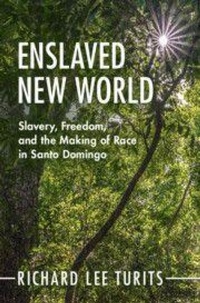
Enslaved New World
Slavery, Freedom, and the Making of Race in Santo Domingo
Will be published approx. on 31. August 2026
Book
Hardback
375 pages
978-1-009-72146-2 (ISBN)
Description
Enslaved New World illuminates sixteenth-century Santo Domingo as the site of the Americas' earliest plantation and slave society and the first place where slavery became limited to people of African descent. Yet Santo Domingo was also home, Turits shows, to widespread continual flight from bondage and an ecology providing escapees with relatively easy refuge. This transformed the colony into a land in which predominantly self-emancipated Black people became the largest population group by the late seventeenth century, 150 years before slavery's abolition. Afterwards, slavery and legal racial hierarchy persisted, but the White elite often remained too poor and weak to overcome resistance and competing constructs of status and color emerged. By focusing on Santo Domingo's understudied African-descended majority population within novel frameworks, Turits opens up new understandings of Dominican history, slavery's racialization, race and racism's historical contingency, and an extraordinarily successful Afro-American trajectory of resistance.
Reviews / Votes
'History at its best! Enslaved New World fundamentally re-orients the narrative of slavery, freedom and race-making in the Americas. On every page, Turits offers the reader so much-superb historical writing, rich conceptualization and nuanced theorization. The new rendering of the history of the New World begins here.' Herman Bennett, author of African Kings and Black Slaves: Sovereignty and Dispossession in the Early Modern Atlantic 'With this transformative reading of the history of Santo Domingo, Richard Turits challenges and reconfigures our understanding of Caribbean and Atlantic history. Woven together through meticulous and insightful reading of archives, Enslaved New World tells the fascinating story of the origins of plantation slavery and of those who refused it and created enduring spaces of autonomy and freedom in its place.' Laurent Dubois, author of Haiti: The Aftershocks of History 'Probing legal fictions and actual practices, Turits provides a fascinating and deeply researched account of how racial identities and practices were made, functioned, and changed during three centuries of life and labor in Santo Domingo. An essential and ground-breaking reading.' Thomas C. Holt, author of The Problem of Freedom: Race, Labor, and Politics in Jamaica and Britain, 1832-1938More details
Series
Language
English
Place of publication
Cambridge
United Kingdom
Target group
College/higher education
Illustrations
Worked examples or Exercises
Weight
500 gr
ISBN-13
978-1-009-72146-2 (9781009721462)
Copyright in bibliographic data and cover images is held by Nielsen Book Services Limited or by the publishers or by their respective licensors: all rights reserved.
Schweitzer Classification
Other editions
Additional editions
Book
approx. 08/2026
Cambridge University Press
€40.00
Not yet published
Person
Richard Lee Turits is a professor of History, Africana Studies, and Latin American Studies at William & Mary. He is the author of Foundations of Despotism: Peasants, the Trujillo Regime, and Modernity in Dominican History; Freedom Roots: Histories from the Caribbean (with Laurent Dubois), and Terreurs de frontiere: Le massacre des Haitiens en Republique Dominicaine en 1937 (with Lauren Derby).
Content
Introduction; 1. Slavery's transformation begins: Santo Domingo in the sixteenth century; 2. Becoming a world of Black and White: the Americas' first plantation society; 3. The enslaved strike back: Santo Domingo's long counter-plantation war; 4. Foiling Spanish supremacy: the pursuit of freedom in the century before abolition; 5. 'As if there were no more classes than free or slave': the problem of race in the eighteenth century; Epilogue: Freedom; Index.