

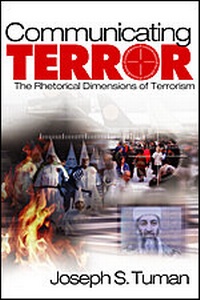
Communicating Terror
The Rhetorical Dimensions of Terrorism
1st Edition
Published on 1. July 2003
Book
Hardback
176 pages
978-0-7619-2765-5 (ISBN)
Description
Communicating Terror: The Rhetorical Dimensions of Terrorism argues that the meaning of terrorism is socially constructed and suggests a new definition of terrorism, chiefly as a process of communication between terrorists and multiple target audiences. Concise yet comprehensive, this up-to-date text examines how acts of "terrorism" create rhetorical acts: What messages, persuasive meanings, symbols, do acts of terrorism generate and communicate to the world at large? These rhetorical components include definitions and labels, symbolism in terrorism, public oratory about terrorism, and the relationship between terror and media. This book examines diverse acts of terrorism, not just September 11th or recent events in the Middle East, to show the history and various effects of these acts as a medium for communication.
This unique communication perspective shows how the rhetoric of terrorism is truly a war of words, symbols, and meanings.
This unique communication perspective shows how the rhetoric of terrorism is truly a war of words, symbols, and meanings.
More details
Language
English
Place of publication
Thousand Oaks
United States
Target group
College/higher education
Product notice
Cloth over boards
Dimensions
Height: 229 mm
Width: 152 mm
Weight
358 gr
ISBN-13
978-0-7619-2765-5 (9780761927655)
Copyright in bibliographic data and cover images is held by Nielsen Book Services Limited or by the publishers or by their respective licensors: all rights reserved.
Schweitzer Classification
Person
Joseph S. Tuman (J.D., University of California, Berkeley; B.A., political science, University of California, Berkeley) is Professor of Political and Legal Communications at San Francisco State University, where he regularly teaches upper-division courses in rhetoric and terrorism, political and legal communication, argumentation & advocacy, and technology and human communication. A past recipient of the Jacobus tenBroek Society Award for Teaching Excellence, Professor Tuman has also taught at the University of California, St. Mary's College, the New School for Social esearch, and Paris II, the top law school in France. He is the author of Political Communication in American Campaigns(SAGE, (c)2008) and the co-author of numerous books, including Freedom of Speech in the Marketplace of Ideas and of The Bedford/St. Martin's Guide to Public Speaking; he has also been the journal editor of Contemporary Argumentation & Debate: The Journal of the Cross Examination Debate Association. His work has been featured in news publications such as the New York Times, Los Angeles Times and the San Francisco Chronicle, and he has served as a network analyst for news programs on ABC, NBC, CNN and CNN International, FOX and the BBC. He currently appears as a regular political commentator for CBS in the western United States.
Content
Preface
Introduction
1. The Struggle to Define Terrorism
Defining Terrorism
Tracing the Roots of the Word as a Label
Academic Definitions
State Definitions
International Definitions
How Terrorists Define Themselves
Terrorism and Political Violence
A Second Attempt at Synthesizing the Definition
2. Terrorism as a Communication Process with Rhetorical Dimensions
Terrorism as Communication Process
Terrorism as Rhetoric
Exploring the Meaning of Rhetoric
Connecting Terrorism and Rhetoric
3. Labeling and Defining Terrorism as Rhetoric
Definitions and Labels
Definitions and Labels can Empower, Marginalize: The Example of "Hate"
Negotiating Definitions and Labels Creates Flexible Meaning: The Example of "Color"
Definitions, Labels and the "Opposite of Normal"
Reconsidering the Definition of Terrorism
Definitions, Labels and Empowerment/Marginalization
Terrorism and The Other
Definition of Terrorism and the Theory Of Presumption
4. Symbols, Symbolism and Terrorism
Symbols, Sybolism and Violence/Destruction
Timothy McVeigh and the Oklahoma City Bombing
The Japanese Red Army
The Tupamaros
The November 17
Terror from Above: the USSR in Afghanistan
Suicide Bombers in Israel and Palestine
The KKK in America
Symbolism in the Implements and Tools of Terrorism
Symbolism in the Target of Terrorism
Symbolism in the World Trade Center and the Pentagon
5. Public Oratory about Terrorism
A Method of Rhetoric for Public Oratory
Public Speaking and Persuasion as Audience-Centered Rhetoric
Public Speaking, Oratory and Rhetorical Appeals
Public Speaking, Oratory and Rhetorical Figures
Public Speaking, Oratory and Rhetorical Fallacies
Case Studies
President Bush's Speech on Terrorism and 9/11 (September 11, 2001)
Audience Analysis of Pres. Bush's Speeh of 9/11
Selection of Rhetorical Appeals
Figures and Fallacies in the 9/11 Speech
President Bush's Speech on the Response to Terror (September 20, 2001)
Audience Analysis of the 9/20 Speech
Selection of Rhetorical Appeals
Figures and Fallacies in the 9/20 Speech
6. Mass Mediated Images and Construction of Terrorism
Understanding Mass Media
Terrorism From Above and Mass Media
Terrorism From Below and Mass Media
Terrorist Stereotypes and Entertainment Media
Mythologizing Terrorism in News and Entertainment Media
Manipulation of and by News Media
Terrorism and Paid Media
Terrorism, Codes and Cues
Introduction
1. The Struggle to Define Terrorism
Defining Terrorism
Tracing the Roots of the Word as a Label
Academic Definitions
State Definitions
International Definitions
How Terrorists Define Themselves
Terrorism and Political Violence
A Second Attempt at Synthesizing the Definition
2. Terrorism as a Communication Process with Rhetorical Dimensions
Terrorism as Communication Process
Terrorism as Rhetoric
Exploring the Meaning of Rhetoric
Connecting Terrorism and Rhetoric
3. Labeling and Defining Terrorism as Rhetoric
Definitions and Labels
Definitions and Labels can Empower, Marginalize: The Example of "Hate"
Negotiating Definitions and Labels Creates Flexible Meaning: The Example of "Color"
Definitions, Labels and the "Opposite of Normal"
Reconsidering the Definition of Terrorism
Definitions, Labels and Empowerment/Marginalization
Terrorism and The Other
Definition of Terrorism and the Theory Of Presumption
4. Symbols, Symbolism and Terrorism
Symbols, Sybolism and Violence/Destruction
Timothy McVeigh and the Oklahoma City Bombing
The Japanese Red Army
The Tupamaros
The November 17
Terror from Above: the USSR in Afghanistan
Suicide Bombers in Israel and Palestine
The KKK in America
Symbolism in the Implements and Tools of Terrorism
Symbolism in the Target of Terrorism
Symbolism in the World Trade Center and the Pentagon
5. Public Oratory about Terrorism
A Method of Rhetoric for Public Oratory
Public Speaking and Persuasion as Audience-Centered Rhetoric
Public Speaking, Oratory and Rhetorical Appeals
Public Speaking, Oratory and Rhetorical Figures
Public Speaking, Oratory and Rhetorical Fallacies
Case Studies
President Bush's Speech on Terrorism and 9/11 (September 11, 2001)
Audience Analysis of Pres. Bush's Speeh of 9/11
Selection of Rhetorical Appeals
Figures and Fallacies in the 9/11 Speech
President Bush's Speech on the Response to Terror (September 20, 2001)
Audience Analysis of the 9/20 Speech
Selection of Rhetorical Appeals
Figures and Fallacies in the 9/20 Speech
6. Mass Mediated Images and Construction of Terrorism
Understanding Mass Media
Terrorism From Above and Mass Media
Terrorism From Below and Mass Media
Terrorist Stereotypes and Entertainment Media
Mythologizing Terrorism in News and Entertainment Media
Manipulation of and by News Media
Terrorism and Paid Media
Terrorism, Codes and Cues