

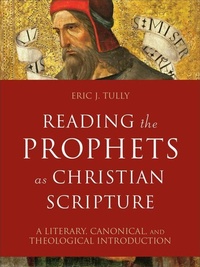
Reading the Prophets as Christian Scripture - A Literary, Canonical, and Theological Introduction
Published on 17. May 2022
Book
Hardback
432 pages
978-0-8010-9973-1 (ISBN)
Description
Southwestern Journal of Theology 2022 Book Award (Honorable Mention, Biblical Studies)
This survey textbook is grounded in the view that the prophetic books of the Old Testament should be read as Christian Scripture. Although it covers critical issues such as authorship, background, and history, its primary focus is on the message and theology of the prophetic books and the contribution they make to the Christian canon. Particular attention is given to literary issues, such as the structure of each prophetic book. Full-color illustrations, diagrams, and artwork bring the text to life. Additional resources for instructors and students are available through Textbook eSources.
This survey textbook is grounded in the view that the prophetic books of the Old Testament should be read as Christian Scripture. Although it covers critical issues such as authorship, background, and history, its primary focus is on the message and theology of the prophetic books and the contribution they make to the Christian canon. Particular attention is given to literary issues, such as the structure of each prophetic book. Full-color illustrations, diagrams, and artwork bring the text to life. Additional resources for instructors and students are available through Textbook eSources.
More details
Language
English
Place of publication
Ada, MI
United States
Publishing group
Baker Publishing Group
Target group
Professional and scholarly
College/higher education
Dimensions
Height: 243 mm
Width: 185 mm
Thickness: 30 mm
Weight
1116 gr
ISBN-13
978-0-8010-9973-1 (9780801099731)
Copyright in bibliographic data and cover images is held by Nielsen Book Services Limited or by the publishers or by their respective licensors: all rights reserved.
Schweitzer Classification
Person
Eric J. Tully (PhD, University of Wisconsin-Madison) is associate professor of Old Testament and Semitic languages and director of the PhD (Theological Studies) program at Trinity Evangelical Divinity School in Deerfield, Illinois. He is the author of The Translation and Translator of the Peshitta of Hosea and coauthor of Old Testament Textual Criticism.
Content
1. Introduction
Part 1: The Context of the Prophets
2. The Theological Context of the Prophets
3. The Historical Context of the Prophets
Part 2: The Old Testament Prophet
4. The Role of the Old Testament Prophet
5. False Prophets and the Prophets of the Nations
6. The Message of the Prophets
7. The Persuasive Strategies of the Prophets
8. From Prophetic Word to Biblical Book
Part 3: The Prophetic Books
9. Isaiah
10. Jeremiah
11. Ezekiel
12. Daniel
13. Hosea
14. Joel
15. Amos
16. Obadiah
17. Jonah
18. Micah
19. Nahum
20. Habakkuk
21. Zephaniah
22. Haggai
23. Zechariah
24. Malachi
Index
Part 1: The Context of the Prophets
2. The Theological Context of the Prophets
3. The Historical Context of the Prophets
Part 2: The Old Testament Prophet
4. The Role of the Old Testament Prophet
5. False Prophets and the Prophets of the Nations
6. The Message of the Prophets
7. The Persuasive Strategies of the Prophets
8. From Prophetic Word to Biblical Book
Part 3: The Prophetic Books
9. Isaiah
10. Jeremiah
11. Ezekiel
12. Daniel
13. Hosea
14. Joel
15. Amos
16. Obadiah
17. Jonah
18. Micah
19. Nahum
20. Habakkuk
21. Zephaniah
22. Haggai
23. Zechariah
24. Malachi
Index