

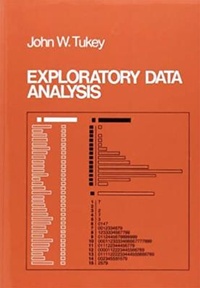
Exploratory Data Analysis
Published on 1. January 1977
Book
Paperback/Softback
712 pages
978-0-201-07616-5 (ISBN)
Description
The approach in this introductory book is that of informal study of the data. Methods range from plotting picture-drawing techniques to rather elaborate numerical summaries. Several of the methods are the original creations of the author, and all can be carried out either with pencil or aided by hand-held calculator.
More details
Other editions
New editions
John Tukey
Exploratory Data Analysis (Classic Version)
Book
04/2019
Pearson
€134.91
Shipment within 15-20 days
Content
1. Scratching Down Numbers (stem-and-leaf).
2. Schematic Summaries (pictures and numbers).
3. Easy Re-Expression (including well-chosen expression).
4. Plots of Relationship.
5. Straightening Out Plots (using three points).
6. Smoothing Sequences.
7. Parallel and Wandering Schematic Plots.
8. Delineations of Batches and Points.
9. Using Two-Way Analyses.
10. Making Two-Way Analyses.
11. Advanced Fits.
12. Three-Way Fits.
13. Looking in Two or More Batches of Points.
14. Counted Fractions.
15. Better Smoothing.
16. Counts in Bin after Bin.
17. Product Ratio Plots.
18. Shapes of Distribution.
19. Mathematical Distributions.
20. Postscript.
2. Schematic Summaries (pictures and numbers).
3. Easy Re-Expression (including well-chosen expression).
4. Plots of Relationship.
5. Straightening Out Plots (using three points).
6. Smoothing Sequences.
7. Parallel and Wandering Schematic Plots.
8. Delineations of Batches and Points.
9. Using Two-Way Analyses.
10. Making Two-Way Analyses.
11. Advanced Fits.
12. Three-Way Fits.
13. Looking in Two or More Batches of Points.
14. Counted Fractions.
15. Better Smoothing.
16. Counts in Bin after Bin.
17. Product Ratio Plots.
18. Shapes of Distribution.
19. Mathematical Distributions.
20. Postscript.