

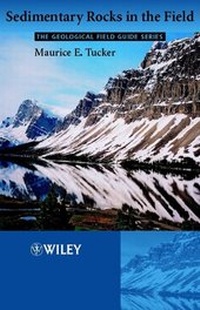
Sedimentary Rocks in the Field
3rd Edition
Published on 21. March 2003
Book
Paperback/Softback
244 pages
978-0-470-85123-4 (ISBN)
Description
This handy pocket-sized guide shows how to achieve successful fieldwork on sedimentary rocks, paying particular detail to the precision and accuracy of recording detail. Various sedimentary rock-types, textures and all the basic field techniques required are clearly described.
Thoroughly revised to incorporate up-to-date information, this 3rd edition will be of use to all students and professionals with a geological background.
Features include:
* New sections on safety in the field, the use of GPS in sedimentary studies, core description, fossils as depth indicators and facies models.
* Improved illustrations and a new updated layout.
Thoroughly revised to incorporate up-to-date information, this 3rd edition will be of use to all students and professionals with a geological background.
Features include:
* New sections on safety in the field, the use of GPS in sedimentary studies, core description, fossils as depth indicators and facies models.
* Improved illustrations and a new updated layout.
Reviews / Votes
"...The basic field techniques required are clearly described, with tables, illustrations and photos..." ( DEW Journal, Vol.14, No.1, November 2004) "...a practical guide...appropriate and well-designed..." (Geological Magazine, 2005; Vol.142 (2))More details
Series
Edition
3., Auflage
Language
English
Place of publication
Chichester
United Kingdom
Publishing group
John Wiley and Sons Ltd
Target group
Professional and scholarly
Edition type
Revised edition
Illustrations
Illustrations
Dimensions
Height: 17.9 cm
Width: 11.8 cm
Thickness: 17 mm
Weight
284 gr
ISBN-13
978-0-470-85123-4 (9780470851234)
Schweitzer Classification
Other editions
New editions
Book
01/2011
4th Edition
Wiley
€41.00
Shipment within 10-20 days
Previous edition
Maurice E. Tucker
Sedimentary Rocks in the Field
Book
01/1996
2nd Edition
Wiley
€27.90
Article exhausted; check for reprint
Content
Preface.
Acknowledgement.
1 Introduction.
Tools of the Trade.
Other Tools for the Field.
Use of GPS in Sedimentary Studies.
Safety in the Field and General Guidance for Fieldwork.
2 Field Techniques.
What to Look for.
The Approach.
Field Notes.
Graphic Logs.
The Logging of Cores.
Lithofacies Codes.
Collecting Specimens.
Presentation of Results.
The Way-Up of Sedimentary Strata.
Stratigraphic Practice.
3 Sedimentary Rock Types.
Principal Lithological Groups
Sandstones.
Conglomerates and Breccias.
Mudrocks.
Limestones.
Evaporites.
Ironstones.
Cherts.
Sedimentary Phosphate Deposits (Phosphorites).
Organic-Rich Deposits.
Volcaniclastic Deposits.
4 Sedimentary Rock Texture.
Introduction.
Sediment Grain Size and Sorting.
Grain Morphology.
Sediment Fabric.
Textural Maturity.
Texture of Conglomerates and Breccias.
Induration and Degree of Weathering.
Colour of Sedimentary Rocks.
5 Sedimentary Structures and Geometry of Sedimentary Deposits.
Introduction.
Erosional Structures.
Depositional Structures.
Depositional Structures of Limestones (Including Dolomites).
Post-Depositional Sedimentary Structures.
Biogenic Sedimentary Structures.
Geometry of Sedimentary Deposits and Lateral Facies Changes.
6 Fossils in the Field.
Introduction.
Fossil Distribution and Preservation.
Fossil Associations and Diversity.
Skeletal Diagenesis.
7 Palaeocurrent Analysis.
Introduction.
Palaeocurrent Measurements.
Structures for Palaeocurrent Measurement.
Presentation of Results and Calculation of Vector Means.
Interpretation of the Palaeocurrent Pattern.
8 What Next? Facies Analysis, Cycles and Sequences.
Introduction.
Facies Analysis.
Facies Models and Depositional Environments.
Cycle Stratigraphy and Sequence Stratigraphy.
References and Further Reading.
Index.
Acknowledgement.
1 Introduction.
Tools of the Trade.
Other Tools for the Field.
Use of GPS in Sedimentary Studies.
Safety in the Field and General Guidance for Fieldwork.
2 Field Techniques.
What to Look for.
The Approach.
Field Notes.
Graphic Logs.
The Logging of Cores.
Lithofacies Codes.
Collecting Specimens.
Presentation of Results.
The Way-Up of Sedimentary Strata.
Stratigraphic Practice.
3 Sedimentary Rock Types.
Principal Lithological Groups
Sandstones.
Conglomerates and Breccias.
Mudrocks.
Limestones.
Evaporites.
Ironstones.
Cherts.
Sedimentary Phosphate Deposits (Phosphorites).
Organic-Rich Deposits.
Volcaniclastic Deposits.
4 Sedimentary Rock Texture.
Introduction.
Sediment Grain Size and Sorting.
Grain Morphology.
Sediment Fabric.
Textural Maturity.
Texture of Conglomerates and Breccias.
Induration and Degree of Weathering.
Colour of Sedimentary Rocks.
5 Sedimentary Structures and Geometry of Sedimentary Deposits.
Introduction.
Erosional Structures.
Depositional Structures.
Depositional Structures of Limestones (Including Dolomites).
Post-Depositional Sedimentary Structures.
Biogenic Sedimentary Structures.
Geometry of Sedimentary Deposits and Lateral Facies Changes.
6 Fossils in the Field.
Introduction.
Fossil Distribution and Preservation.
Fossil Associations and Diversity.
Skeletal Diagenesis.
7 Palaeocurrent Analysis.
Introduction.
Palaeocurrent Measurements.
Structures for Palaeocurrent Measurement.
Presentation of Results and Calculation of Vector Means.
Interpretation of the Palaeocurrent Pattern.
8 What Next? Facies Analysis, Cycles and Sequences.
Introduction.
Facies Analysis.
Facies Models and Depositional Environments.
Cycle Stratigraphy and Sequence Stratigraphy.
References and Further Reading.
Index.