

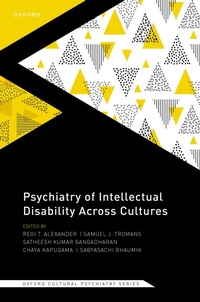
Psychiatry of Intellectual Disability Across Cultures
1st Edition
Published on 9. November 2023
Book
Hardback
416 pages
978-0-19-885760-0 (ISBN)
Description
Intellectual disability is a lifelong condition involving deficits in both intellectual and adaptive functioning. Individuals with intellectual disability experience a greater burden of co-occurring physical and mental illness compared to the general population, and often need a significant degree of support from healthcare professionals and carers, as well as family and friends. Additionally, their lives can be greatly influenced both positively and negatively by the cultures in which they exist, including societal attitudes, belief systems and norms.
An insightful addition to the Oxford Cultural Psychiatry series, Psychiatry of Intellectual Disability across Cultures explores the health, support structures, and societal attitudes towards people with intellectual disabilities throughout the world.
Written by international experts of intellectual disability and mental health, this comprehensive textbook covers broad topics such as anthropology, mental health, physical health, research, and sexuality. It also comprises chapters dedicated to specific geographic regions, such as Africa, America, Australasia, Europe, India, the Middle East, and the United Kingdom and Ireland.
An insightful addition to the Oxford Cultural Psychiatry series, Psychiatry of Intellectual Disability across Cultures explores the health, support structures, and societal attitudes towards people with intellectual disabilities throughout the world.
Written by international experts of intellectual disability and mental health, this comprehensive textbook covers broad topics such as anthropology, mental health, physical health, research, and sexuality. It also comprises chapters dedicated to specific geographic regions, such as Africa, America, Australasia, Europe, India, the Middle East, and the United Kingdom and Ireland.
More details
Series
Language
English
Place of publication
Oxford
United Kingdom
Target group
Professional and scholarly
Product notice
sewn/stitched
Cloth over boards
Dimensions
Height: 232 mm
Width: 162 mm
Thickness: 30 mm
Weight
765 gr
ISBN-13
978-0-19-885760-0 (9780198857600)
Copyright in bibliographic data and cover images is held by Nielsen Book Services Limited or by the publishers or by their respective licensors: all rights reserved.
Schweitzer Classification
Other editions
Additional editions
E-Book
02/2024
1st Edition
OUP eBook
€52.99
Available for download
E-Book
10/2023
1st Edition
OUP eBook
€52.99
Available for download
Persons
Samuel Tromans is an Associate Professor of Psychiatry at the Department of Health Sciences, University of Leicester, and an Honorary Consultant Psychiatrist at the Adult Learning Disability Service, Leicestershire Partnership NHS Trust. He completed his PhD in autism epidemiology in 2021 at the University of Leicester, under the supervision of Professor Traolach (Terry) Brugha, who he continues to work with. As a psychiatry trainee, he won the Alec Shapiro prize (Royal College of Psychiatrists) three times. His academic research is related to psychiatric epidemiology, and clinically he works as a community psychiatrist for adults with intellectual disabilities.
Regi Alexander graduated from the University of Kerala, India and completed a Diploma in Psychological Medicine from the National Institute of Mental Health & Neurosciences, India. He is a fellow of the Royal College of Psychiatrists and served as its associate dean for advanced learning. An author of about 100 publications, he is also the editor of the Oxford Textbook of Psychiatry of Intellectual Disability. He is the current President of the Royal Society of Medicine- Intellectual Disability Section and convenor of RADiANT - a research network of NHS Trusts, academics, service-users, and family members.
Satheesh Gangadharan graduated in medicine from University of Kerala, India, completed post-graduation in psychiatry (MD psychiatry and Diplomate of the National Board of Medicine) before moving to UK. Fellow of the Royal College of Psychiatrist, been a consultant in psychiatry of Intellectual Disability for 20 years and held senior leadership roles in NHS such as being the Medical Director of Leicestershire Partnership NHS Trust. Currently focusing on clinical work and research with affiliations to University of Leicester and Loughborough University.
Chaya Kapugama is a consultant psychiatrist in intellectual disabilities at Sussex Partnership Foundation Trust and an honorary senior (clinical) lecturer at Brighton and Sussex Medical School. She graduated from University of Colombo, Sri Lanka and has completed her higher training in Intellectual Disability Psychiatry in Leicester.
Sabyasachi Bhaumik practiced as a Consultant Psychiatrist in Learning Disability and was the Medical Director of Leicestershire Partnership NHS Trust, where he established a nationally recognized research culture in learning disability. In 2005, he was winner of Hospital Doctor Award for Psychiatry Team of the Year, and was awarded an OBE in 2006 for services to medicine. He served as Chair of Faculty of LD, RCPsych (2006-2010), after which he led the College's international education and training programme. He was Chair of the Diaspora Organisation Committee of RCPsych and Honorary Professor of Psychiatry with the University of Leicester.
Regi Alexander graduated from the University of Kerala, India and completed a Diploma in Psychological Medicine from the National Institute of Mental Health & Neurosciences, India. He is a fellow of the Royal College of Psychiatrists and served as its associate dean for advanced learning. An author of about 100 publications, he is also the editor of the Oxford Textbook of Psychiatry of Intellectual Disability. He is the current President of the Royal Society of Medicine- Intellectual Disability Section and convenor of RADiANT - a research network of NHS Trusts, academics, service-users, and family members.
Satheesh Gangadharan graduated in medicine from University of Kerala, India, completed post-graduation in psychiatry (MD psychiatry and Diplomate of the National Board of Medicine) before moving to UK. Fellow of the Royal College of Psychiatrist, been a consultant in psychiatry of Intellectual Disability for 20 years and held senior leadership roles in NHS such as being the Medical Director of Leicestershire Partnership NHS Trust. Currently focusing on clinical work and research with affiliations to University of Leicester and Loughborough University.
Chaya Kapugama is a consultant psychiatrist in intellectual disabilities at Sussex Partnership Foundation Trust and an honorary senior (clinical) lecturer at Brighton and Sussex Medical School. She graduated from University of Colombo, Sri Lanka and has completed her higher training in Intellectual Disability Psychiatry in Leicester.
Sabyasachi Bhaumik practiced as a Consultant Psychiatrist in Learning Disability and was the Medical Director of Leicestershire Partnership NHS Trust, where he established a nationally recognized research culture in learning disability. In 2005, he was winner of Hospital Doctor Award for Psychiatry Team of the Year, and was awarded an OBE in 2006 for services to medicine. He served as Chair of Faculty of LD, RCPsych (2006-2010), after which he led the College's international education and training programme. He was Chair of the Diaspora Organisation Committee of RCPsych and Honorary Professor of Psychiatry with the University of Leicester.
Volume editor
Associate Professor of PsychiatryAssociate Professor of Psychiatry, Department of Health Sciences, University of Leicester
Visiting ProfessorVisiting Professor, University of Hertfordshire
Consultant PsychiatristConsultant Psychiatrist, Adult Learning Disability Service, Leicestershire Partnership NHS Trust
Honorary Senior LecturerHonorary Senior Lecturer, Brighton and Sussex Medical School
Honorary Professor of PsychiatryHonorary Professor of Psychiatry, Department of Health Sciences, University of Leicester
Content
Section 1 - Introduction and epidemiology
1: Concepts and prevalence of intellectual disability across cultures
2: Physical health of people with intellectual disability across cultures
3: Neurodevelopmental disorders in people with intellectual disability
4: Mental health in intellectual disability across cultures
5: Research in intellectual disability across cultures
Section 2 - General issues
6: Anthropology and intellectual disability across cultures
7: Perception of intellectual disability across cultures
8: Safeguarding the rights of people with intellectual disability across cultures
9: Sexuality, marriage and parenthood across cultures
10: Models of healthcare provision
Section 3 - Management in a cultural context
11: Culture and therapies
12: Family networks and voluntary sector participation in the care of people with intellectual disabilities
13: Intellectual disability, spirituality, religion and social inclusion across cultures
14: People with intellectual disability in the criminal justice system
Section 4 - Service models in different countries
15: North America (Canada and USA)
16: South America
17: UK and Ireland
18: Europe (Eastern and Western)
19: Africa
20: Middle East
21: Indian Subcontinent
22: Australia & New Zealand
1: Concepts and prevalence of intellectual disability across cultures
2: Physical health of people with intellectual disability across cultures
3: Neurodevelopmental disorders in people with intellectual disability
4: Mental health in intellectual disability across cultures
5: Research in intellectual disability across cultures
Section 2 - General issues
6: Anthropology and intellectual disability across cultures
7: Perception of intellectual disability across cultures
8: Safeguarding the rights of people with intellectual disability across cultures
9: Sexuality, marriage and parenthood across cultures
10: Models of healthcare provision
Section 3 - Management in a cultural context
11: Culture and therapies
12: Family networks and voluntary sector participation in the care of people with intellectual disabilities
13: Intellectual disability, spirituality, religion and social inclusion across cultures
14: People with intellectual disability in the criminal justice system
Section 4 - Service models in different countries
15: North America (Canada and USA)
16: South America
17: UK and Ireland
18: Europe (Eastern and Western)
19: Africa
20: Middle East
21: Indian Subcontinent
22: Australia & New Zealand