

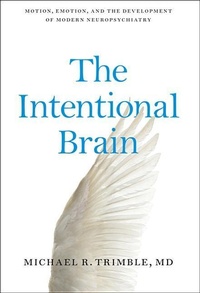
The Intentional Brain
Motion, Emotion, and the Development of Modern Neuropsychiatry
Will be published approx. on 10. August 2016
Book
Hardback
328 pages
978-1-4214-1949-7 (ISBN)
Description
Neuropsychiatry has a distinguished history, yet its ideals and principles fell out of fashion in the early twentieth century as neurology and psychiatry diverged into separate disciplines. Later, neuropsychiatry reemerged as the two disciplines moved closer again, accelerated by advances in neuroanatomy, neurochemistry, and drugs that alter the functioning of the central nervous system. But as neuropsychiatrist Michael R. Trimble explains in The Intentional Brain, the new neuropsychiatry has its own identity and is more than simply a borderland between two disparate clinical disciplines. Looking at neuropsychiatry in the context of major cultural and artistic achievements, Trimble explores changing views of the human brain and its relation to behavior and cognition over 2,500 years of Western civilization. Beginning with the early Greek physicians and moving through the Middle Ages, the Enlightenment, the romantic era, the World Wars, and up to the present day, he explores understandings about the brain's integral role in determining movement, motivation, and mood.
Persuasively arguing that storytelling forms the backbone of human culture and individuality, Trimble describes the dawn and development of artistic creativity and traces the conflicts between differing philosophical views of our world and our position in it. A sweeping history of the branch of medicine concerned with both psychic and organic aspects of mental disorder, the book reveals what scientists have learned about movement and emotion by studying people with such diseases as epilepsy, syphilis, hysteria, psychosis, movement disorders, and melancholia. The Intentional Brain is a marvelous and interdisciplinary look at the clinical interface between the mind and the brain.
Persuasively arguing that storytelling forms the backbone of human culture and individuality, Trimble describes the dawn and development of artistic creativity and traces the conflicts between differing philosophical views of our world and our position in it. A sweeping history of the branch of medicine concerned with both psychic and organic aspects of mental disorder, the book reveals what scientists have learned about movement and emotion by studying people with such diseases as epilepsy, syphilis, hysteria, psychosis, movement disorders, and melancholia. The Intentional Brain is a marvelous and interdisciplinary look at the clinical interface between the mind and the brain.
Reviews / Votes
It reminded me exactly why I love psychiatry, for its complex history and ongoing scientific mystery. If you are feeling in need of a reminder of how far we have come, Trimble may provide just that inspiration. British Society for the History of MedicineMore details
Language
English
Place of publication
Baltimore, MD
United States
Target group
Professional and scholarly
Product notice
sewn/stitched
Cloth over boards
Illustrations
12 s/w Photographien bzw. Rasterbilder, 4 s/w Zeichnungen
4 Line drawings, black and white; 12 Halftones, black and white
Dimensions
Height: 236 mm
Width: 156 mm
Thickness: 27 mm
Weight
587 gr
ISBN-13
978-1-4214-1949-7 (9781421419497)
DOI
10.1353/book.47465
Copyright in bibliographic data and cover images is held by Nielsen Book Services Limited or by the publishers or by their respective licensors: all rights reserved.
Schweitzer Classification
Other editions
Additional editions
Michael R. Trimble
The Intentional Brain
Motion, Emotion, and the Development of Modern Neuropsychiatry
E-Book
08/2016
Johns Hopkins University Press
€22.49
Available for download
Person
Michael R. Trimble, MD, is professor emeritus of behavioral neurology at University College London's Institute of Neurology. He is the author of The Soul in the Brain: The Cerebral Basis of Language, Art, and Belief and Why Humans Like to Cry: Tragedy, Evolution, and the Brain.
Content
Preface
1. Origins of the Romance
2. The Middle Ages
3. The Renaissance
4. The Enlightenment
5. Romanticism
6. Late Romanticism
7. Charcot's Joints
8. The Division of the Hemispheres
9. Fin de Siecle
10. The Turn of the Screw
11. The In-Between Years
12. After the War
13. Coda
14. Neuropsychiatry, Then and Now
Acknowledgments
Name Index
Subject Index
1. Origins of the Romance
2. The Middle Ages
3. The Renaissance
4. The Enlightenment
5. Romanticism
6. Late Romanticism
7. Charcot's Joints
8. The Division of the Hemispheres
9. Fin de Siecle
10. The Turn of the Screw
11. The In-Between Years
12. After the War
13. Coda
14. Neuropsychiatry, Then and Now
Acknowledgments
Name Index
Subject Index