

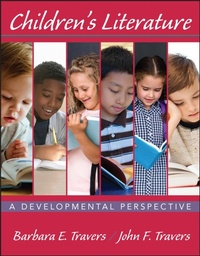
Childrens Literature
A Developmental Perspective
Published on 14. December 2007
Book
Paperback/Softback
464 pages
978-0-470-11104-8 (ISBN)
Description
This book takes a developmental approach to children's literature, offering a fresh perspective in the field. By combining children's literature with developmental psychology, future teachers and librarians will have a better understanding of the appropriate book for a child at a certain stage of their life. Each genre is covered within a chapter devoted to a certain developmental stage.
More details
Language
English
Place of publication
New York
United States
Target group
Professional and scholarly
Dimensions
Height: 273 mm
Width: 216 mm
Thickness: 17 mm
Weight
839 gr
ISBN-13
978-0-470-11104-8 (9780470111048)
Copyright in bibliographic data is held by Nielsen Book Services Limited or its licensors: all rights reserved.
Schweitzer Classification
Persons
John Travers is a published author of several child development and educational psychology textbooks. He has won numerous rewards at Boston College including Teacher of the Year, and he was recognized as one of eight (out of 1,000) outstanding teachers in the university.
Barbara Travers has a master's degree from Boston College with a concentration in children's literature. She has been a teacher and librarian and has received a Horace Mann Award for her creativity in teaching children's literature.
Barbara Travers has a master's degree from Boston College with a concentration in children's literature. She has been a teacher and librarian and has received a Horace Mann Award for her creativity in teaching children's literature.
Content
Part One. Introduction. Chapter 1. Children, Literature, And Development: Interactions And Insights. Chapter 2. Children And Their Literature: Changes Through The Years. Part Two. Understanding Children's Literature. Chapter 3. Genres In Children's Literature. Chapter 4. Analyzing, Selecting, And Responding To Children's Literature. Chapter 5. The Craft Of Writing And Illustrating. Chapter 6. Diversity In Children's Literature. Part Three. The Content Of Children's Literature. Chapter 7. Literature For The Early Years (Birth To Two). Chapter 8. Literature For The Preschool Years (2-4). Chapter 9. Literature For The Early Elementary School Years (5-7). Chapter 10. Literature For The Intermediate Years (8-11). Chapter 11. Literature For The Middle School Years (11-14). Chapter 12. Literature For The High School Years (14-18). Part Four. Topics For Teachers And Librarians. Chapter 13. Science Literature Through The Grades: A Curricular Model. Chapter 14. Issues For Teachers And Librarians.