

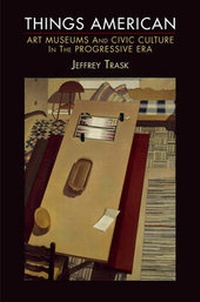
Things American
Art Museums and Civic Culture in the Progressive Era
Published on 3. January 2012
Book
Hardback
312 pages
978-0-8122-4362-8 (ISBN)
Description
American art museums of the Gilded Age were established as civic institutions intended to provide civilizing influences to an urban public, but the parochial worldview of their founders limited their democratic potential. Instead, critics have derided nineteenth-century museums as temples of spiritual uplift far removed from the daily experiences and concerns of common people. But in the early twentieth century, a new generation of cultural leaders revolutionized ideas about art institutions by insisting that their collections and galleries serve the general public.
Things American: Art Museums and Civic Culture in the Progressive Era tells the story of the civic reformers and arts professionals who brought museums from the realm of exclusivity into the progressive fold of libraries, schools, and settlement houses. Jeffrey Trask's history focuses on New York's Metropolitan Museum of Art, which stood at the center of this movement to preserve artifacts from the American past for social change and Americanization. Metropolitan trustee Robert de Forest and pioneering museum professional Henry Watson Kent influenced a wide network of fellow reformers and cultural institutions. Drawing on the teachings of John Dewey and close study of museum developments in Germany and Great Britain, they expanded audiences, changed access policies, and broadened the scope of what museums collect and display. They believed that tasteful urban and domestic environments contributed to good citizenship and recognized the economic advantages of improving American industrial production through design education. Trask follows the influence of these people and ideas through the 1920s and 1930s as the Met opened its innovative American Wing while simultaneously promoting modern industrial art.
Things American is not only the first critical history of the Metropolitan Museum. The book also places museums in the context of the cultural politics of the progressive movement-illustrating the limits of progressive ideas of democratic reform as well as the boldness of vision about cultural capital promoted by museums and other cultural institutions.
Things American: Art Museums and Civic Culture in the Progressive Era tells the story of the civic reformers and arts professionals who brought museums from the realm of exclusivity into the progressive fold of libraries, schools, and settlement houses. Jeffrey Trask's history focuses on New York's Metropolitan Museum of Art, which stood at the center of this movement to preserve artifacts from the American past for social change and Americanization. Metropolitan trustee Robert de Forest and pioneering museum professional Henry Watson Kent influenced a wide network of fellow reformers and cultural institutions. Drawing on the teachings of John Dewey and close study of museum developments in Germany and Great Britain, they expanded audiences, changed access policies, and broadened the scope of what museums collect and display. They believed that tasteful urban and domestic environments contributed to good citizenship and recognized the economic advantages of improving American industrial production through design education. Trask follows the influence of these people and ideas through the 1920s and 1930s as the Met opened its innovative American Wing while simultaneously promoting modern industrial art.
Things American is not only the first critical history of the Metropolitan Museum. The book also places museums in the context of the cultural politics of the progressive movement-illustrating the limits of progressive ideas of democratic reform as well as the boldness of vision about cultural capital promoted by museums and other cultural institutions.
Reviews / Votes
"In its revealing and canny glimpse of the convergence of money, stuff, intelligence, and social zeal in one institution at one critical time, Trask's work would constitute a worthy success."-American Historical Review "Jeffrey Trask's well-researched and engagingly written history of New York City's Metropolitan Museum of Art explores the expanding educational role of museums during the Progressive Era. . . . Trask successfully establishes the Met's efforts at cultural democracy and their unintended consequences."-Journal of American History "Things American gives us, at last, a history of the Metropolitan Museum of Art based on genuine archival materials. Moreover, it reorients our thinking about art museums in the United States, demonstrating that there were important democratic, utilitarian, and civic impulses at work behind them. The book also broadens our thinking about progressivism, reminding us how it shaped art museums and how those museum-related programs it spawned continued beyond World War I."-Steven Conn, author of Do Museums Still Need Objects?More details
Series
Language
English
Place of publication
Pennsylvania
United States
Target group
College/higher education
Illustrations
35 illus.
Dimensions
Height: 229 mm
Width: 152 mm
ISBN-13
978-0-8122-4362-8 (9780812243628)
Copyright in bibliographic data and cover images is held by Nielsen Book Services Limited or by the publishers or by their respective licensors: all rights reserved.
Schweitzer Classification
Other editions
Additional editions
E-Book
11/2011
1st Edition
University of Pennsylvania Press
€33.99
Available for download
Person
Jeffrey Trask teaches history at Georgia State University.
Content
List of Illustrations
Introduction. Museums and Society
Chapter 1. Progressive Connoisseurs: The Intellectual Origins of Education Reform in Museums
Chapter 2. The De Forest Faction's Progressive Museum Agenda
Chapter 3. The Educational Value of American Things: Balancing Usefulness and Connoisseurship
Chapter 4. The Arts of Peace: World War I and Cultural Nationalism
Chapter 5. The Art of Living: The American Wing and Public History
Chapter 6. Americanism in Design: Industrial Arts and Museums
Epilogue. Depression Modern: Institutional Sponsors and Progressive Legacies
Notes
Bibliography
Index
Acknowledgments
Introduction. Museums and Society
Chapter 1. Progressive Connoisseurs: The Intellectual Origins of Education Reform in Museums
Chapter 2. The De Forest Faction's Progressive Museum Agenda
Chapter 3. The Educational Value of American Things: Balancing Usefulness and Connoisseurship
Chapter 4. The Arts of Peace: World War I and Cultural Nationalism
Chapter 5. The Art of Living: The American Wing and Public History
Chapter 6. Americanism in Design: Industrial Arts and Museums
Epilogue. Depression Modern: Institutional Sponsors and Progressive Legacies
Notes
Bibliography
Index
Acknowledgments